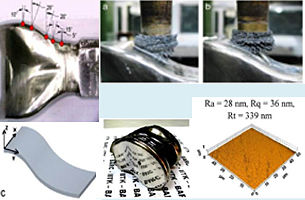
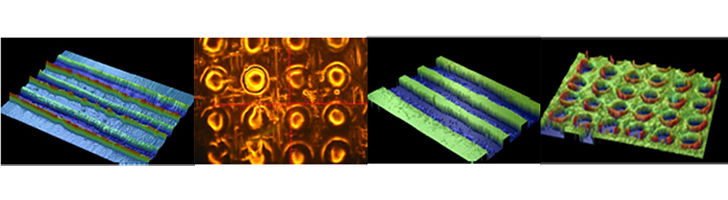
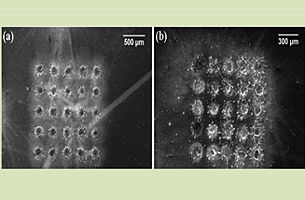
Materials Testing Laboratory
Teaching Laboratory
ME 222: Nature and Properties of Materials
Overview:
Objective is to give a broad understanding of common materials related to mechanical engineering with an emphasis on the fundamentals of structure-property-application relationships.
Course Content:
History of engineering materials, Engineering materials, Materials property chart, Crystal structure, Imperfections of solids, Mechanism of strengthening in metals, Hall-Petch effect, Xray diffraction, Fracture: Ductile, brittle, fatigue. Griffith criterion, S-N curve, Creep, Phase diagram (binary), Iron-carbon system, Heat treatment of metals, Electrical properties, Thermal properties, Magnetic properties, Optical properties, Corrosion, Oxidation, Thermal stability ,
Wear, abrasion, friction of materials, Characterization techniques: Optical microscopy, scanning electron microscopy, transmission electron microscopy, atomic force microscopy, Polymer and its characterization, Viscoleasticity, Nanomaterials and its important properties at nanoscale, Composites: Characterization of composites, Ionic polymer matrix composites, Shape memory alloy, Intelligent Multifunctional materials, Economics, Environment, and
Sustainability In addition to the lectures, the course is associated with a laboratory session. A group of 6/7 students can conduct experiment effectively. A total of six experiments for the duration of 2 hours each is proposed for this course.
Processing Equipment:
Environmental Controlled High Temperature Furnace: Heat treatment in controlled atmosphere
Specification:
Temperature: Room temperature to 1400 0C
Heating rate : 0.5 0C/min to 10 0C/min
Environment : Air, Nitrogen, etc
Location: ACMS 207B |
 |
Processing Equipment:
Specimen Cutting Machine- Metallic, polymer, etc
Specification:
RPM- 1500 max
Wheel size: 33 x 2 x 32 mm
Sample size (max): 30 mm x30 mm
Location:ACMS 203B
|
|
Processing Equipment:
Single/Double Disc Polishing Machine- Polishing of samples to get smooth surface finish
Specification:
Diameter of disc: 200 mm
Rotation: 300-650 rpm
Location: ACMS 203B
|
|
Characterization Equipment:
Universal Testing Machine- Studies of strain-strain behaviour of materials
Specification:
Max force- 100 kN
Cross head speed- 5 mm/min to 100 mm/min
Travel length- 450 mm
Test types- Tension, Compression, and Flexural
Location: NL-1, Room # 112
|
|
Characterization Equipment:
MTS 810 Testing Machine- Studies of mechanical properties of materials
Specification:
Max. Force- 100 kN
Travel length- 1308 mm
Controller: Flex test 40
Test types: Tension, compression, bending, and cyclic fatigue
Location: NL-1, Room # 112
|
|
Characterization Equipment:
Rotating Beam Fatigue Tester: Studies of fatigue life and endurance limits of metals
Specification:
Load- 10 Kg to 40 Kg
RPM – 1420
Location: ACMS, Room # 207B
|
|
Characterization Equipment:
Rotating Beam Reverse Bending Fatigue Testing Machine- Studies of fatigue life and endurance limits of metals
Specification:
RPM- 2800 - 6000
Load- 0.5 kg – 4 Kg
Sample- Dumbbell shape
Diameter of specimen: 8 mm
Location: ACMS 207B
|
|
Characterization Equipment:
Rotating Beam Reverse Bending Fatigue Testing Machine - Studies of fatigue life and endurance limits of metals
Specification:
Diameter of test specimen: 8 mm Maximum bending moment: 500 Kg. cm.
RPM- 1425
Load- 0.250 Kg to 50 Kg
Location: ACMS 207B
|
|
Characterization Equipment:
Shore A Durometer- Measurement of hardness for soft materials like rubber
Specification:
Preload: 0.45 Kgf
Major Load: 8.06 N
Indentor type- 35° truncated cone indenter
Type of load- Constant contact pressure
Location: ACMS 207B
|
|
Characterization Equipment:
Shore D Durometer- Measurement of harness for hard polymer
Specification:
Preload: 0.45 Kgf
Major Load: 44.48 N
Indentor type- 30° cone indenter
Type of load- Constant contact pressure
Location: ACMS 207B
|
|
Characterization Equipment:
Portable Hardness Tester- Rockwell hardness tester for measurement of hardness
Specification:
Rockwell test
Load – 10 Kg, 60 Kg, 100 Kg and 150 Kg
Indentor: Diamond /
1/16” ball
Location: ACMS 207B
|
|
Characterization Equipment:
Poldi Hardness Tester- Measurement of hardness
Specification:
Preload: 0.42 Kgf
Major Load: Hammer blow
Material - Alloy steel EN-8 OR EN-9
Dia- 30mm
Length- 85 mm
Tungsten Carbide Ball
Dia- 10 mm
Poldy Bar
Material: Alloy steel EN-8 or EN-9 or Carbon Steel- WPS
Size- 12 mm X 12mm X 150 mm
Eyepiece- 8X, 25 X
Location: ACMS 207B
|
|
Characterization Equipment:
Ellipsometer- Thickness of thin film
Specification:
Range: 10 nm – 400 nm
Source – Green laser, 532 nm
Location: ACMS 203F
|
|
Characterization Equipment:
Metallography Station Trinolcular Optical Microscope with Camera- To study surface morphology
Specification:
Magnification- 25 X to 1200X
Focusing: Coarse to fine
Head: Monocular, binocular/trinocular
Illumination- Halogen, incident light
Eye piece: 5X, 10X, 15X and 20 X
Objective: 5X, 10X 20X and 40X
Location: NL-1, Room # 112
|
|
Characterization Equipment:
Surface Roughness Tester- Measurement of surface hardness
Specification:
Range: 350 m (-200 m to 150 m)
Detecting mode: Skid measurement
Measuring force: 4mN or 0.75 mN (Low force type)
Stylus tip: Diamond, 900/mR (600/2mR: low force type)
Travelling length : 6 mm
Evolution length (mm) : 1.25, 4.0
Location: ACMS 207B
|
|
Characterization Equipment:
Superficial Rockwell Tester
Specification:
Range: 350 m (-200 m to 150 m)
Detecting mode: Skid measurement
Measuring force: 4mN or 0.75 mN (Low force type)
Stylus tip: Diamond, 900/mR (600/2mR: low force type)
Travelling length : 6 mm
Evolution length (mm) : 1.25, 4.0
Location: ACMS 207B
|
|
Characterization Equipment:
Brinell Hardness Tester- Brinell hardness test of Metals
Specification:
Preload: 250 Kgf
Major Load - 250-3000 Kgf in range of 250 Kgf
250, 500, 750, 1000, 1250, 1500 Kgf
Maximum test height- 410 mm
Depth of throat- 205 mm
Max depth of spindle below base – 180 mm
Steel ball diameter (Indentor)- 10 mm , 5 mm, 2.5 mm
Location: ACMS 203B
|
|
Characterization Equipment:
Vickers Hardness Tester- Vickers hardness tester of metals
Specification:
Load- 5 Kgf to 50 Kgf
30, 40, 50 Kgf (loads 5, 10, 15, 20 not working properly)
Indentor – diamond
Magnification- 25 X
Location: ACMS 203B
|
|
Associate Faculty: Prof. Kamal K. Kar, Prof. Bishakh Bhattacharya, Prof. J. Ramkumar
Staff: Mr. Suresh Chendra
Contact Person: Mr. Suresh Chendra