Combustion and Energy Systems

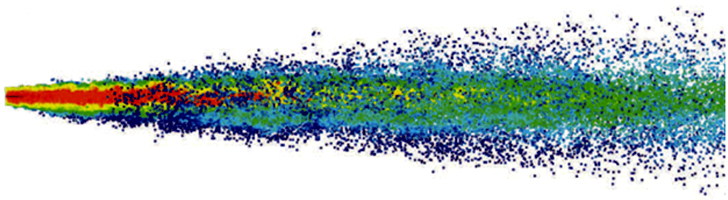
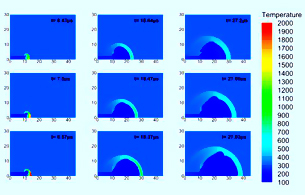
LES of reacting spray jets


The Combustion and Energy Systems area seeks to focus on technologies for efficient energy conversion, storage and utilization, which aim to meet the urgent challenge of a safe, reliable and sustainable energy supply in the face of ever-growing demand and increasing geo-political uncertainty. Overall, our research spans the following technical areas: energy harvesting and storage, battery technology, thermal management of portable energy sources, energy storage materials, computational material science, electrochemical energy conversion and chemically reacting systems, combustion of fossil fuels, ignition and flame stabilization, and CFD of reactive flows. Our research on these subjects involves creative synthesis, sustainable technologies and engineering solution.

Research Areas


    • Solar-assisted water-splitting for H2 generation: prototype development

    • PEM Fuel cell: quantification of aging using inverse technique

    • CO2 sequestration in hydrate form using injection-depressurization technique: model/solver development

    • Accidental release of high-pressure hydrogen: simulation using commercial solvers

    • Thermal management of vehicular battery packs

    • Development of battery modules for efficient heat transfer

    • Recycling rechargeable energy storage systems

    • Concentrated solar thermal technology - system and material challenges

    • Futuristic energy storage and harvesting

    • Multi-scale multi-physics material modeling

    • Modeling of turbulence-chemistry interaction in spray flames

    • Stabilization mechanism in lifted jet diffusion flame

    • Investigation of autoignition in turbulent H2 jet in a hot coflow

    • CFD of reactive flows using LES/DNS


Research Laboratories:


  • Computational Fluid Dynamics Laboratory

  • Energy Conversion and Storage Laboratory


Associated Faculty


Jishnu Bhattacharya, PhD (Univ. Michigan): thermodynamics, heat transfer, energy storage materials, atomic scale computation, multi-scale modeling

Malay K. Das, Ph.D (Penn State): electrochemical energy conversion and chemically reacting systems

Santanu De, PhD (IISc Bangalore): RANS, LES and DNS of reactive flows, advanced turbulent combustion modeling (Flamelet, CMC, MMC and PDF method), flame stabilization, extinction/re-ignition, auto-ignition, spray atomization and combustion


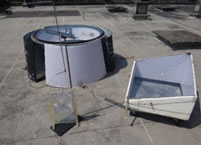
Prototype development for Solar-assisted water-splitting for H2 generation

Numerical simulation of accidental release of high-pressure hydrogen through a 5 mm dia opening


Energy Conversion Lab

Address:


Overview:


This lab is used for the under graduate course (ME-401A).

Equipment:


  • Computerized table top demonstration model for Francis Impulse Turbine (Pelton Wheel)

  • Centrifugal Pump

  • Axial fan unit

  • Hydraulic Coupling

  • Gas Turbine Model

  • Centrifugal compressor

  • Kaplan Turbine

  • Several Educational Models related to turbo machinery

  • Computerized Demonstration Model for Kaplan Turbine: In pipe line

Experiments:

    1. A test setup to estimate the performance characteristics of a two-stage axial flow fan

Specifications:

      • Number of stages: 2

      • Design R.P.M. : 2400

      • Design Discharge : 1.7 m3/s

      • Design Pressure : 15.0 cm of water

      • No. of stator blades : 37

      • No. of Rotor blades : 24

    1. Impulse Turbine: a small-scale hydro power unit designed to demonstrate the principles of operation and to evaluate the characteristics of a Pelton turbine.

Specifications:

      • 70mm diameter, 10 buckets rotor

      • 4.5mm diameter nozzle

      • Adjustable spear valve

      • Electronic measurement sensors for inlet pressure, rotational speed and break force PC controlled data processing


    1. Serial and Parallel Pump: A small-scale series/parallel centrifugal pump to find the pump characteristic in serial and parallel mode. Equipped with electronic measurement sensors for pump differential pressure, flow rate, temperature and rotational speed. PC controlled data processing via the IFD6 interface console.

    2. High Speed Centrifugal Compressor: Multi-stage centrifugal compressor to evaluate effciency and performance characteristics. Sensors for inlet and exit temperature, flow rate, speed and power.

    3. Rankine Cycle: A steam-electric power plant including components such as a multi-pass boiler, axial - flow steam turbine, AC/DC generator and a condenser tower to evaluate the thermal effciency and output.

Specifications:

      • Boiler: Pressure 120 psi (827 kPa), Temperature 4820F (2500C)

      • Generator: 15.0 Volts, 1.0 Amp (Total Load of 15.0 Watts)

      • Fuel: Liquid Petroleum

      • Digital: High Speed Data Acquisition System

    1. A cascade Tunnel: Variable incident mechanism, end and side wall bleed, low inlet turbulence level, variable speed motors, five identical blades, end passage bleed

Specifications:

    • Test section size : 610mm X 230mm

    • Test section velocity : 20 m/s

    • Cascade inlet flow angle : 00 to 430

Relevant Information (if any):

Faculty: Dr. S. Sarkar (Lab Coordinator)

Staff:

Contact Person:


Experimental Stress Analysis (ESA) Lab

Address:


Overview:


Equipment:

  • 25 KN servo hydraulic universal testing machine

  • Strain conditioners and data acquisition systems

  • Drop weight testing machine

  • Field Emission Scanning Electron Microscope with EDS

  • Universal testing machine

  • Hardness tester (Brinell, Vickers, Rockwell superficial)

  • Poldi Portable Hardness Tester (Shore A and Shore D)

  • Fatigue tester (rotating bending, and reverse bending)

Experiments:

  • Application of strain gauge techniques: Lecture on strain gauge based methods, Cantilever beam and Portal frame experiments

  • Application of Strain Gauge techniques: experiment on combined bending and torsion

  • Applications  of  photoelasticity: demonstration  of  photoelastic techniques

  • Applications of photoelasticity:  Calibration of the photoelastic constant, Determination of the stress field in a beam under bending

  • Applications of Digital Image Correlation: Demonstration of DIC techniques, determination of strain fields in the gauge section of a polymeric dog-bone specimen under tension

  • Applications of DIC: Determination of thermoelastic stress and strain fields using DIC


Relevant Information (if any):

Faculty: Dr. Sumit Basu

Staff:

Contact Person:


Fluid Mechanics Laboratory

Address:

3rd floor NL-1

Overview:

This lab is run in conjunction with the theory course ME 231 (Fluid Mechanics). It is an introductory course where flow behaviour, fluid forces and analysis tools are introduced. The goals of the experiments include determination of forces generated when fluid flow takes place over a solid object, applications of the control volume approach, demonstration of the momentum and energy equations, viscosity measurement and engineering correlations. Intricate flow phenomena such as separations and transition to turbulence are demonstrated. Experimental setups such as flow through a tube, flow over a flat plate, wind tunnel, smoke tunnel and viscometer are made available to the students. The lab experiments utilize U-tube manometer and digital manometer, a hot-wire anemometer system and data acquisition. The lab runs closely with the lectures in such a way that experiments support the text covered in the class room.

Equipment:

  • Low speed wind tunnel

  • Smoke tunnel

  • Open-channel flow apparatus

  • Jet arrangement

  • Viscometer

  • Reynolds apparatus

  • Digital manometer

  • U-tube manometer

  • Hot-wire anemometer

  • Force transducers

  • Imaging devices

Experiments:

  • Jet impact on flat and curved surfaces

  • Measurement of drag on a circular cylinder in high Reynolds number flow

  • Energy loss measurements in subcritical and supercritical open channel flow

  • Measurement of fluid viscosity

  • Determination of friction factor as a function of Reynolds number in pipe flow

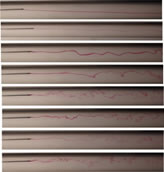
  • Studying laminar-turbulent transition for flow in a tube

  • Boundary layer flow over a flat plate

  • Pressure distribution around a circular cylinder in high Reynolds number flow

Relevant Information:

The laboratory manual is available here.

The laboratory provides training to undergraduate and graduate students in flow measurements. It boasts of a considerable and diverse collection of imaging equipment, many of them developed within the laboratory itself. The areas of research include flow imaging, control, jets and wakes, micro-scale transport, and interfacial fluid dynamics. It has good computational facilities as well. A large number of Master’s and doctoral students have graduated over the years and flourish professionally around the world. The faculty has collaborated with organizations such as DRDL Hyderabad, SSPL, New Delhi, BARC Mumbai, RRCAT Indore, IGCAR Kalpakkam within the country. International partners include ETH Zurich, Kyoto University, Japan, and University of Minnesota, USA. Recently, the faculty has started collaborative projects with the private industry in solar energy, biomedical equipment, and diamond characterization.


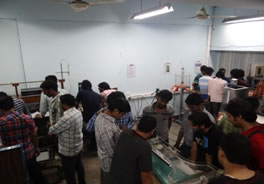
An undergraduate laboratory in progress

A wind tunnel experiment
     
Open channel flow

Sub-critical flow
Reynolds experiment
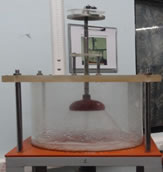
Impact of jet apparatus

Super-critical flow


Sponsored Projects

  1. SYNTHETIC JET ACTUATOR FOR DRAG REDUCTION OF UNDERWATER VEHICLES

  2. LOCK-IN-THERMOGRAPHY FOR SOLAR CELL AND MODULE CHARACTERIZATION

  3. Thermal striping study in a fast breeder reactor: eddies transport using combined PIV/ LIF and Schlieren techniques

  4. A predictive model of aneurysm development in an arterial bifurcation

  5. Micro-holographic particle image velocimetry development for biomedical and MEMS application

  6. GENERATION OF SOLAR HYDROGEN

  7. Development of a General Purpose CFD Solver over a Hybrid Unstructured Grid

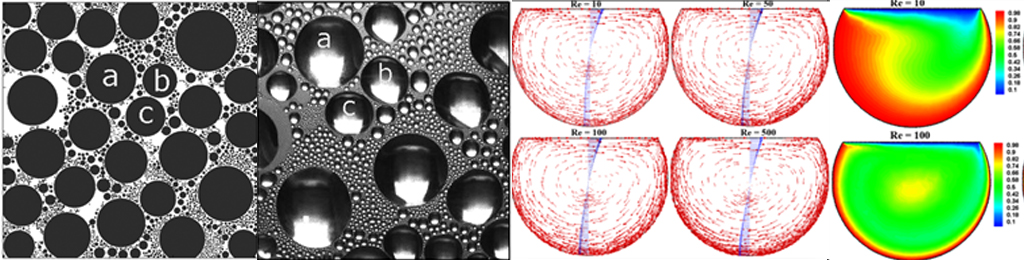
  8. STATICS AND DYNAMICS OF MICRO DROPLETS FORMED ON TEXTURED SURFACES DURING CONDENSATION

  9. QUANTITATIVE ANALYSIS OF IN VIVO MAGNETIC RESONANCE IMAGING DATA FOR DIAGNOSTICS OF VASCULAR DISEASES SUPPORTED BY CFD SIMULATION

  10. EXPERIMENTS IN ACTIVE CONTROL OF BLUFF BODY DRAG USING SCHLIEREN VELOCIMETRY TECHNIQUE

Patents

    1. Enhancing blood flow images using computational fluid dynamics.

    2. Functional flow generator for multi-drug delivery system.

    3. Non-invasive technique for evaluation of flow rates and identification of vascular deformation.

    4. Water purification system using an enhanced solar still.

    5. Light streak imaging technique for determining mass diffusivity in a binary diffusion process.


Colour schlieren


Mach-Zehnder interferometry


Liquid crystal thermography

Schlieren and shadowgraph

Particle image velocimetry

Enhanced solar still


Electro-atomization facility


Holograph and micro PIV


Particle tracking velocimetry


Faculty:
Dr K Muralidhar, Dr P K Panigrahi, Dr. Arun K. Saha, Dr M K Das, Dr. S. Khandekar, Dr Anirban Guha

Staff: Manoj Sharma

Contact Person:

Dr M. Sharma
Room: NL 303
Phone: 4928
Email : This email address is being protected from spambots. You need JavaScript enabled to view it.