ME730A

MODAL ANALYSIS: THEORY AND PRACTICE

Credits:


COURSE OVERVIEW:


Course will cover the theory and practical aspects of the processes involved in testing of structural components with the objective of obtaining a mathematical description of their dynamic behavior. Main ingredients of the course will be the study of the theoretical basis of vibrations, details and functioning of vibration measuring instruments, digital processing of measurements, and detailed analysis of measured data. Laboratory sessions will provide instructive guidelines for dynamic testing, selection/placement considerations of sensors and actuators, and for system identification using modal parameter extraction methods. The course will motivate solutions for testing, monitoring and diagnosis of common structural components found in the machine tool/automotive/aerospace/ship building/civil industries.


WHO SHOULD TAKE THIS COURSE?


  • PG/UG students interested in applied vibrations.

  • Students keen on exploring work opportunities related to vibration testing, monitoring and diagnosis in the machine tool/automotive/aerospace/ship building/civil industries.  

COURSE OBJECTIVES:


  • To teach the basics of the theory and practice of modal analysis

  • To introduce experimental methods in modal analysis

  • To teach digital signal processing of measurements

  • To teach estimation and extraction of modal parameters (natural frequencies, damping and mode shapes) from measured data

  • To teach construction of mathematical models from extracted modal parameters

  • To introduce advanced topics on dynamic substructuring, modal reduction, modal expansion, model updating, and vibration testing of weakly nonlinear structures

COURSE OUTCOMES:


Students will, on completion of the course:

  • Get familiar with theoretical and practical aspects of structural dynamics

  • Develop the ability to plan for experimental testing of structural vibrations

  • Gain understanding of sensor and actuator selection and placement

  • Gain understanding of the importance of digital signal processing of measurements, and its impact on quality of measured data

  • Gain the ability to reconstruct mathematical models describing the structure based on experimental modal analysis

  • Appreciate role of modal analysis in system identification, model updating, and condition monitoring

COURSE MATERIAL:


(1) Modal testing: theory, practice and application by D. J. Ewins;

(2) Theoretical and experimental modal analysis by N. Maia and J. Silva

COURSE OUTLINE (BASED ON 90 MIN LECTURES)


1. Theoretical basis for modal analysis (6 lectures)

  • Overview of modal analysis

  • Vibrations of single and multiple degree of freedom (SDOF, MDOF)  systems

  • Frequency response functions (FRFs) for SDOF/MDOF systems. Types of FRFs.

  • Orthogonality of modes and their application in modal analysis

  • Theory of undamped, proportionally damped, and non-proportionally damped SDOF/MDOF systems

  • Analyses for complex modes and sensitivity analysis of modal models

2. FRF measurement considerations (6 lectures)

  • Introduction to test planning

  • Excitation of structures (electromagnetic and electrohydraulic shakers, hammers, etc.)

  • Transducers and amplifiers for measurements (force transducer, accelerometers, laser vibrometers, signal conditioners, amplifiers etc.)

  • Actuator/sensor placement considerations

  • Revision of Fourier analysis and Fourier transforms

  • Discussions on aliasing, leakage, windowing, filtering and averaging

  • Role of excitations signals in structural testing

3. Modal parameter extraction and derivation of mathematical models (6 lectures)

  • Preliminary checks of FRF data (spectrum, coherence, asymptotic behavior, assessment using singular value decomposition (SVD))

  • Mode indicator functions

  • SDOF modal analysis methods (peak-picking, circle-fit)

  • Treatment of residuals

  • MDOF modal analysis in the frequency domain  (least square methods, rational fraction polynomial methods)

  • Extraction of natural frequencies, damping ratios and shapes.

  • Discussion on modal models, response models and spatial models

4. Applications and advanced topics (6 lectures)

  • Model correlation. Concepts of modal assurance criterion and some of its variants

  • Dynamic substructuring

  • Modal reduction and expansion

  • Model updating

  • Advanced curve fitting for modal parameter extractions

  • Testing of weakly nonlinear structures

Book Chapters

1. Dhananjay Kumar Srivastava, Avinash Kumar Agarwal, Rakesh Kumar Maurya, and Amitava Datta, “Horizons in Internal Combustion Research”, Published in Advances in Internal Combustion Engine Research, Chapter 1, pp. 3-6, (Editors: Dhananjay Kumar Srivastava, Avinash Kumar Agarwal, Amitava Datta, and Rakesh Kumar Maurya), Published by Springer, Singapore (2018), (ISBN # 978-981-10-7574-2)


2. Akhilendra Pratap Singh and Avinash Kumar Agarwal, “Low-Temperature Combustion: An Advanced Technology for Internal Combustion Engines”, Published in Advances in Internal Combustion Engine Research, Chapter 2, pp. 9-41, (Editors: Dhananjay Kumar Srivastava, Avinash Kumar Agarwal, Amitava Datta, and Rakesh Kumar Maurya), Published by Springer, Singapore, (2018). (ISBN # 978-981-10-7574-2)


3. Sadaraboina Moses Vidya Sagar and Avinash Kumar Agarwal, “Hydrogen-Enriched Compressed Natural Gas: An Alternate Fuel for IC Engines”, Published in  Advances in Internal Combustion Engine Research, Chapter 6, pp. 111-134, (Editors: Dhananjay Kumar Srivastava, Avinash Kumar Agarwal, Amitava Datta, and Rakesh Kumar Maurya), Published by Springer, Singapore, (2018), (ISBN # 978-981-10-7574-2)


4. Tadveer Singh Hora, Akhilendra Pratap Singh and Avinash Kumar Agarwal, “Future Mobility Solutions of Indian Automotive Industry: BS-VI, Hybrid, and Electric Vehicles”, Published in Advances in Internal Combustion Engine Research, Chapter 14, pp, 309-345, (Editors: Dhananjay Kumar Srivastava, Avinash Kumar Agarwal, Amitava Datta, and Rakesh Kumar Maurya), Published by Springer, Singapore, (2018), (ISBN # 978-981-10-7574-2)


5. Nikhil Sharma, Avinash Kumar Agarwal, Peter Eastwood, Tarun Gupta, and Akhilendra Pratap Singh, “Introduction to Air Pollution and Its Control”, Published in  Air Pollution and Control, Chapter 1, pp. 3-7, (Editors: Nikhil Sharma, Avinash Kumar Agarwal. Eastwood, Tarun Gupta, and Akhilendra P. Singh), Published by Springer, Singapore, (2018), (ISBN # 978-981-10-7184-3)


6. Joonsik Hwang, Choongsik Bae, Chetankumar Patel, Tarun Gupta, and Avinash Kumar Agarwal, “Biodiesel Soot Characteristics”, Published in Air Pollution and Control, Chapter 3, pp. 45-55, (Editors: Nikhil Sharma, Avinash Kumar Agarwal. Eastwood, Tarun Gupta, and Akhilendra P. Singh),Published by Springer, Singapore, (2018), (ISBN 978-981-10-7184-3)


7. Pravesh Chandra Shukla, Tarun Gupta, and Avinash Kumar Agarwal, “Techniques to Control Emissions from a Diesel Engine”, Published in Air Pollution and Control, Chapter 4, pp. 57-72, (Editors: Nikhil Sharma, Avinash Kumar Agarwal. Eastwood, Tarun Gupta, and Akhilendra P. Singh), Published by Springer, Singapore, (2018), (ISBN # 978-981-10-7184-3)


8. Nikhil Sharma and Avinash Kumar Agarwal, “Gasoline Direct Injection Engines and Particulate Emissions”, Published in  Air Pollution and Control, Chapter 6, pp. 87-105, (Editors: Nikhil Sharma, Avinash Kumar Agarwal. Eastwood, Tarun Gupta, and Akhilendra P. Singh), Published by Springer, Singapore, (2018), (ISBN # 978-981-10-7184-3)


9. Himanshu Tyagi, Avinash Kumar Agarwal, Prodyut Ranjan Chakraborty, and Satvasheel Powar, “Introduction to Applications of Solar Energy”, Published in  Applications of Solar Energy, Chapter 1, pp. 3-10, (Editors: Himanshu Tyagi, Avinash Kumar Agarwal, Prodyut R. Chakraborty, and Satvasheel Powar),Published by Springer, Singapore, (2018), (ISBN # 978-981-10-7205-5)


10. Saptarshi Basu, Avinash Kumar Agarwal, Achintya Mukhopadhyay, and Chetankumar Patel, “Introduction to Application Paradigms of Droplets and Spray Transport”, Published in  Applications Paradigms of Droplet and Spray Transport: Paradigms and Applications, Chapter 1, pp. 3-6, (Editors: Saptarshi Basu, Avinash Kumar Agarwal, Achintya Mukhopadhyay, Chetankumar Patel), Published by Springer, Singapore, (2018), (ISBN # 978-981-10-7232-1)


11. Sunita J. Varjani, Avinash Kumar Agarwal*, Edgard Gnansounou, and Baskar Gurunathan, “Introduction to Environmental Protection and Management”, Published in  Bioremediation: Applications for Environmental Protection and Management, Chapter 1, pp. 1-6, (Editors: Sunita J. Varjani, Avinash Kumar Agarwal, Edgard Gnansounou, and Baskar Gurunathan), Published by Springer, Singapore, (2018), (ISBN # 978-981-10-7484-4)


12. Saptarshi Basu, Avinash Kumar Agarwal, Achintya Mukhopadhyay, and Chetankumar Patel, “Introduction to Droplets and Sprays: Applications for Combustion and Propulsion”, Published in Droplets and Sprays, Chapter 1, pp. 3-6, (Editors: Saptarshi Basu, Avinash Kumar Agarwal, Achintya Mukhopadhyay, Chetankumar Patel), Published by Springer, Singapore, (2018),(ISBN # 978-981-10-7448-6)


13. Shantanu Bhattacharya, Avinash Kumar Agarwal, Nripen Chanda, Ashok Pandey, Ashis Kumar Sen, Sanjay Kumar, and Poonam Sundriyal, “Introduction to Environmental, Chemical, and Medical Sensors”, Published in  Environmental, Chemical and Medical Sensors, Chapter 1, pp. 3-6, (Editors: Shantanu Bhattacharya, Avinash Kumar Agarwal, Nripen Chanda, Ashok Pandey Ashis Kumar Sen), Published by Springer, Singapore, (2018),(ISBN # 978-981-10-7750-0)


14. Akhilendra Pratap Singh, Avinash Kumar Agarwal, Rashmi Avinash Agarwal, Atul Dhar, and Mritunjay Kumar Shukla, “Introduction of Alternative Fuels”, Published in Prospects of Alternative Transportation Fuels, Chapter 1, pp. 3-6, (Editors: Akhilendra P. Singh, Rashmi Avinash Agarwal Avinash Kumar Agarwal, Atul Dhar, Mritunjay Kumar Shukla), Published by Springer, Singapore (2018), (ISBN # 978-981-10-7517-9)


15. Akhilendra Pratap Singh, Atul Dhar, and Avinash Kumar Agarwal, "Evolving Energy Scenario: Role and Scope for Alternative Fuels in Transport Sector." Published in Prospects of Alternative Transportation Fuels, Chapter 2, pp. 7-19, (Editors: Akhilendra P. Singh, Rashmi Avinash Agarwal Avinash Kumar Agarwal, Atul Dhar, Mritunjay Kumar Shukla), Published by Springer, Singapore (2018), (ISBN # 978-981-10-7517-9)


16. Anuj Pal and Avinash Kumar Agarwal, "Hydrogen for Internal Combustion Engines." Published in Prospects of Alternative Transportation Fuels, Chapter 4, pp. 39-54, (Editors: Akhilendra P. Singh, Rashmi Avinash Agarwal Avinash Kumar Agarwal, Atul Dhar, Mritunjay Kumar Shukla), Published by Springer, Singapore (2018), (ISBN # 978-981-10-7517-9)


17. Tadveer Singh Hora and Avinash Kumar Agarwal, "Compressed Natural Gas and Hythane for On-road Passenger and Commercial Vehicles." Published in Prospects of Alternative Transportation Fuels, Chapter 6, pp. 79-106, (Editors: Akhilendra P. Singh, Rashmi Avinash Agarwal Avinash Kumar Agarwal, Atul Dhar, Mritunjay Kumar Shukla), Published by Springer, Singapore (2018), (ISBN# 978-981-10-7517-9)


18. Dev Prakash Satsangi, Nachiketa Tiwari, and Avinash Kumar Agarwal, "Alcohols for Fueling Internal Combustion Engines." Published in Prospects of Alternative Transportation Fuels, Chapter 7, pp. 109-129, (Editors: Akhilendra P. Singh, Rashmi Avinash Agarwal Avinash Kumar Agarwal, Atul Dhar, Mritunjay Kumar Shukla), Published by Springer, Singapore (2018), (ISBN# 978-981-10-7517-9)


19. Akhilendra Pratap Singh, and Avinash Kumar Agarwal, "Utilization of Alternative Fuels in Advanced Combustion Technologies." Published in Prospects of Alternative Transportation Fuels, Chapter 15, pp. 359-385, (Editors: Akhilendra P. Singh, Rashmi Avinash Agarwal Avinash Kumar Agarwal, Atul Dhar, Mritunjay Kumar Shukla), Published by Springer, Singapore (2018), (ISBN# 978-981-10-7517-9)


20. Avinash Kumar Agarwal, Santanu De, Ashok Pandey, Akhilendra Pratap Singh, “Introduction to Combustion for Power Generation and Transportation”, Combustion for Power Generation and Transportation: Technology, Challenges and Prospects, Chapter 1, pp. 3-8, Springer, New Delhi (2017), (ISBN # 978-981-10-3784-9)

21. Avinash Kumar Agarwal, Akhilendra Pratap Singh, “Lasers and Optical Diagnostics for Next Generation IC Engine Development: Ushering New Era of Engine Development”, Combustion for Power Generation and Transportation: Technology, Challenges and Prospects, Chapter 11, pp. 211-259, Springer, New Delhi (2017), (ISBN # 978-981-10-3784-9)

22. Avinash Kumar Agarwal, Atul Dhar, Anirudh Gautam, Ashok Pandey, “Introduction to the Locomotives and Rail Road Transportation”, Locomotives and Rail Road Transportation: Technology, Challenges and Prospects, Chapter 1, pp. 3-8, Springer, New Delhi (2017), (ISBN # 978-981-10-3787-0)

23. Joydeep Dutta, Avinash Kumar Agarwal, “Diesel Locomotives of Indian Railways: A Technical History”, Locomotives and Rail Road Transportation: Technology, Challenges and Prospects, Chapter 2, pp. 9-23, Springer, New Delhi (2017), (ISBN # 978-981-10-3787-0)

24. Anirudh Gautam, Ravindra Nath Misra, Avinash Kumar Agarwal, “Biodiesel as an Alternate Fuel for Diesel Traction on Indian Railways”, Locomotives and Rail Road Transportation: Technology, Challenges and Prospects, Chapter 5, pp. 73-113, Springer, New Delhi (2017), (ISBN # 978-981-10-3787-0)

25. Avinash Kumar Agarwal, Nikhil Sharma, Akhilendra Pratap Singh, “Potential of DME and Methanol for Locomotive Traction in India: Opportunities, Technology Options and Challenges”, Locomotives and Rail Road Transportation: Technology, Challenges and Prospects, Chapter 7, pp. 131-153, Springer, New Delhi (2017), (ISBN # 978-981-10-3787-0)

26. Sunit K. Singh, Rohini Khobragade, Govindachetty Saravanan, Avinash Kumar Agarwal, Ahmed S. AL-Fatesh, Nitin K. Labhasetwar, “Catalytic Control Options for Diesel Particulate Emissions Including that from Locomotive Engines”, Locomotives and Rail Road Transportation: Technology, Challenges and Prospects, Chapter 9, pp. 171-194, Springer, New Delhi (2017), (ISBN # 978-981-10-3787-0)

27. Avinash Kumar Agarwal, Rashmi Avinash Agarwal, Tarun Gupta, Bhola Ram Gurjar, “Introduction to Biofuels”, Biofuels: Technology, Challenges and Prospects, Chapter 1, pp. 3-6, Springer, New Delhi (2017). DOI: 10-1007/978-981-10-3791-7 (ISBN # 978-981-10-3790-0)


ME340A

INTRODUCTION TO REFRIGERATION AND AIR CONDITIONING

Credits:


3L-0T-0L-0D (9 Credits)


Objective:


This course will serve as a basic introduction to design of refrigeration and air conditioning systems. The course will build upon the fundamentals of thermodynamics (ESO201) and apply it to RAC systems. It will introduce elements of basic RAC machinery and its operating principles and design issues.

Course Content:


Thermodynamics and heat transfer, Refrigeration/Heat Pump Cycles, Elements of a vapor compression refrigeration system, Types, Design calculations, Refrigerants and their impact on the environment, Thermodynamics of moist air, Psychrometry, Load calculations, Solar radiation and interaction with building structures, Introduction to some non-conventional refrigeration systems, Industrial Applications/ Case studies/ Field visits/ Project.

Lecturewise Breakup:


I. Background revision, Basic thermodynamics, Heat transfer, Refrigeration/Heat Pump Cycles : (4 Lectures)

II. Elements of a vapor compression refrigeration system: Compressors, Condensers, Expansion Valves, Evaporators, Design calculations(6 Lectures)

III. Complete vapor compression system, Types, Single and Multi-stage units, Design calculations(8 Lectures)

IV. Refrigerants and their impact on environment (2 Lectures)

V. Thermodynamics of moist air, Psychrometry, Load calculations(6 Lectures)

VI. Solar radiation and interaction with building structures (4 Lectures )

VII. Some non-conventional refrigeration systems (Thermo-electric, Vortex and Pulse Tube, Gas cycles, Absorption chillers)(4 Lectures)

VIII. Industrial Applications/ Case studies: Ice plants, Water Coolers, Cold storages, Food refrigeration, Primary/secondary systems, Specialized air-conditioning, VRF (4 Lectures)

IX. Field Visits and Special Topics(2 Lectures)


Pre-requisites:


  1. ESO 201

Recommended books:


  1. Refrigeration and Air Conditioning, C. P. Arora, 3rd Edition, 2017.

  2. Refrigeration and Air Conditioning, Manohar Prasad, 2015.

Reference books:

  1. Refrigeration, Air Conditioning and Heat Pumps, 5th Edition, by Hundy, Trott and Welsh, 2016.

  2. Handbook of Air Conditioning and Refrigeration (Engineering Handbook by Shan Wang, 2000).

  3. ASHRAE Handbooks/Manuals.


Undergraduate Projects


Internal Nano-Polishing of Micro-Tubes using Ferrofluids


Students
Piyush Jain
Navneet Singh
Varun Rai


Supervisor
Dr. S. Khandekar


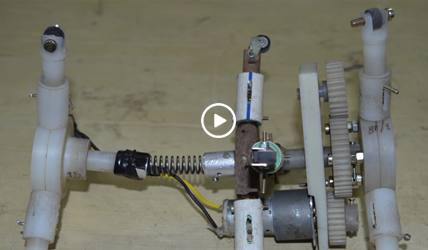
Pipe Traversing Robot


Students
Mukund Tibrewal
Ghanshyam Lal Dhakar
Maitrey Sinha


Supervisor
Dr. Ashish Dutta


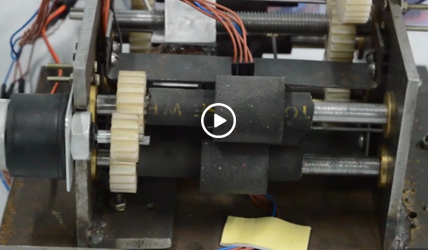
Currency Identification and Verification Device


Students
Anuj Kumar
Ashwinin Roy
Akshay Kumar Porwal


Supervisor
Dr. Sumit Basu


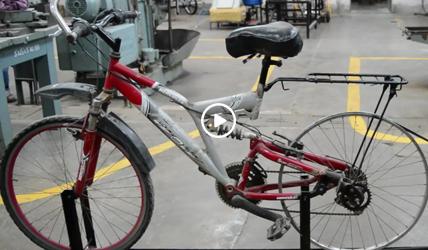
Pedal Powered Washing Machine


Students
Utkarsh Srivastava
Gautam Pratap Singh
Sanny Kumar


Supervisor
Dr. S. K. Choudhury


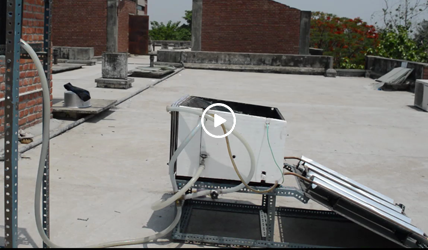
Thermosyphonic Water Purification System


Students
S. Gautham Raj
Manas Bharti
Manish Kumar Awadhiya


Supervisor
Dr. K. Muralidhar


Electromagnetic abrasive finishing machine


Students
Anuj rai
Vikas Bishnoi
Vineet Kumar Singh


Supervisor
Dr. J. Ramkumar