ME772A

MECHATRONICS

Credits:


3-0-0-9


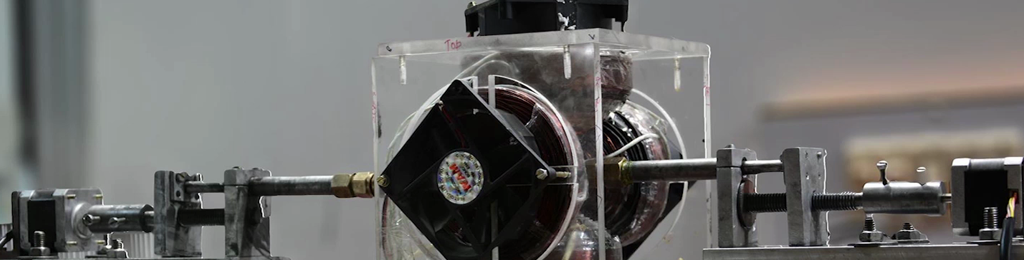
Fundamentals of systems, subsystems and integration of mechanical and electrical systems using computer based control. Basic signal processing, different types of sensors, actuators, controllers, DSP, , ADC/DAC etc. Modeling of electromechanical systems, block diagrams, etc. control system design. PLCs and introduction to industrial automation. Practical application of mechatronics , design issues, industrial techniques etc. Examples of sensor, actuator and controller integration for common micro controllers like atmeag 16, PIC, Arduino, etc.

Basic class Schedule


I. Introduction to mechatronics (2 hrs)


II. Sensors and actuators (6 hrs)


III. Analogue and digital signals, Basic signal conditioning (5 hrs)


IV. ADC, DAC (3 hrs)


V. Block diagrams, System and subsystem models (6 hrs)


VI. Control systems design (PID, PD etc) (6 hrs)


VII. Microcontrollers and DSP (6 hrs)


VIII. PLC and industrial automation (4 hrs)


IX. Practical applications of mechatronics (5 hrs)

Books:


Mechatronics . W. Bolton, Pearson Publishers., 4th edition.


ME773A

GRANULAR MATERIALS

Credits:


3-0-0-9


Aim:


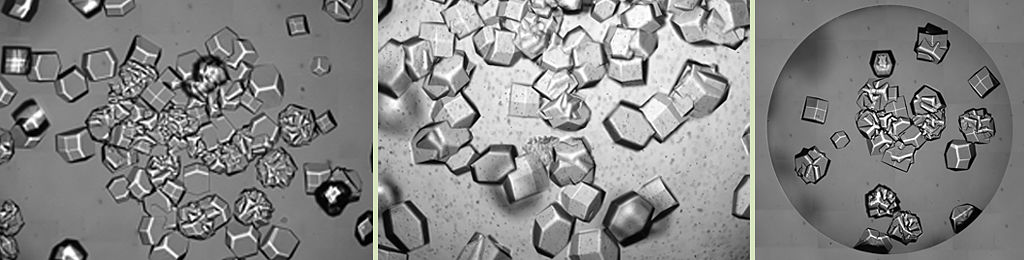
Granular materials are the most industrially important materials after water. In nature, they are found as landslides and avalanches. Their constitutive response is not understood, and their description depends on the manner in which they move. This course develops continuum descriptions of rapidly flowing granular materials, through the application of kinetic theory of gases, which is modified to take into account the finite size of the grains, and the dissipative nature of their collisions.

Pre-requisite:


First course at the graduate level in engineering mathematics and continuum mechanics

Course Contents


Introduction to granular materials; Review of classical thermodynamics; Kinetic theory of perfect gases: Fundamental equations of fluid mechanics, Viscosity, Thermal conductivity; Kinetic description of flow of grains: smooth inelastic grains, rough inelastic grains; Examples; Effect of air on granular flow.

Topics with suggested lectures in parenthesis


I. Introduction to granular materials: Illustrative examples. (1)


II. Thermodynamics: First and second laws; Entropy; Pressure; Temperature. (3)


III. Elementary kinetic theory: Equation of state of a perfect gas; Kinetic definitions of pressure and temperature; Maxwellian distribution; van der Waals equation; Mean free path; Viscosity; Thermal conductivity. (5)


IV. Exact kinetic theory: Maxwell—Boltzmann collision equation; Molecular chaos; H—Theorem; Maxwellian distribution; Fundamental equations of fluid mechanics; Integration of the collision equation; Viscosity; Thermal conductivity. (10)


V. Elementary description of flowing granular materials. (2)


VI. Computational modeling: Introduction to DE modeling. (1)


VII. Rapid granular flow: Smooth inelastic particles. (8)


VIII. Applications: Plane Couette flow, Inclined chutes. (2)


IX. Rapid granular flow: Rough inelastic particles. (4)


X. Application to mixing and segregation: Brazil-nut effect, Rotating drum and Avalanches. (3)


XI. Effect of air: Porous beds, Barchan dunes and Hourglasses. (3)


Textbooks, alternate sources and further readings:

  1. Rao, K., and P. R. Nott 2008. An Introduction to Granular Flow. Cambridge U. Press.

  2. Sommerfeld, A. 1956. Thermodynamics and Statistical Mechanics. Associate Press.

  3. Jeans, J. H. 2009. An Introduction to the Kinetic Theory of Gases. Cambridge U. Press.

  4. Chapman, S. and T. G. Cowling 1995. The Mathematical Theory of Non-Uniform Gases. Cambridge U. Press.

  5. Ferziger, J. H. and H. G. Kaper 1972. Mathematical Theory of Transport Processes in Gases. NorthHolland.

Prepared by


Ishan Sharma


ME781A

Approximate Methods in Engineering Mathematics

Credits:


3-0-0-9


Aim:


This course aims at providing a set of powerful analytical tools for the solution of engineering problems. These methods are often necessary to obtain solutions to problems that are inaccessible to numerical computation, because of, e.g., large separation of time and length scales, or presence of singularities.

Pre-requisite:


Basic course in calculus and exposure to linear second-order ordinary differential equations

Course Contents


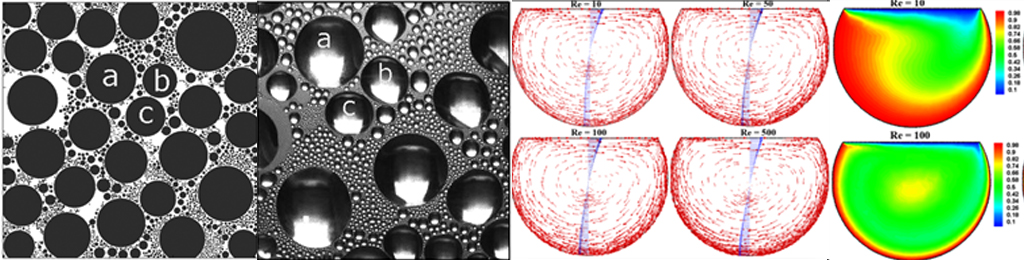
Definitions of asymptoticness; Asymptotic evaluation of integrals; Approximate solutions of algebraic equations; Eigenvalue problems; Regular perturbation of ODEs; Singular perturbation of ODEs: Poincare-Lindstedt, Boundary layer theory, WKB theory, Multiple scales method; Singular perturbation of PDEs; Engineering applications.

Topics with suggested lectures in parenthesis


I. Introduction to asymptotic approximations: Definitions; Convergence; Asymptoticness; Parametric expansions. (2)


II. Asymptotic analysis of integrals: Elementary examples; Integration by parts; Laplace’s method; Watson’s lemma; Method of stationary phase; Method of steepest descent. (8)


III. Solutions to algebraic equations: Regular and singular perturbations; Eigenvalue problems. (4)


IV. Regular perturbation problems in ODEs and PDEs: Initial value problems; Boundary perturbations. (3


V. Introduction to singular perturbation of ODEs. (1)


VI. Poincare-Lindstedt method. (2)


VII. Boundary layer theory. (5)


VIII. WKB Theory. (3)


IX. Multiple-scale analysis. (3)


X. Introduction to singular perturbation of PDEs (4)


XI. Engineering applications: At least one example each from fluid mechanics, solid mechanics, andvibrations. (6)


Textbooks, alternate sources and further readings:

  1. Bender, C. M. and S. O. Orszag, 1999. Advanced Mathematical Methods for Scientists and Engineers, Springer-Verlag: New York, USA.

  2. Hinch, E. J., 1991. Perturbation Methods, Cambridge U. Press: Cambridge, U.K.

  3. Murdock, J. A., 1987. Perturbations: Theory and Methods, SIAM.

  4. Van Dyke, M., 1975. Perturbation Methods in Fluid Mechanics. Parabolic Press.

  5. Kevorkian, J., and J. D. Cole, 1981. Perturbation Methods in Applied Mathematics. Springer

  6. Holmes, M. H. 2013. Introduction to Perturbation Methods. Springer.

Prepared by


Ishan Sharma
P Wahi
A Gupta
S L Das


ME850A

BASIC CONTROL SYSTEMS FOR MECHANICAL ENGINEERS

Credits:


3-0-0-9


Elementary review of dynamic systems. Equations of motion. Numerical solution of ODEs. Linearization. Stability. Laplace transforms and inverse Laplace transforms. Block diagrams. Transfer functions. Feedback loops. Poles and zeros. Transient responses. Stability. The Routh‐Hurwitz criterion. Nonminimum phase systems and their transient responses. Steady state responses. Root locus plots. Nyquist plots. Bode plots. Implications for transient responses. Compensators. Lead and lag compensators. PID controllers. Tuning rules. Stabilization using a stable controller: motivation and sample problems. Discrete time systems; their stability. State space. Standard form for an LTI system.
General solution. Controllability and observability. Pole placement. Connections with classical control. Introduction to optimal control. The linear quadratic regulator. Introduction to time‐delayed control. Simulations of nonlinear systems with linearization based controllers. Case studies from the literature as time permits.

Lecture-wise breakup


I. Elementary review of dynamic systems. Equations of motion. Numerical solution of ODEs. Linearization. Stability. (5 lectures)


II. Laplace transforms and inverse Laplace transforms. Block diagrams. Transfer functions. Feedback loops. Poles and zeros. Transient responses. Stability. The Routh‐Hurwitz criterion. Nonminimum phase systems and their transient responses. Steady state responses. (7 lectures)


III. Root locus plots. Nyquist plots. Bode plots. Implications for transient responses. (5 lectures)


IV. Compensators. Lead and lag compensators. PID controllers. Tuning rules. (4 lectures)


V. Stabilization using a stable controller: motivation and sample problems. (3 lectures)


VI. Discrete time systems. Stability. (2 lectures)


VII. State space. Standard form for an LTI system. General solution. Controllability and observability. Pole placement. Connections with classical control. (8 lectures)


VIII. Introduction to optimal control. The linear quadratic regulator. (2 lectures)


IX. Introduction to time‐delayed control. (2 lectures)


X. Simulations of nonlinear systems with linearization based controllers. Case studies from the literature as time permits. (4 lectures)


References:

  1. K. Ogata. Modern Control Engineering (current edition). Prentice-Hall India.

  2. G. F. Franklin, J. D. Powell, and A. Emami-Naeini. Feedback Control of Dynamic Systems (current edition). Pearson Education.

  3. F. Golnaraghi and B. C. Kuo. Automatic Control Systems. Wiley.