Admission

Admission to both B. Tech. and B. Tech. – M..Tech. dual degree programs is made once a year in July through a Joint Entrance Examination (JEE) conducted on an All India level in April/May. The minimum academic qualification for appearing in JEE is a pass in the final examination of 10+2 system or its equivalent. One should not be more than 25 years of age (30 years for SC/ST) as on 1st October after admission. Admission is offered on the basis of one's choice vis-a-vis his/her All India Rank in the JEE. Requests for application forms should be sent to the Chairman, Joint Entrance Examination, IIT-Kanpur. For the detailed procedure in this regard, write to Chairman JEE, IIT Kanpur - 208016, INDIA before the end of December preceding the year in which admission is sought.

A student can get admission in the undergraduate degree programs (B. Tech. and B. Tech. – M. Tech. dual degree) of Mechanical Engineering through the following ways:

  1. Through Joint Entrance Examination -Admissions to the Bachelor of Technology are made once a year in July through Joint Entrance Examination (JEE) conducted on an All India level by IITs. The procedures and other requirements for admission are specified in the JEE Information Brochure brought out every year.

  2. A few admissions are offered under the Cultural Exchange Fellowship Program of the Government of India, administered by Indian Council of Cultural Relations (ICCR), New Delhi. For these fellowships, the candidates are required to apply through the Indian High Commission/Embassy in their respective countries.

  3. Reservations of Seats and Admission for reserved seats - Reservation of seats for the various categories shall be as prescribed by the Board of governors. The admission process for the reserved seats is as stated below:

    • SC and ST Candidates-Reserved seats are filled on the basis of JEE qualifying norms specified for them. In case these reserved seats remain vacant, other SC and ST candidates (who appeared in JEE and satisfy certain relaxed conditions) are offered admission to the Preparatory Course of one year duration in Physics, Chemistry, Mathematics and English. On completion of the preparatory course and passing of the examination conducted by the Institute, the candidates are offered admission to the first year of B. Tech. program against the vacant reserved seats of the year of their appearance in JEE.

    • Other Backward Classes (OBC) Candidates (Not belonging to creamy layer)- Reserved seats are filled on the basis of JEE qualifying norms specified for them.

    • PD Candidates-Reserved seats are filled on the basis of JEE qualifying norms specified for them. In case these reserved seats remain vacant, other candidates in their respective categories are offered admission.

  4. Admission with Advanced Standing –Normally, admissions are made to the first year of the B. Tech. programmes. However, under exceptional circumstances, the Senate may admit a student with advanced standing (up to a maximum of four semesters) on the basis of his/her partial completion of a similar programme elsewhere.

  5. Change of Programme -The students shall normally pursue the respective B. Tech. programmes allocated to them at the time of admission. However, the Senate may permit a limited number of students to change their programme as per the approved guidelines.


UG Degree Programs

At the undergraduate level, we offer the following degrees:

  • Bachelor of Technology (B. Tech..)

  • Bachelor of Technology – Master of Technology (B. Tech. – M. Tech.)

  • Minor in Mechanical Engineering

  • Dual Major in Mechanical Engineering


UG Curriculum

The undergraduate programs have two components. The first component is the core program common to all students and is carefully planned to give the students a solid foundation of general education in Mathematics, Physics, Chemistry, Engineering Sciences, Technical Arts, and Humanities and Social Sciences. Besides these courses, students also undertake courses in Introduction to Mechanical Engineering, Mechanics of Solids, Nature and Properties of Materials, Thermodynamics and Fluid Mechanics in the first four semesters of the B.Tech program. Some of these courses are complemented by laboratory and project work. The course structure in the core curriculum provides for large lecture classes with tutorial discussion hours and laboratory sessions in smaller groups.

The second component of the undergraduate program includes professional courses and a project in the chosen branch of specialization. In the last four semesters, students undertake some core mechanical engineering courses in Design of Machine Elements, Dynamics and Vibration of Machinery, Manufacturing Technology, Heat and Mass Transfer, Energy Systems, etc. An important feature of our undergraduate program is the availability of large number of elective courses which provides the students considerable freedom to develop academically according to their individual tastes. These courses are often designed to advance the fundamental understanding, introduce new concepts and technologies pertinent to the industries and academia.


Summer Internship


Students also undergo compulsory summer training during the B.Tech program, which helps them to visit and learn from the leading Indian and foreign industries/academia.

Students Projects


In the final two semesters of the program, students undertake an advanced design project, which involves the application of modern analysis and design techniques. Often the student projects translate in a development of new product and technology, leading to patent or other type of publications.

Undergraduate Term Projects

Assessment


Assessment can vary from course to course and can include a combination of class work, tutorials, assignments, laboratory work, quizzes, project work and exams.


Complete Undergraduate Curriculum of Mechanical Engineering is available here.

 

UG Teaching Laboratories

Laboratory experience is considered to be an integral part of our undergraduate program in Mechanical Engineering program. There are courses oriented laboratories where a student does experimental work leading to a better understanding of the physical phenomena.

The department has the following undergraduate teaching laboratories:


Energy Conversion Laboratory

Experimental Stress Analysis Laboratory
Fluid Mechanics Laboratory

Heat Transfer Laboratory
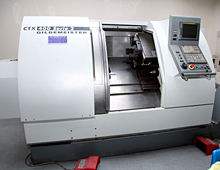
Manufacturing Science Laboratory
Material Testing Laboratory
Mechanics Laboratory
Vibration and Control Laboratory

Apart from the departmental laboratories, students have access to the following central facilities:


Central Workshop

Computer Center

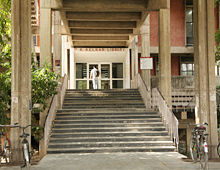
Central Library


Besides the central library, we also operate a small ME department library.