
Heat Transfer

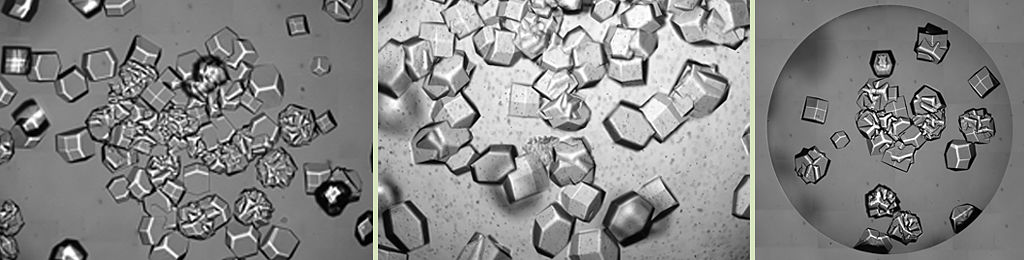
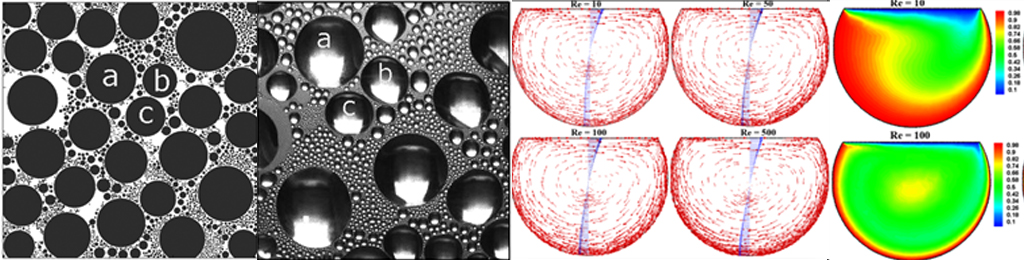
Research Areas include Liquid-Vapor Phase Change Phenomena, Heat Pipes/ pulsating Heat Pipes/ Thermosyphons, Flow and Heat Transfer in Narrow Channels, Dropwise Condensation, Energy Systems, Nanofluids.


Title of image on left

Brief description of what the image on left is about


Card 1


Lorem ipsum dolor sit

 
  1. Extended Surface Heat Transfer Unit.

  2. Emissivity Measurement Apparatus.

  3. Critical heat Flux apparatus/

  4. Calibration of Thermocouples using constant Temperature silicone Oil Bath.

  5. Natural Convection over a Pin Fin.

  6. Forced convection in a heated tube.

  7. Stefan - Boltzmann Apparatus.

  8. Pool boiling Unit.

  9. Parallel-Flow and Counter-flow heat Exchanger Unit.

  10. LAN of connected PCs.


IC Engines

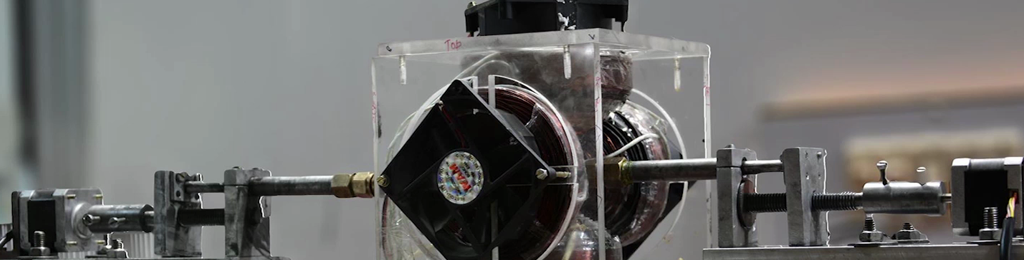
Major thrust areas of research are IC Engines, Combustion and Emissions, BiodieselDevelopment and Characterisation, Lubricating Oil Tribology, Laser DiagonisticTechniques and MicrosensorDevelopment for IC Engines.


Title of image on left

Brief description of what the image on left is about


Card 1


Lorem ipsum dolor sit

 
  1. CFR Engine (Variable Compression Ratio Engine)

  2. M&M Direct Injection (DI) Engine

  3. M&M Indirect Injection Engine

  4. Maruti Zen MPFI Engine

  5. BAJAJ Tempo Engine

  6. Several Stationary Agriculture Engines

  7. Several portable Gen Set engine

  8. Fiat Engine

  9. EDDY Current Dynamometers

  10. Laminar Flow Equipment for volumetric flow rate measurement of air

  11. Pressure transducer and charge amplifier for pressure history diagram

  12. High Precision Shaft Encoder

  13. Kinematic Viscometer

  14. Dead Weight Pressure Gauge Tester?

  15. Bomb Calorimeter

  16. Boeing Jet Engine (Demonstration Set up)?

  17. Helicopter Engine (Demonstration Set up)

  18. Horiba Raw exhaust emission analyzer for HC, CO, CO2,  O2  &   NOX  measurement

  19. Indica V2 engine test bench

  20. Mahindra DI engine test cell for gasious fuel applications

  21. Multi-channel data logger 

  22. AVL Indimeter

  23. Surface roughness profilometer

  24. Gravimetric fuel flow measurement apparatus

  25. Volumetric fuel flow measurement apparatus

  26. Several lubricating oil testing equipments such as

  • Karl - Fischer tirator

  • Contradson carbon residue tester

  • TLC Apparatus

  • Pensky - marten's flash point apparatus

  • Heating oven

  1. Several new demonstration models for engine, gear box, fuel injection system, Wankel engine etc.


Smart Materials & Structures

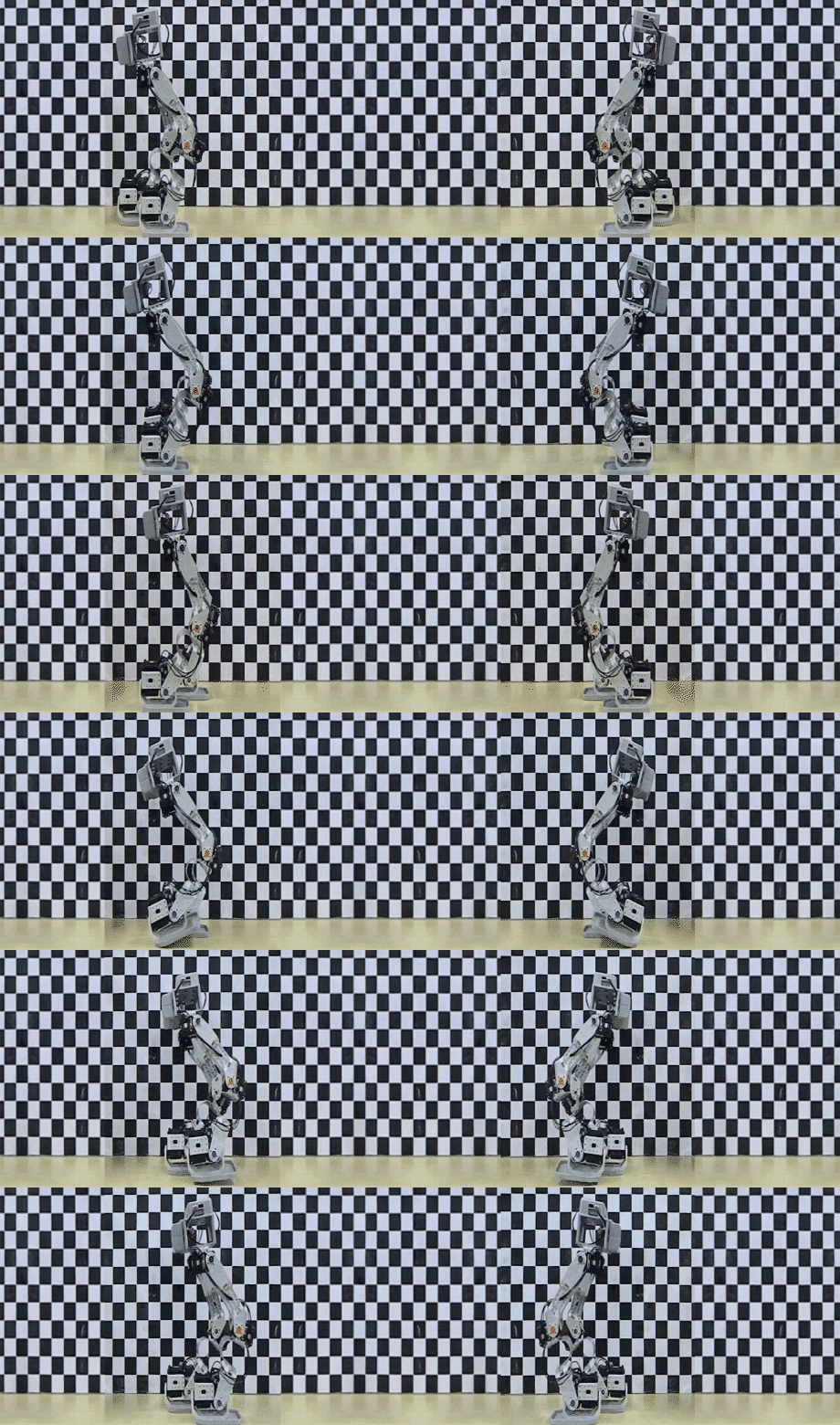
The lab has extensive research areas including Active Vibration Control, Non-contact Energy Dissipation, Energy Harvesting & Energy Scavenging Sensors & Actuators, Terfenol-D, PZT and EAP based Smart Composites, Shape Memory Alloy Based Actuators, Robotic Grasping Mechanism, Space Antenna Shape Control.


Title of image on left

Brief description of what the image on left is about


Card 1


Lorem ipsum dolor sit

 
  1. Vickers MicroHardness Indentor
    Specification: The micro-hardness derives from the field of hardness determination by means of an indenter entering the material to be tested with specific load and dwell time. After removing the indenter, the produced imprint is measured and the hardness number calculated.
    N.B. It is used measure the micro-hardness of any kind of materials. But fails to measure the same thing if length of diagonal exceeds the value of 174 micrometer even at minimum applied load of 10 gf for certain materials. The surface of the test materials should be fine polished. The dwell time should be kept between 5-10 second.

  2. Furnace
    Specification: It is used to dry the specimen up to ~ 5000 C.

  3. Oven
    Specification: Use to Cure the Specimen up to ~ 2000 C.

  4. d33 Meter
    Specification: It is used to find out the properties of piezoelectric materials.

  5. Sensor Actuator System
    Specification: Active closed loop vibration suppression system using smart piezo actuator sensors.

  6. DC Power Supply

  7. LCR-Q Meter

  8. Ultrasonic Cleaner

  9. Multisensor testing bench with LVDT, straingauge & accelerometers

  10. ATILA software for modeling smart structure

  11. FEMLAB software for modeling MEMS


Turbomachinery

Research in this lab focuses on Computational Fluid Dynamics applied to Turbomachinery: Flow analysis through blade passages, Film cooling of turbine blades, Wake-induced unsteady flows, LES for complex transitional and turbulent flows, DNS and flow instability, Development of efficient flow solvers, Turbulence modellingof compressible flows.


Title of image on left

Brief description of what the image on left is about


Card 1


Lorem ipsum dolor sit


Experimental Facilities

  1. Computerized table top demonstration model for Francis Impulse Turbine (Pelton Wheel)

  2. Centrifugal Pump

  3. Axial fan unit

  4. Hydraulic Coupling

  5. Gas Turbine Model

  6. Centrifugal compressor

  7. Kaplan Turbine?

  8. Several Educational Models related to turbo machinery

  9. Computerized Demonstration Model for Kaplan Turbine: In pipe line

The aim of the lab is to develop a fast, accurate and robust Navier-Stokes solver as a desired design tool for flow and heat transfer analysis through modern turbomachinery. Importance has equally been given on fundamental studies and engineering applications.


PCs & work stations networked with central computational facilities of the institute.For details please visit Computational turbomachinary