



Faculty
Research
Publications
Admissions
Welcome Message

The Department of Civil Engineering at IIT Kanpur is producing since 1961, high quality technical manpower needed by industry, R&D organizations, and academic institutions.
- Read More
The Department offers B. Tech., B. Tech. - M. Tech. Dual degree in Civil Engineering, and M.Tech degree in Civil Engineering with seven specializations, i.e., Environmental Engineering, Geoinformatics, Geotechnical Engineering, Hydraulics ...
-Prof. Priyanka Ghosh
Head, Department of Civil Engineering
- Regular PG admissions for 2026-27-I New
- Spot Admissions for CFTI students New
- e-Masters Program
- Prof. S. N. Tripathi has been awarded the Alexander von Humboldt Medal 2025 of the European Geophysical Union
- Prof. Salil Goel has been selected for the INAE Young Associates 2024
- Prof. S. N. Tripathi has been selected for the Sir M. Visvesvaraya Chair
- Prof. Priyanka Ghosh has been selected for the Arjun Dev Joneja Faculty Chair
- Prof. K. V. Harish has been promoted to Associate Professor position.
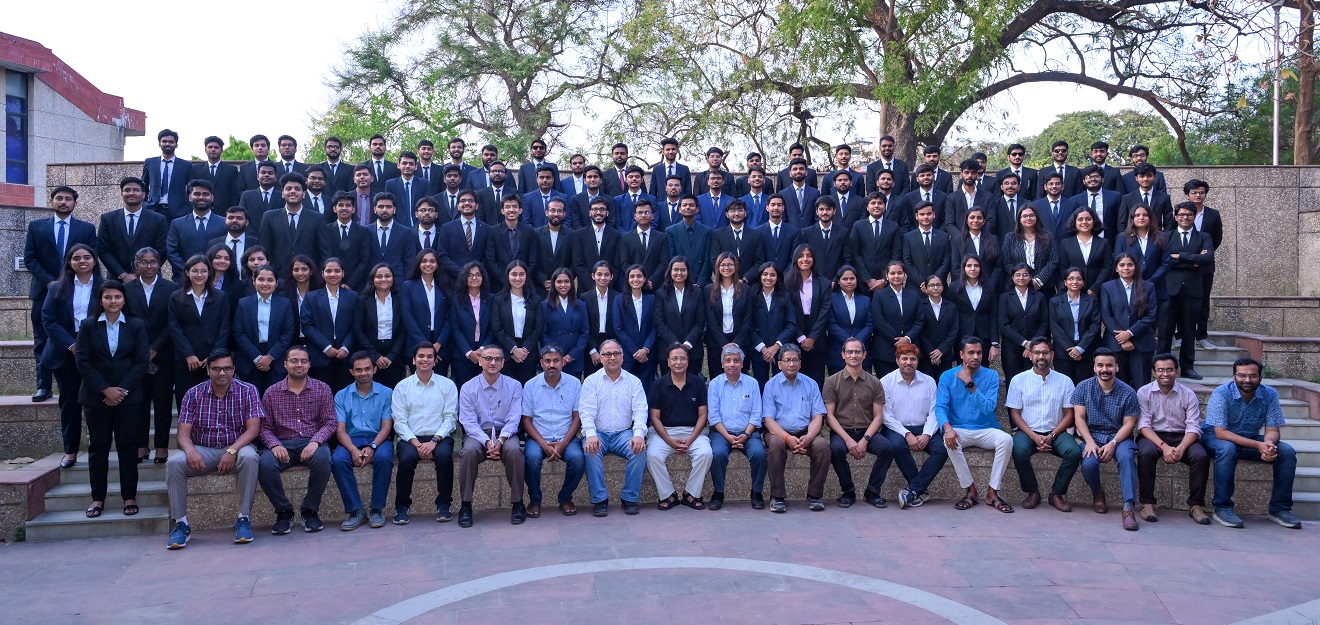
- Congratulations to the Current Graduating Batch of 2024
- Prof. Gourabananda Pahar has been selected for the Sir M. Visvesvaraya Research Fellowship
- PG admissions July 2024 now open
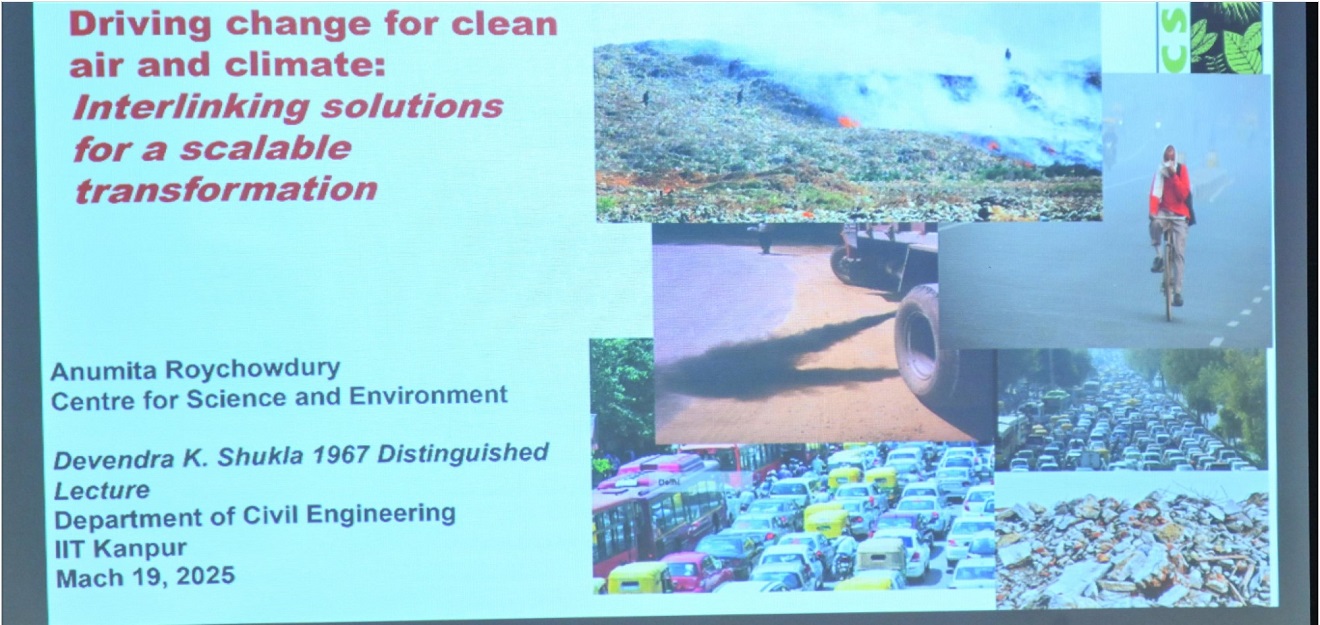
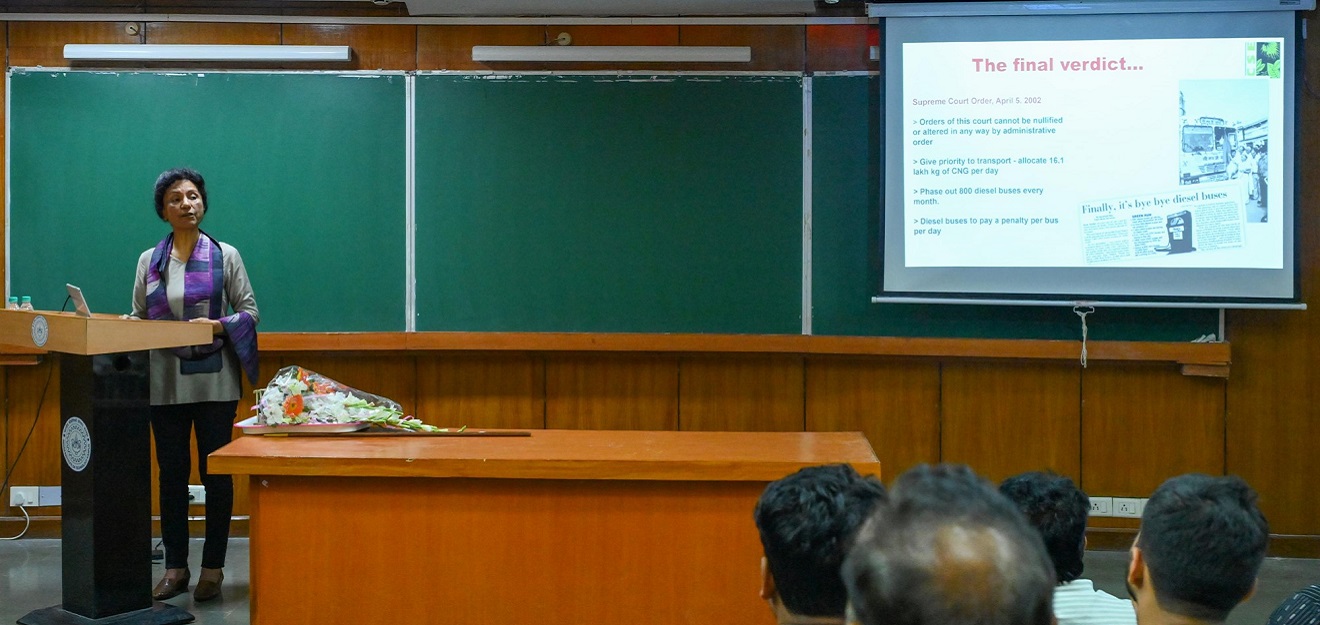
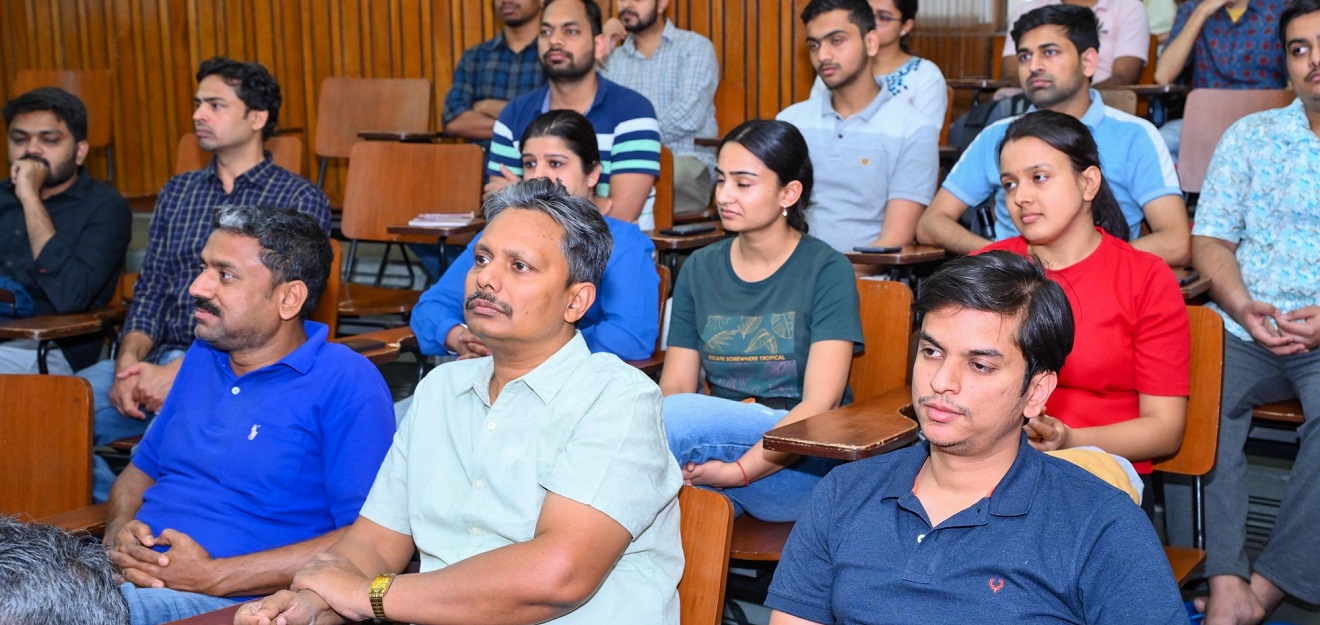
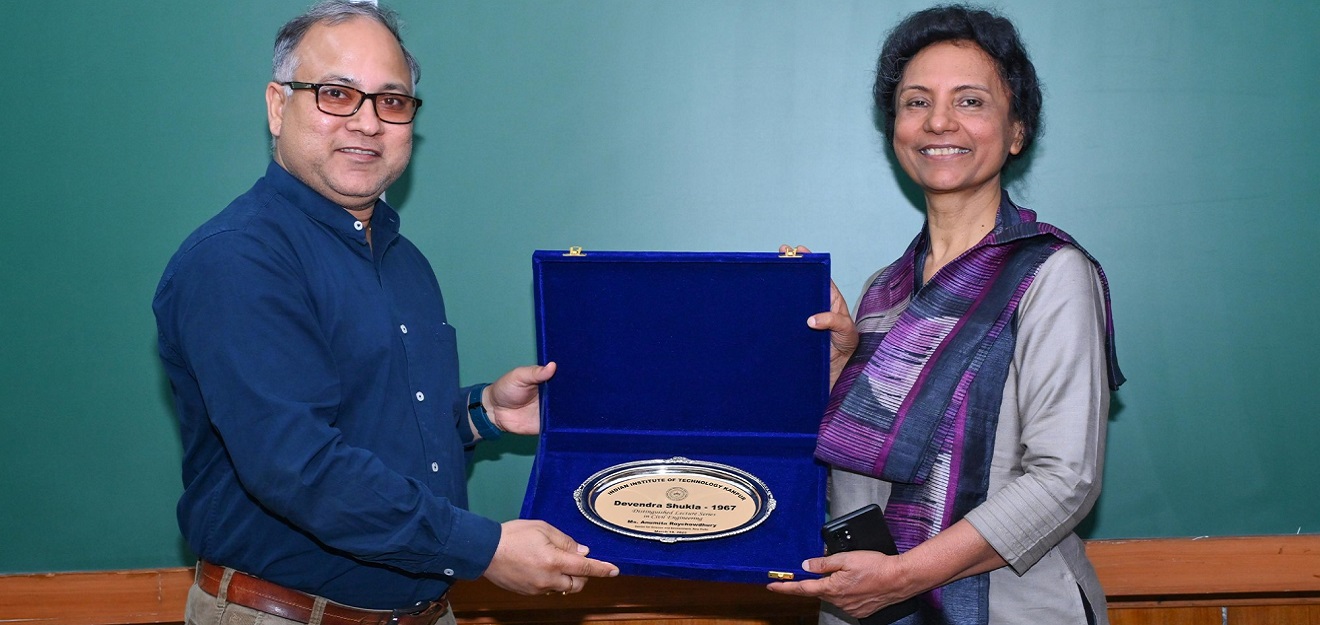
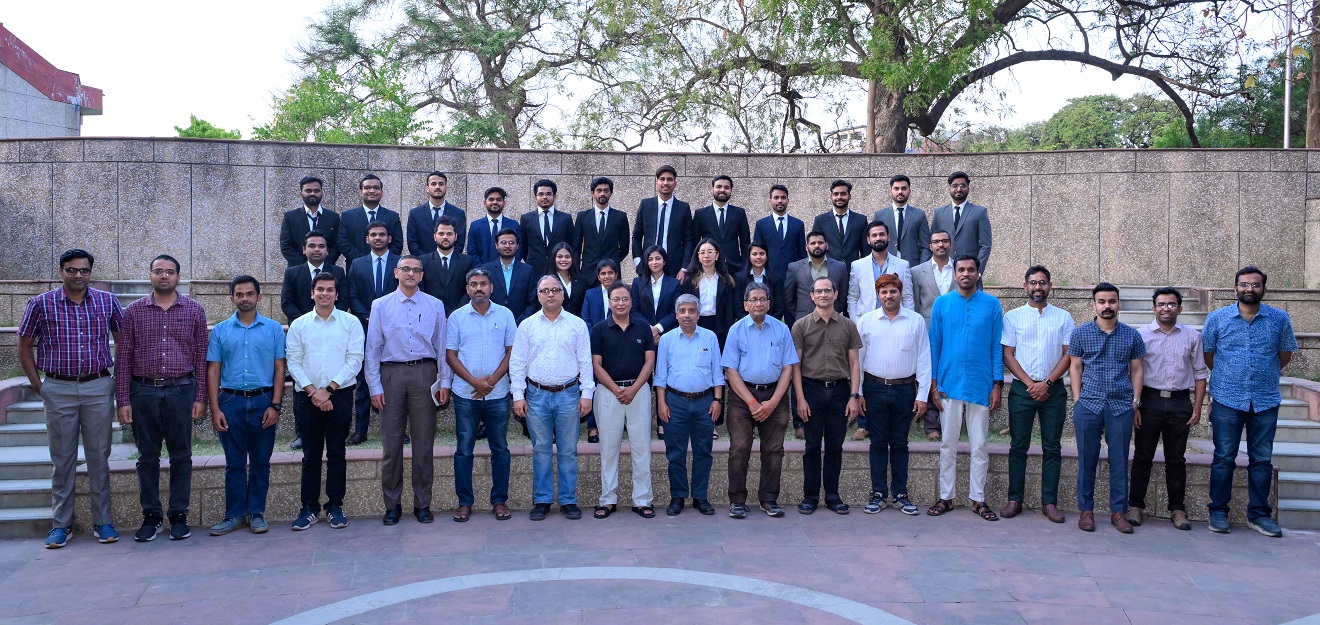
- Devendra Shukla Distinguished Lecture Series Seminar was organized on 10th April, 2024 with Mr Krishnamurthy Subramanian, Executive Vice Chairman of Afcons Infrastructure Limited as the Distinguished Speaker
- Sankalan, a national level CE Conclave, organized by the Society of Civil Engineers IIT Kanpur, will be held from 27-28th January, 2024
- Prof. S. N. Tripathi has been awarded the prestigious Infosys Prize 2023 in ENGINEERING AND COMPUTER SCIENCE by Infosys Science Foundation.
- Prof. Priyanka Ghosh has been invited to join the Editorial Board of the International Journal of Geomechanics, ASCE, as an Associate Editor.
- IITK CE alumni (M. Tech/PhD student) Prof. Dipti Ranjan Sahoo has been awarded the prestigious Shanti Swarup Bhatnagar Prize 2022
- Applications invited for a Masters by Research (MSR) position in the area of Environmental Engineering in Walk-In mode
- Ms Akanksha, PhD student of Prof. S.N. Tripathi, has got the second position in the poster competition held in ICAS 2023, Bangalore
- Seminar on Offshore Geomechanics by Dr. Anamitra Roy, University of Melbourne, 30/08/2023
- Prof. Abhas Singh and Prof. Sudib K Mishra have been awarded Excellence-in-Teaching Award 2023
- Dr. Suparno Mukhopadhyay has been selected as the prestigious Professor R.N. Biswas Young Faculty Fellowship in Teaching Excellence.
- e-Masters Program
- Abhilasha Tripathi, PhD student of Prof. P. Bose has received Science innovation award at the International Conference on Agriculture and Rural development, held at Bhubaneswar.
- **Surya Sujathan (PhD student) and Prof. Abhas Singh published an article titled, "Investigation of Potential Drivers of Elevated Uranium Prevalence in Indian Groundwaters with a Unified Speciation Model" in the top journal Environmental Science and Technology **
- Patent Granted to Dr. Tarun Gupta and Mr. Anand Kumar (student) || Patent No.- 418343 || Title: MULTIPLE SLIT NOZZLE-BASED HIGH VOLUME PM2.5 IMPACTOR ASSEMBLY || IPA No.- 2088/DEL/2014
- New technology for retrofitting non-earthquake-resistant buildings can prevent major damage in old settlements
- STRENGTH MAGAZINE FOR THE YEAR 2022
- Dr. K.K. Bajpai, Scientific Officer, has been promoted to the post of Chief Scientific Officer at IIT Kanpur in the department of Civil Engineering.
- M.Tech student Anshul Rawat, Prof. Mukesh Sharma and Prof. Anubha Goyal granted a patent for developing technology for growing fresh veggies in high-altitude areas.
- Congratulation to all the Awardees (Batch 2022)
- Congratulations to Current Graduating Batch 2022.
- MSR student Tavishi Mishra has received the best oral presentation award at the ICESE 2022 conference organized at IIT Bombay.
- Prof. Tarun Gupta, current occupant of Prof. N.C. Nigam Memorial Chair
- B. Tech student Shivansh Tripathi has been awarded Prof. ASR Sai Memorial Medal and General Proficiency Medal at the 54th Convocation – 2021.
- M. Tech student Patel Ajay Kumar Dahyalal has been awarded Prof. ASR Sai Gold Medal at 54th Convocation – 2021.
- PhD student Gyanesh Kumar Singh has been awarded Outstanding Ph.D. Thesis Award at the 54th Convocation – 2021.
- PhD student Behera Prasanna Kumar has been awarded Outstanding Ph.D. Thesis Award at the 54th Convocation - 2021.
- Prof. Gaurav Tiwari's publication has been awarded IGS-Roorkee Chapter YGE Award 2021(Best Paper published in the area of Rock Mechanics).
- Prof. Durgesh C. Rai has been awarded the 2021 John B. Scalzi Research Award during The Masonry Society’s Annual Meeting in Nashville, Tennessee
- Prof. Sachchida N. Tripathi has been invited to join the Advisory Board of Journal, Environmental Science: Atmospheres, published by the Royal Society of Chemistry.
- Prof. Mukesh Sharma has been appointed as an honorary non-remunerative member of the WHO Global Air Pollution and Health - Technical Advisory Group (GAPH-TAG).
- PhD student Mr Akshat Verma received a certificate of merit from American Chemical Society (ACS) Fall 2020 virtual meeting.
- Prof. Sachchidanand Tripathi has received the prestigious J.C. Bose Fellowship from SERB, DST.
- New programme DIIT program in three broad areas: (i) Geodesy (ii) Navigation and Mapping and (iii) Remote Sensing and GIS.
- Prof. Sachchidanand Tripathi has been elected as the Fellow of Indian National Science Academy.
- Prof. Partha Chakroborty has been chosen as the recipient of the Excellence in Teaching Award 2020.
- Prof. Rajesh Srivastava has been chosen as the recipient of the Excellence in Teaching Award 2020.
- Prof. Sachchida Tripathi has been appointed as a member of Editorial Advisory Board of Environmental Science and Technology Letters.
- Dr. Pranamesh Chakraborty is serving as one of the guest editors in the Special Issue "Deep Learning in Transportation" in the BDAT journal.
- Mr. Vishwajeet Khan (Ph.D. Student) has been awarded IGS-Bangalore Chapter Young Geotechnical Engineer Award for the year 2019 (Best Paper published in the area of Environmental Geotechnology).
- Dr. Gaurav Tiwari has been awarded IGS-Prof. Leonard’s Annual Award for the year 2018 for his Ph.D Thesis.
- PG admission notice 2019-20, 2nd Semester
- Prof. B. Nagarajan has been chosen as the recipient of the Excellence in Teaching Award 2019.
- Prof. P. Bose has been chosen as the recipient of the Excellence in Teaching Award 2019.
- Prof. Nihar Ranjan Patra has been invited as a member of Editorial Board of Indian Geotechnical Journal (2019).
- Prof. Priyanka Ghosh has been invited as a member of Editorial Board of Indian Geotechnical Journal (2019)
- Mr. Sunil Nishad received Merit Award - 2018 for his relentless service to the users of the Hydraulics Laboratory.
- Dr. Salil Goel has been selected for the Young Geospatial Scientist 2018 award and the Rachapudi Kamakshi Memorial Gold Medal.
- PG admission notice 2018-19, 2nd Semester and 2019-20, 1st semester.
- STudent Enrichment Program (STEP) – An initiative to facilitate students’ travel
- Mr. Saifi Izhar (PhD student) has been awarded with Outstanding Poster Presentation Award at the international conference AJM 2018 Xian.
- Dr. Tarun Gupta, has been selected for the INAE Innovator Entrepreneur Award 2018.
- Presentation: Welcome to New PG students 2018-19.
- Prof. SachchidaNand Tripathi awarded 2018 UP Ratna Award, Government of Uttar Pradesh.
- Prof. Salil Goel Awarded Best Paper Award for the paper titled " An Indoor Outdoor Cooperative Localization Framework for UAVs" at International Global Navigation Satellite Systems (IGNSS) Conference 2018 held in Sydney, Australia from February 7-9, 2018.
- Prof. Priyanka Ghosh has become the member of Editorial Review Board in International Journal of Geotechnical Earthquake Engineering (2018).
- Dr. Sudib Kumar Mishra (CE), has been selected for the INAE Young Engineer Award of 2016
- Prof. Sachchida Nand Tripathi (Civil Engg.) awarded Shanti Swarup Bhatnagar Prize in Earth, Atmosphere, Ocean & Planetary Sciences.
- Visit PG admission section to see the list of selected M.Tech. and M.S.R. candidates in the last round of admissions.
- Dr. S.N. Tripathi is fundedresearch project entitled "Building a Novel System for Soot: Measurement, Toxicity Assessment and Source Identification" funded by MHRD, India.
- Dr. Bharat Lohani delivered lecture talk entitled "LiDAR Remote Sensing and Its Application Potential" in IIRS User Interaction Meet 2014, Dehradun on February 20, 2014.
- Dr. D.C. Rai delivered lecture talk entitled "Masonry Research at IIT Kanpur" at IIT Guwahati, Guwahati on March 21, 2014.
- Dr. S.N. Tripathi delivered lecture talk entitled "Observations and Monitoring Needs" and "Scientific Basis for Knowledge to Action" in Policy Conclave on Reducing Vehicular Emissions to Improve Air Quality, New Delhi on February 4, 2014.
- Dr. S.N. Tripathi delivered lecture talk entitled "Atmospheric Aerosol Measurements: India Perspective" in National Space Science Symposium, Dibrugargh on February 1, 2014
- Dr. Tarun Gupta delivered lecture talk entitled "Measurement Instrumentation for Radiatively Active Constituents"in 1st Climate Science and Policy Workshop, Mumbai on March 7, 2014.
- Ganesh, R., & Sahoo, J. P. (2023). Kinematic horizontal slice method for uplift capacity analysis of plate anchors in nonhomogeneous soils with a nonlinear failure criterion. In Computers and Geotechnics (Vol. 159, p. 105407). Elsevier BV. https://doi.org/10.1016/j.compgeo.2023.105407
- Parik, P., & Patra, N. R. (2023). Applicability of Clay Soil Stabilized with Red Mud, Bioenzyme, and Red Mud–Bioenzyme as a Subgrade Material in Pavement. In Journal of Hazardous, Toxic, and Radioactive Waste (Vol. 27, Issue 2). American Society of Civil Engineers (ASCE). https://doi.org/10.1061/jhtrbp.hzeng-1182
- Cai, X., Leng, Z., Kumar Ashish, P., Yang, J., & Gong, M. (2023). Quantitative analysis of the role of temperature in the mesoscale damage process of semi flexible pavement composite through finite element method. In Theoretical and Applied Fracture Mechanics (Vol. 124, p. 103742). Elsevier BV. https://doi.org/10.1016/j.tafmec.2022.103742
- Majumder, R., Chakraborty, S., & Mishra, S. K. (2023). Reliability analysis and design of randomly imperfect thin cylindrical shells against post-critical drops. In Thin-Walled Structures (Vol. 185, p. 110576). Elsevier BV. https://doi.org/10.1016/j.tws.2023.110576
- Mufti, S., & Das, A. (2023). Multiscale pore network construction for two phase flow simulations in granular soils. In Advances in Water Resources (Vol. 173, p. 104386). Elsevier BV. https://doi.org/10.1016/j.advwatres.2023.104386
- Huang, T., Chakraborty, P., & Sharma, A. (2023). Deep convolutional generative adversarial networks for traffic data imputation encoding time series as images. In International Journal of Transportation Science and Technology (Vol. 12, Issue 1, pp. 1–18). Elsevier BV. https://doi.org/10.1016/j.ijtst.2021.10.007
- Gupta, S., & Nair, S. (2023). A review of the emerging role of UAVs in construction site safety monitoring. In Materials Today: Proceedings. Elsevier BV. https://doi.org/10.1016/j.matpr.2023.03.135
- Singh, G. K., Qadri, A. M., Paul, D., Gupta, T., Mukherjee, S., & Chatterjee, A. (2023). Investigation of sources and atmospheric transformation of carbonaceous aerosols from Shyamnagar, eastern Indo-Gangetic Plains: Insights from δ13C and carbon fractions. In Chemosphere (Vol. 326, p. 138422). Elsevier BV. https://doi.org/10.1016/j.chemosphere.2023.138422
- Xie, S.-C., Kolay, C., Feng, D.-C., & Ricles, J. M. (2023). Nonlinear static analysis of extreme structural behavior: Overcoming convergence issues via an unconditionally stable explicit dynamic approach. In Structures (Vol. 49, pp. 58–69). Elsevier BV. https://doi.org/10.1016/j.istruc.2023.01.086
- Sahu, C. K., & Neufeld, J. A. (2023). Experimental insights into gravity-driven flows and mixing in layered porous media. In Journal of Fluid Mechanics (Vol. 956). Cambridge University Press (CUP). https://doi.org/10.1017/jfm.2022.1082
- Malik, R., Singh, G., Dikshit, O., & Yamaguchi, Y. (2023). General Five-Component Scattering Power Decomposition with Unitary Transformation (G5U) of Coherency Matrix. In Remote Sensing (Vol. 15, Issue 5, p. 1332). MDPI AG. https://doi.org/10.3390/rs15051332
- Sujathan, S., & Singh, A. (2023). Investigation of Potential Drivers of Elevated Uranium Prevalence in Indian Groundwaters with a Unified Speciation Model. In Environmental Science & Technology (Vol. 57, Issue 5, pp. 1970–1986). American Chemical Society (ACS). https://doi.org/10.1021/acs.est.2c08524
- Barbhaya, D., Tran, J., Khetan, A., Hejjaji, V., Jain, S., Chan, C., & Goel, A. (2023). Rationale and Design of a Study to Test the Effect of Personal Protective Aids on Hypertension and Diabetes in People Living With High Levels of Air Pollution—Study Protocol. In Heart, Lung and Circulation (Vol. 32, Issue 1, pp. 124–130). Elsevier BV. https://doi.org/10.1016/j.hlc.2022.11.001
- Kumar, S., Tiwari, G., & Das, A. (2023). Experimental assessment of dynamic loading response of grouted non-persistent jointed rock. In IOP Conference Series: Earth and Environmental Science (Vol. 1124, Issue 1, p. 012055). IOP Publishing. https://doi.org/10.1088/1755-1315/1124/1/012055
- Bagchi, A., & Raychowdhury, P. (2023). Sensitivity Study of the Pressure-Dependent Soil Model Based on the Abutment-Backfill Pushover Behaviour. In Lecture Notes in Civil Engineering (pp. 129–139). Springer Nature Singapore. https://doi.org/10.1007/978-981-19-6998-0_13
- Das, G., & Ghosh, P. (2023). Effect of Footing Size on the Dynamic Behaviour of Cohesionless Soil-Foundation System. In Lecture Notes in Civil Engineering (pp. 505–513). Springer Nature Singapore. https://doi.org/10.1007/978-981-19-6998-0_43
- Pandey, B. K., Rajesh, S., & Chandra, S. (2022). A State-of-the-Art Review on Electro-osmotic Treatment for Stabilization of Soft Soils. In Lecture Notes in Civil Engineering (pp. 225–234). Springer Nature Singapore. https://doi.org/10.1007/978-981-19-6727-6_20
- Latha, L., Ray-Chaudhuri, S., Mukhopadhyay, S., & Bajpai, K. K. (2022). Seismic Performance Enhancement of Unreinforced Brick Masonry Buildings by Retrofitting with Reinforced Concrete Bands: Full Scale Experiments. In Journal of Structural Engineering (Vol. 148, Issue 12). American Society of Civil Engineers (ASCE). https://doi.org/10.1061/(asce)st.1943-541x.0003460
- Latha, L., Ray-Chaudhuri, S., Mukhopadhyay, S., & Bajpai, K. K. (2022). Seismic Performance Enhancement of Unreinforced Brick Masonry Buildings by Retrofitting with Reinforced Concrete Bands: Full Scale Experiments. In Journal of Structural Engineering (Vol. 148, Issue 12). American Society of Civil Engineers (ASCE). https://doi.org/10.1061/(asce)st.1943-541x.0003460
- Gurjar, S. K., Shrivastava, S., Suryavanshi, S., & Tare, V. (2022). Assessment of the natural flow regime and its variability in a tributary of Ganga River: Impact of land use and land cover change. In Environmental Development (Vol. 44, p. 100756). Elsevier BV. https://doi.org/10.1016/j.envdev.2022.100756
- Chaudhary, A., & Akhtar, A. (2022). Template for Evaluating Cradle-to-Site Environmental Life Cycle Impacts of Buildings in India. In ACS Environmental Au (Vol. 3, Issue 2, pp. 94–104). American Chemical Society (ACS). https://doi.org/10.1021/acsenvironau.2c00035
- Chhabra, J. P. S., & Rai, D. C. (2022). Experimental testing of aluminum‐core buckling restrained knee braced Truss moment frames for earthquake resistance. In Earthquake Engineering & Structural Dynamics (Vol. 52, Issue 3, pp. 660–680). Wiley. https://doi.org/10.1002/eqe.3780
- Prakasam, C., Aravinth, R., Kanwar, V. S., & Nagarajan, B. (2022). Soil erosion risk assessment and its impact on landslides – A study on parts of Himalayan Region, India. In INTERNATIONAL CONFERENCE ON ADVANCES IN MULTI-DISCIPLINARY SCIENCES AND ENGINEERING RESEARCH: ICAMSER-2021. INTERNATIONAL CONFERENCE ON ADVANCES IN MULTI-DISCIPLINARY SCIENCES AND ENGINEERING RESEARCH: ICAMSER-2021. AIP Publishing. https://doi.org/10.1063/5.0095256
- Balakrishna Madayala, A., Jain, A., & Lohani, B. (2022). Development of a Physics-Guided Neural Network Model for Effective Urban Flood Management. In Journal of Hydrologic Engineering (Vol. 27, Issue 9). American Society of Civil Engineers (ASCE). https://doi.org/10.1061/(asce)he.1943-5584.0002196
- Mahata, B. K., Chang, S., & Bose, P. (2022). Bio-Inspired phosphate adsorption by Copper-Decorated weak base anion exchanger. In Separation and Purification Technology (Vol. 296, p. 121339). Elsevier BV. https://doi.org/10.1016/j.seppur.2022.121339
- Khan, S., Ashish, P. K., Kannelli, V., Hossain, K., Nagabhushana, M. N., & Tiwari, D. (2022). Potential application of over-burnt brick and fly ash for sustainable inverted pavement structure. In Construction and Building Materials (Vol. 345, p. 128298). Elsevier BV. https://doi.org/10.1016/j.conbuildmat.2022.128298
- Vishwakarma, B. D., Ramsankaran, R., Azam, Mohd. F., Bolch, T., Mandal, A., Srivastava, S., Kumar, P., Sahu, R., Navinkumar, P. J., Tanniru, S. R., Javed, A., Soheb, M., Dimri, A. P., Yadav, M., Devaraju, B., Chinnasamy, P., Reddy, M. J., Murugesan, G. P., Arora, M., … Bamber, J. (2022). Challenges in Understanding the Variability of the Cryosphere in the Himalaya and Its Impact on Regional Water Resources. In Frontiers in Water (Vol. 4). Frontiers Media SA. https://doi.org/10.3389/frwa.2022.909246
- Gupta, B. K. (2022). Dynamic pile-head stiffness of laterally loaded end-bearing pile in linear viscoelastic soil − A comparative study. In Computers and Geotechnics (Vol. 145, p. 104654). Elsevier BV. https://doi.org/10.1016/j.compgeo.2022.104654
- Chauhan, P., Kanagaraj, V., & Asaithambi, G. (2022). Understanding the mechanism of lane changing process and dynamics using microscopic traffic data. In Physica A: Statistical Mechanics and its Applications (Vol. 593, p. 126981). Elsevier BV. https://doi.org/10.1016/j.physa.2022.126981
- Bhat, N. U. H., & Pahar, G. (2022). Depth-averaged coupling of submerged granular deformation with fluid flow: An augmented HLL scheme. In Journal of Hydrology (Vol. 606, p. 127364). Elsevier BV. https://doi.org/10.1016/j.jhydrol.2021.127364
- Soni, P., Tripathi, S., & Srivastava, R. (2022). Impact of renewed solar dimming on streamflow generation in monsoon dominated tropical river basins. In Journal of Hydro-environment Research (Vol. 41, pp. 12–24). Elsevier BV. https://doi.org/10.1016/j.jher.2022.02.002
- Soni, P., Tripathi, S., & Srivastava, R. (2022). Impact of renewed solar dimming on streamflow generation in monsoon dominated tropical river basins. In Journal of Hydro-environment Research (Vol. 41, pp. 12–24). Elsevier BV. https://doi.org/10.1016/j.jher.2022.02.002
- Vikram, D., Mittal, S., & Chakroborty, P. (2022). Stabilized finite element computations with a two-dimensional continuum model for disorderly traffic flow. In Computers & Fluids (Vol. 232, p. 105205). Elsevier BV. https://doi.org/10.1016/j.compfluid.2021.105205
Computational Mechanics and Structural Analysis
Nonlinear Mechanics, Stability of Structures, Mechanics of Composite. Multiscale, Multiphysics modeling in Mechanics and Materials, Finite element/Meshless methods, Lattice-Boltzmann (LB) simulations of solids.
Earthquake Engineering
Seismic hazard analysis, Modeling of sources, occurrence and attenuation, Ground motion simulation, Study of nonstationary characteristics, Strong motion characterization, Near-field effects.
Seismic Analysis and Design
Structural response, Stochastic and nonlinear dynamic analysis, Seismic soil-structure-interaction, Dynamic stability, Effects of stiffness and strength irregularities, Damage models, Seismic risk assessment, Seismic protection, Base isolation, Energy dissipating devices, Performance-based design, Seismic performance evaluation of structural and nonstructural components and systems.
Risk and Reliability
Stochastic, robust optimization of structures, Uncertainty, Reliability of structures, Structural damage assessment, Hazard mitigation, Cost-benefit analysis. Time dependent reliability, Enhancement of sustainability of infrastructure systems under extreme events.
Structural Design Design of steel, masonry and concrete structures, Pre-stressed and post-tensioned concrete, structural steel, other materials, Rehabilitation of aging and damaged structures.
Structural Materials
Behavior of concrete and cementatious materials and plastics, High-performance steels, concrete, fiber reinforced plastics for structural frames, Smart materials, Durability and deterioration of concrete structures.
Concrete and cement based materials
Design and development of Special Concretes high performance concrete, high strength concrete, high density concrete, fiber reinforced concrete, light weight aggregate concrete and others. Influence of mineral and chemical admixtures in concrete.
Durability of cement based materials – Microstructure of cement based materials – Identification and detection of hydrated compounds using specialized techniques including FTIR, TGA, XRD, XRF, NMR, SEM, Optical microscopy, Calorimetry and several others. Relationship between microstructural parameters such as porosity, permeability, pore structure of concrete with associated properties.
Design and Experimentation
Static and dynamic testing of structural components/subassemblages, Pseudo-dynamic tests, Shake table test, Components and system models, Large-scale Structural testing, Nondestructive evaluation, Validation of simulation models, Retrofit measures for existing structures, Exploration of new materials and new structural systems.
Sensing and Monitoring
Experimental modal analysis, Structural health monitoring, Free/force/ambient vibration studies, Condition assessment, Distributed sensing, Real-time monitoring.
Courses Offered
Climate Change
Effect of climate change on surface and subsurface flows, Exploring linkages between global climate and regional hydrology, Engaging uncertainties in hydro-climatic modelling, and Eco-hydrologic modelling.
Groundwater
Identification of pollution sources in groundwater, Transport of reactive solutes in groundwater, and Metal extraction through heap-leaching.
Experimental Hydraulics and Sediment Transport
Hydraulic model study of bridge and associated river training works, Hydraulics of compound channel junctions, Flow past a dyke in meandering channel, Deposition of fine sediments, Detection of blockage in a pipe, Application of ERP in water sector, Scaling issues and transferability of laboratory models to field conditions, Sediment transport mechanisms, and Scour studies at bridge piers and abutments under free-surface and pressure-flow conditions.
Hydrology and water resources systems
Hydro-climatology, water resources systems analysis, hydrologic extremes, coupled human-natural systems, hydrologic modelling
Flow modelling in porous media
Flow and mixing in porous media, buoyancy and density driven flows, dye-attenuation technique, carbon sequestration, groundwater contamination, geothermal energy recovery
Subsurface flow modelling
Flow and transport in porous media, Bioremediation of Toxic Organics in Natural Systems, Fate and Transport of Pesticides and Heavy Metals in the Natural Systems, Metal uptake in plants, Natural Isotopes
Courses Offered
Foundation Engineering
Optimal design and analysis of foundation systems, Analysis of underground openings, Pile foundations, Soil arching, Retaining walls and earth pressure theory, Pullout resistance of anchors, Soil-structure interaction, Interference of multiple footings, Railway geotechnology
Geotechnical Earthquake Engineering
Experimental and analytical evaluation of liquefaction potential, Earthquake-induced slope failure, Seismic soil-structure interaction, Effect of soil nonlinearity on structural response, Spatial and probabilistic liquefaction analysis, Ground response analysis, Dynamic behavior of shallow footings and piles, Evaluation of dynamic soil properties
Ground Improvement Techniques
Analysis of reinforced earth, Geosynthetic- reinforced granular fill, Beams on reinforced granular beds, Geosynthetic-reinforced soil retaining walls, Reinforced embankments, Nailed slopes, Geogrid-reinforced soil barriers of landfill covers, Granular piles and stone columns
Other Geotechnical Research Areas
Rock mechanics, Geo-environmental engineering, Numerical and constitutive modeling for granular materials
Courses Offered
Geodetic GPS surveys
GPS data capture methodologies and network establishment, GPS data processing methodologies, Errors and adjustment, Seismic and other applications.
Satellite data processing and application
Optical, microwave, and high resolution image segmentation, Image classification, Radiometric and geometric distortion modeling, Software development.
Laser scanning technology
Airborne and terrestrial data capture methodologies, Flight planning, Errors in LiDAR data, 3D laser imaging and LCS measurement, Development of LiDAR simulators, LiDAR data visualization methods and software.
Laser scanning applications
Propagation modelling using high resolution LiDAR data (sound, sun rays, GPS signal), As built mapping using terrestrial laser scanning of complex structures including heritage.
GIS applications
Innovative webGIS applications in archaeology, tourism, municipalities, land records.
Courses Offered
Water and Wastewater Treatment
Physico-chemical and Advanced oxidation processes for water and wastewater treatment, Anaerobic Wastewater Treatment, Abiotic remediation of groundwater resources, Bioremediation, Microbial Ecology, Fate and Transport of Heavy Metals in the subsurface.
Aerosol Properties and Regional Climate Change
Effect of aerosol properties on climate change, measurement of aerosol optical, physical, chemical and cloud condensation nuclei properties over the Indo-Gangetic basin; modeling their optical properties and effect on Earth radiation budget, Exploring linkages between global and regional climate changes.
Experimental
Chamber studies on emission of fine particle from anthropogenic sources and behavior in environment, Fog chamber studies to understand the role of ambient particles on fog life cycle, simulations of aerosol charging and electrical conductivities in planetary atmospheres.
Instrument design
Development of instruments for aerosol measurement, engineering control of particles in ambient and indoor settings. PM1 and PM2.5 samplers designed, developed and evaluated at IITK.
Modeling and simulation of environmental systems
Air quality modeling and management, Fate processes of organic pollutants and parameter estimation, physico-chemical characterization of atmospheric pollutants, size segregated distribution of pollutants on suspended particles, source apportionment of pollutants, impact of agricultural activities on air quality, nutrient uptake by plants, soft computing techniques for air quality modeling and management, Knowledge extraction from satellite data, personal exposure assessment and health effects of inhaled particles.
Courses Offered
Featured Faculty


Featured Alumni


