



Faculty
Research
Publications
Admissions
Welcome Message

The Department of Civil Engineering at IIT Kanpur is producing since 1961, high quality technical manpower needed by industry, R&D organizations, and academic institutions.
- Read More
The Department offers B. Tech., B. Tech. - M. Tech. Dual degree in Civil Engineering, and M.Tech degree in Civil Engineering with seven specializations, i.e., Environmental Engineering, Geoinformatics, Geotechnical Engineering, Hydraulics ...
-Prof. Priyanka Ghosh
Head, Department of Civil Engineering
- Regular PG admissions for 2026-27-I New
- Spot Admissions for CFTI students New
- e-Masters Program
- Prof. S. N. Tripathi has been awarded the Alexander von Humboldt Medal 2025 of the European Geophysical Union
- Prof. Salil Goel has been selected for the INAE Young Associates 2024
- Prof. S. N. Tripathi has been selected for the Sir M. Visvesvaraya Chair
- Prof. Priyanka Ghosh has been selected for the Arjun Dev Joneja Faculty Chair
- Prof. K. V. Harish has been promoted to Associate Professor position.
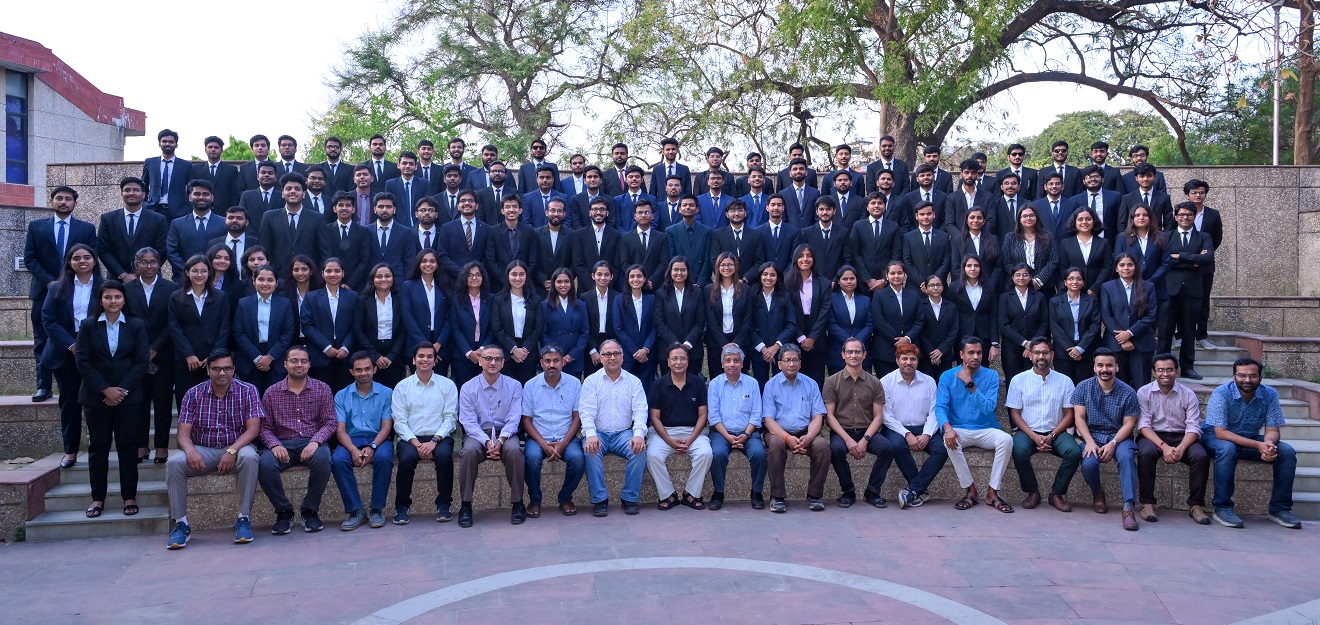
- Congratulations to the Current Graduating Batch of 2024
- Prof. Gourabananda Pahar has been selected for the Sir M. Visvesvaraya Research Fellowship
- PG admissions July 2024 now open
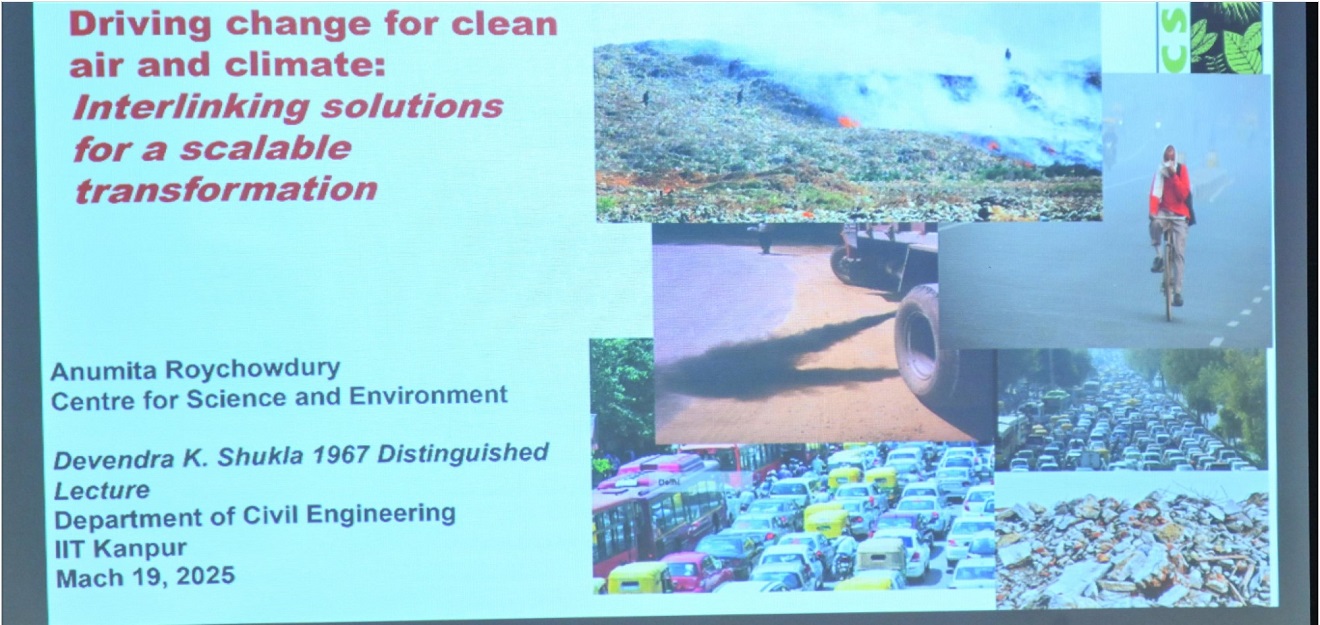
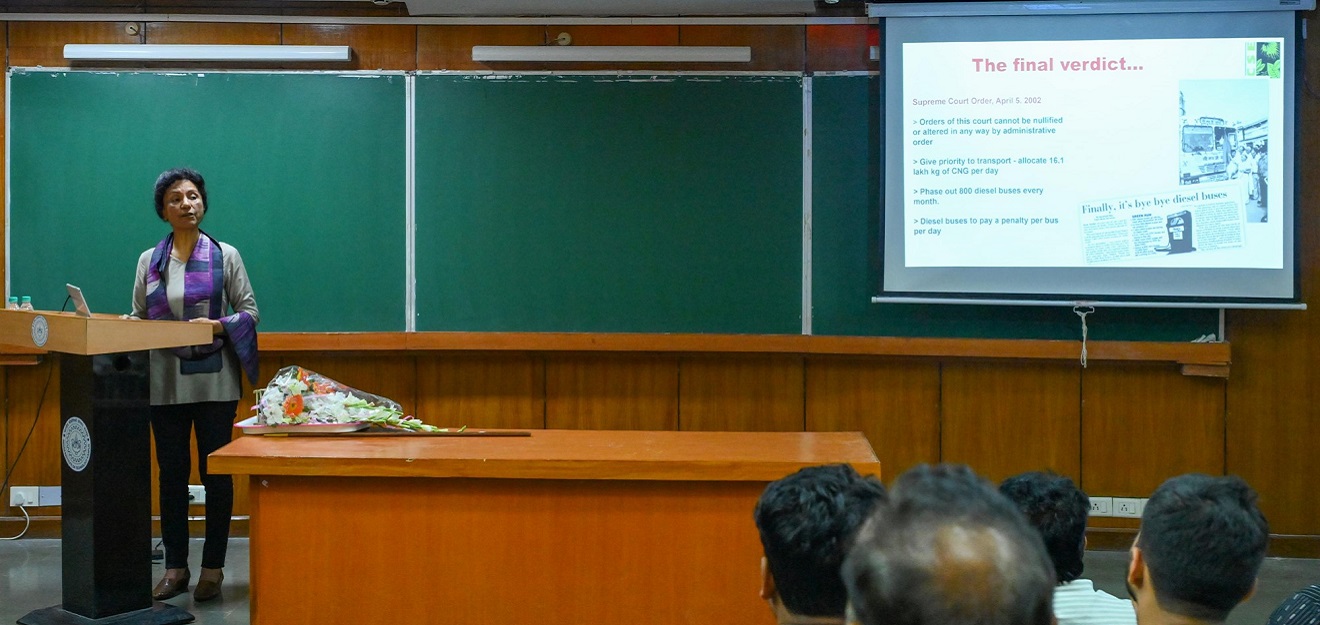
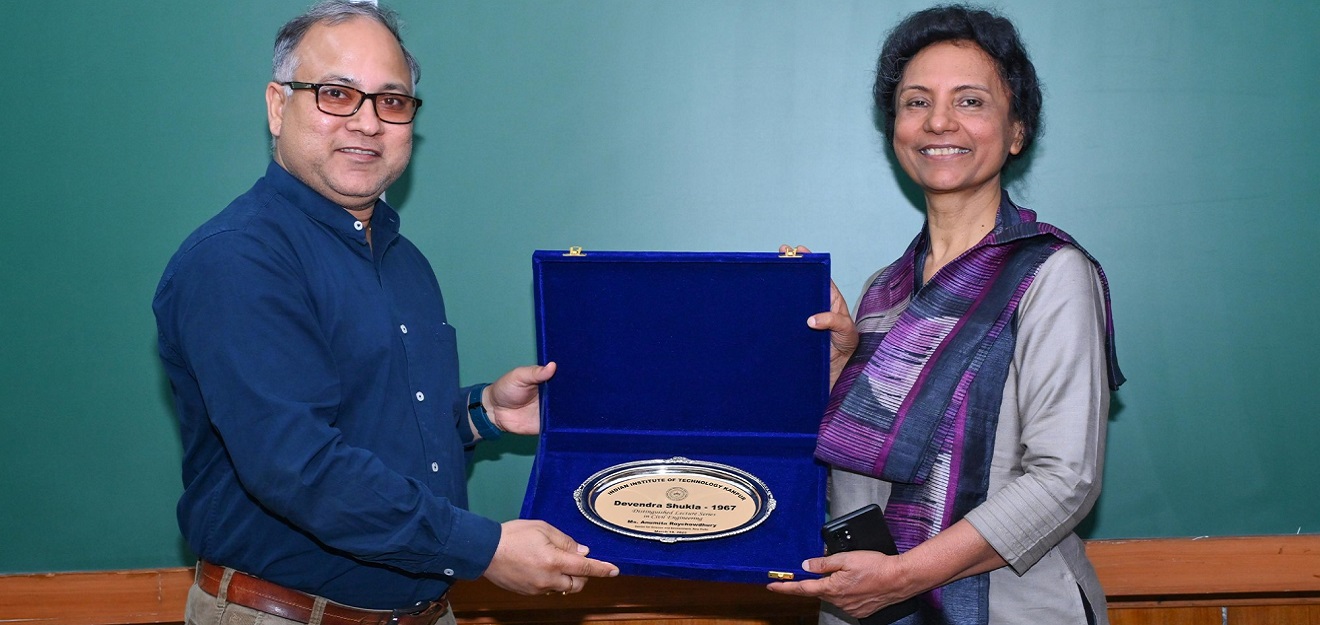
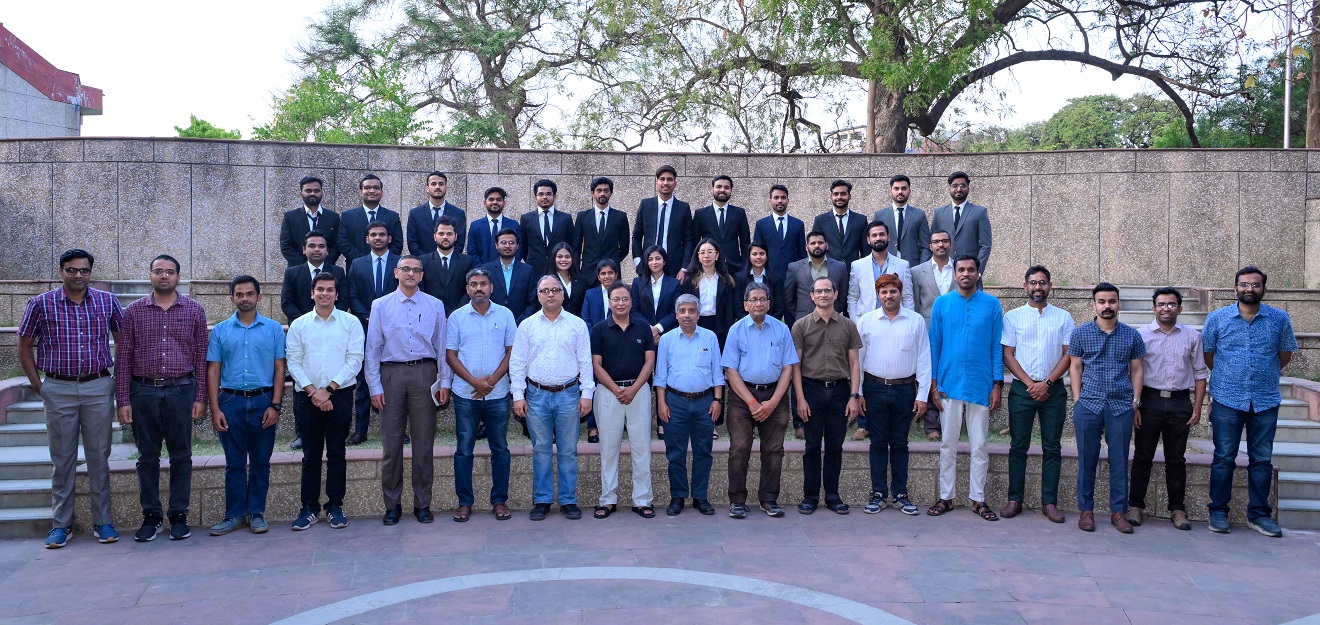
- Devendra Shukla Distinguished Lecture Series Seminar was organized on 10th April, 2024 with Mr Krishnamurthy Subramanian, Executive Vice Chairman of Afcons Infrastructure Limited as the Distinguished Speaker
- Sankalan, a national level CE Conclave, organized by the Society of Civil Engineers IIT Kanpur, will be held from 27-28th January, 2024
- Prof. S. N. Tripathi has been awarded the prestigious Infosys Prize 2023 in ENGINEERING AND COMPUTER SCIENCE by Infosys Science Foundation.
- Prof. Priyanka Ghosh has been invited to join the Editorial Board of the International Journal of Geomechanics, ASCE, as an Associate Editor.
- IITK CE alumni (M. Tech/PhD student) Prof. Dipti Ranjan Sahoo has been awarded the prestigious Shanti Swarup Bhatnagar Prize 2022
- Applications invited for a Masters by Research (MSR) position in the area of Environmental Engineering in Walk-In mode
- Ms Akanksha, PhD student of Prof. S.N. Tripathi, has got the second position in the poster competition held in ICAS 2023, Bangalore
- Seminar on Offshore Geomechanics by Dr. Anamitra Roy, University of Melbourne, 30/08/2023
- Prof. Abhas Singh and Prof. Sudib K Mishra have been awarded Excellence-in-Teaching Award 2023
- Dr. Suparno Mukhopadhyay has been selected as the prestigious Professor R.N. Biswas Young Faculty Fellowship in Teaching Excellence.
- e-Masters Program
- Abhilasha Tripathi, PhD student of Prof. P. Bose has received Science innovation award at the International Conference on Agriculture and Rural development, held at Bhubaneswar.
- **Surya Sujathan (PhD student) and Prof. Abhas Singh published an article titled, "Investigation of Potential Drivers of Elevated Uranium Prevalence in Indian Groundwaters with a Unified Speciation Model" in the top journal Environmental Science and Technology **
- Patent Granted to Dr. Tarun Gupta and Mr. Anand Kumar (student) || Patent No.- 418343 || Title: MULTIPLE SLIT NOZZLE-BASED HIGH VOLUME PM2.5 IMPACTOR ASSEMBLY || IPA No.- 2088/DEL/2014
- New technology for retrofitting non-earthquake-resistant buildings can prevent major damage in old settlements
- STRENGTH MAGAZINE FOR THE YEAR 2022
- Dr. K.K. Bajpai, Scientific Officer, has been promoted to the post of Chief Scientific Officer at IIT Kanpur in the department of Civil Engineering.
- M.Tech student Anshul Rawat, Prof. Mukesh Sharma and Prof. Anubha Goyal granted a patent for developing technology for growing fresh veggies in high-altitude areas.
- Congratulation to all the Awardees (Batch 2022)
- Congratulations to Current Graduating Batch 2022.
- MSR student Tavishi Mishra has received the best oral presentation award at the ICESE 2022 conference organized at IIT Bombay.
- Prof. Tarun Gupta, current occupant of Prof. N.C. Nigam Memorial Chair
- B. Tech student Shivansh Tripathi has been awarded Prof. ASR Sai Memorial Medal and General Proficiency Medal at the 54th Convocation – 2021.
- M. Tech student Patel Ajay Kumar Dahyalal has been awarded Prof. ASR Sai Gold Medal at 54th Convocation – 2021.
- PhD student Gyanesh Kumar Singh has been awarded Outstanding Ph.D. Thesis Award at the 54th Convocation – 2021.
- PhD student Behera Prasanna Kumar has been awarded Outstanding Ph.D. Thesis Award at the 54th Convocation - 2021.
- Prof. Gaurav Tiwari's publication has been awarded IGS-Roorkee Chapter YGE Award 2021(Best Paper published in the area of Rock Mechanics).
- Prof. Durgesh C. Rai has been awarded the 2021 John B. Scalzi Research Award during The Masonry Society’s Annual Meeting in Nashville, Tennessee
- Prof. Sachchida N. Tripathi has been invited to join the Advisory Board of Journal, Environmental Science: Atmospheres, published by the Royal Society of Chemistry.
- Prof. Mukesh Sharma has been appointed as an honorary non-remunerative member of the WHO Global Air Pollution and Health - Technical Advisory Group (GAPH-TAG).
- PhD student Mr Akshat Verma received a certificate of merit from American Chemical Society (ACS) Fall 2020 virtual meeting.
- Prof. Sachchidanand Tripathi has received the prestigious J.C. Bose Fellowship from SERB, DST.
- New programme DIIT program in three broad areas: (i) Geodesy (ii) Navigation and Mapping and (iii) Remote Sensing and GIS.
- Prof. Sachchidanand Tripathi has been elected as the Fellow of Indian National Science Academy.
- Prof. Partha Chakroborty has been chosen as the recipient of the Excellence in Teaching Award 2020.
- Prof. Rajesh Srivastava has been chosen as the recipient of the Excellence in Teaching Award 2020.
- Prof. Sachchida Tripathi has been appointed as a member of Editorial Advisory Board of Environmental Science and Technology Letters.
- Dr. Pranamesh Chakraborty is serving as one of the guest editors in the Special Issue "Deep Learning in Transportation" in the BDAT journal.
- Mr. Vishwajeet Khan (Ph.D. Student) has been awarded IGS-Bangalore Chapter Young Geotechnical Engineer Award for the year 2019 (Best Paper published in the area of Environmental Geotechnology).
- Dr. Gaurav Tiwari has been awarded IGS-Prof. Leonard’s Annual Award for the year 2018 for his Ph.D Thesis.
- PG admission notice 2019-20, 2nd Semester
- Prof. B. Nagarajan has been chosen as the recipient of the Excellence in Teaching Award 2019.
- Prof. P. Bose has been chosen as the recipient of the Excellence in Teaching Award 2019.
- Prof. Nihar Ranjan Patra has been invited as a member of Editorial Board of Indian Geotechnical Journal (2019).
- Prof. Priyanka Ghosh has been invited as a member of Editorial Board of Indian Geotechnical Journal (2019)
- Mr. Sunil Nishad received Merit Award - 2018 for his relentless service to the users of the Hydraulics Laboratory.
- Dr. Salil Goel has been selected for the Young Geospatial Scientist 2018 award and the Rachapudi Kamakshi Memorial Gold Medal.
- PG admission notice 2018-19, 2nd Semester and 2019-20, 1st semester.
- STudent Enrichment Program (STEP) – An initiative to facilitate students’ travel
- Mr. Saifi Izhar (PhD student) has been awarded with Outstanding Poster Presentation Award at the international conference AJM 2018 Xian.
- Dr. Tarun Gupta, has been selected for the INAE Innovator Entrepreneur Award 2018.
- Presentation: Welcome to New PG students 2018-19.
- Prof. SachchidaNand Tripathi awarded 2018 UP Ratna Award, Government of Uttar Pradesh.
- Prof. Salil Goel Awarded Best Paper Award for the paper titled " An Indoor Outdoor Cooperative Localization Framework for UAVs" at International Global Navigation Satellite Systems (IGNSS) Conference 2018 held in Sydney, Australia from February 7-9, 2018.
- Prof. Priyanka Ghosh has become the member of Editorial Review Board in International Journal of Geotechnical Earthquake Engineering (2018).
- Dr. Sudib Kumar Mishra (CE), has been selected for the INAE Young Engineer Award of 2016
- Prof. Sachchida Nand Tripathi (Civil Engg.) awarded Shanti Swarup Bhatnagar Prize in Earth, Atmosphere, Ocean & Planetary Sciences.
- Visit PG admission section to see the list of selected M.Tech. and M.S.R. candidates in the last round of admissions.
- Dr. S.N. Tripathi is fundedresearch project entitled "Building a Novel System for Soot: Measurement, Toxicity Assessment and Source Identification" funded by MHRD, India.
- Dr. Bharat Lohani delivered lecture talk entitled "LiDAR Remote Sensing and Its Application Potential" in IIRS User Interaction Meet 2014, Dehradun on February 20, 2014.
- Dr. D.C. Rai delivered lecture talk entitled "Masonry Research at IIT Kanpur" at IIT Guwahati, Guwahati on March 21, 2014.
- Dr. S.N. Tripathi delivered lecture talk entitled "Observations and Monitoring Needs" and "Scientific Basis for Knowledge to Action" in Policy Conclave on Reducing Vehicular Emissions to Improve Air Quality, New Delhi on February 4, 2014.
- Dr. S.N. Tripathi delivered lecture talk entitled "Atmospheric Aerosol Measurements: India Perspective" in National Space Science Symposium, Dibrugargh on February 1, 2014
- Dr. Tarun Gupta delivered lecture talk entitled "Measurement Instrumentation for Radiatively Active Constituents"in 1st Climate Science and Policy Workshop, Mumbai on March 7, 2014.
- Ganesh, R., & Sahoo, J. P. (2023). Kinematic horizontal slice method for uplift capacity analysis of plate anchors in nonhomogeneous soils with a nonlinear failure criterion. In Computers and Geotechnics (Vol. 159, p. 105407). Elsevier BV. https://doi.org/10.1016/j.compgeo.2023.105407
- Parik, P., & Patra, N. R. (2023). Applicability of Clay Soil Stabilized with Red Mud, Bioenzyme, and Red Mud–Bioenzyme as a Subgrade Material in Pavement. In Journal of Hazardous, Toxic, and Radioactive Waste (Vol. 27, Issue 2). American Society of Civil Engineers (ASCE). https://doi.org/10.1061/jhtrbp.hzeng-1182
- Cai, X., Leng, Z., Kumar Ashish, P., Yang, J., & Gong, M. (2023). Quantitative analysis of the role of temperature in the mesoscale damage process of semi flexible pavement composite through finite element method. In Theoretical and Applied Fracture Mechanics (Vol. 124, p. 103742). Elsevier BV. https://doi.org/10.1016/j.tafmec.2022.103742
- Majumder, R., Chakraborty, S., & Mishra, S. K. (2023). Reliability analysis and design of randomly imperfect thin cylindrical shells against post-critical drops. In Thin-Walled Structures (Vol. 185, p. 110576). Elsevier BV. https://doi.org/10.1016/j.tws.2023.110576
- Mufti, S., & Das, A. (2023). Multiscale pore network construction for two phase flow simulations in granular soils. In Advances in Water Resources (Vol. 173, p. 104386). Elsevier BV. https://doi.org/10.1016/j.advwatres.2023.104386
- Huang, T., Chakraborty, P., & Sharma, A. (2023). Deep convolutional generative adversarial networks for traffic data imputation encoding time series as images. In International Journal of Transportation Science and Technology (Vol. 12, Issue 1, pp. 1–18). Elsevier BV. https://doi.org/10.1016/j.ijtst.2021.10.007
- Gupta, S., & Nair, S. (2023). A review of the emerging role of UAVs in construction site safety monitoring. In Materials Today: Proceedings. Elsevier BV. https://doi.org/10.1016/j.matpr.2023.03.135
- Singh, G. K., Qadri, A. M., Paul, D., Gupta, T., Mukherjee, S., & Chatterjee, A. (2023). Investigation of sources and atmospheric transformation of carbonaceous aerosols from Shyamnagar, eastern Indo-Gangetic Plains: Insights from δ13C and carbon fractions. In Chemosphere (Vol. 326, p. 138422). Elsevier BV. https://doi.org/10.1016/j.chemosphere.2023.138422
- Xie, S.-C., Kolay, C., Feng, D.-C., & Ricles, J. M. (2023). Nonlinear static analysis of extreme structural behavior: Overcoming convergence issues via an unconditionally stable explicit dynamic approach. In Structures (Vol. 49, pp. 58–69). Elsevier BV. https://doi.org/10.1016/j.istruc.2023.01.086
- Sahu, C. K., & Neufeld, J. A. (2023). Experimental insights into gravity-driven flows and mixing in layered porous media. In Journal of Fluid Mechanics (Vol. 956). Cambridge University Press (CUP). https://doi.org/10.1017/jfm.2022.1082
- Malik, R., Singh, G., Dikshit, O., & Yamaguchi, Y. (2023). General Five-Component Scattering Power Decomposition with Unitary Transformation (G5U) of Coherency Matrix. In Remote Sensing (Vol. 15, Issue 5, p. 1332). MDPI AG. https://doi.org/10.3390/rs15051332
- Sujathan, S., & Singh, A. (2023). Investigation of Potential Drivers of Elevated Uranium Prevalence in Indian Groundwaters with a Unified Speciation Model. In Environmental Science & Technology (Vol. 57, Issue 5, pp. 1970–1986). American Chemical Society (ACS). https://doi.org/10.1021/acs.est.2c08524
- Barbhaya, D., Tran, J., Khetan, A., Hejjaji, V., Jain, S., Chan, C., & Goel, A. (2023). Rationale and Design of a Study to Test the Effect of Personal Protective Aids on Hypertension and Diabetes in People Living With High Levels of Air Pollution—Study Protocol. In Heart, Lung and Circulation (Vol. 32, Issue 1, pp. 124–130). Elsevier BV. https://doi.org/10.1016/j.hlc.2022.11.001
- Kumar, S., Tiwari, G., & Das, A. (2023). Experimental assessment of dynamic loading response of grouted non-persistent jointed rock. In IOP Conference Series: Earth and Environmental Science (Vol. 1124, Issue 1, p. 012055). IOP Publishing. https://doi.org/10.1088/1755-1315/1124/1/012055
- Bagchi, A., & Raychowdhury, P. (2023). Sensitivity Study of the Pressure-Dependent Soil Model Based on the Abutment-Backfill Pushover Behaviour. In Lecture Notes in Civil Engineering (pp. 129–139). Springer Nature Singapore. https://doi.org/10.1007/978-981-19-6998-0_13
- Das, G., & Ghosh, P. (2023). Effect of Footing Size on the Dynamic Behaviour of Cohesionless Soil-Foundation System. In Lecture Notes in Civil Engineering (pp. 505–513). Springer Nature Singapore. https://doi.org/10.1007/978-981-19-6998-0_43
- Pandey, B. K., Rajesh, S., & Chandra, S. (2022). A State-of-the-Art Review on Electro-osmotic Treatment for Stabilization of Soft Soils. In Lecture Notes in Civil Engineering (pp. 225–234). Springer Nature Singapore. https://doi.org/10.1007/978-981-19-6727-6_20
- Latha, L., Ray-Chaudhuri, S., Mukhopadhyay, S., & Bajpai, K. K. (2022). Seismic Performance Enhancement of Unreinforced Brick Masonry Buildings by Retrofitting with Reinforced Concrete Bands: Full Scale Experiments. In Journal of Structural Engineering (Vol. 148, Issue 12). American Society of Civil Engineers (ASCE). https://doi.org/10.1061/(asce)st.1943-541x.0003460
- Latha, L., Ray-Chaudhuri, S., Mukhopadhyay, S., & Bajpai, K. K. (2022). Seismic Performance Enhancement of Unreinforced Brick Masonry Buildings by Retrofitting with Reinforced Concrete Bands: Full Scale Experiments. In Journal of Structural Engineering (Vol. 148, Issue 12). American Society of Civil Engineers (ASCE). https://doi.org/10.1061/(asce)st.1943-541x.0003460
- Gurjar, S. K., Shrivastava, S., Suryavanshi, S., & Tare, V. (2022). Assessment of the natural flow regime and its variability in a tributary of Ganga River: Impact of land use and land cover change. In Environmental Development (Vol. 44, p. 100756). Elsevier BV. https://doi.org/10.1016/j.envdev.2022.100756
- Chaudhary, A., & Akhtar, A. (2022). Template for Evaluating Cradle-to-Site Environmental Life Cycle Impacts of Buildings in India. In ACS Environmental Au (Vol. 3, Issue 2, pp. 94–104). American Chemical Society (ACS). https://doi.org/10.1021/acsenvironau.2c00035
- Chhabra, J. P. S., & Rai, D. C. (2022). Experimental testing of aluminum‐core buckling restrained knee braced Truss moment frames for earthquake resistance. In Earthquake Engineering & Structural Dynamics (Vol. 52, Issue 3, pp. 660–680). Wiley. https://doi.org/10.1002/eqe.3780
- Prakasam, C., Aravinth, R., Kanwar, V. S., & Nagarajan, B. (2022). Soil erosion risk assessment and its impact on landslides – A study on parts of Himalayan Region, India. In INTERNATIONAL CONFERENCE ON ADVANCES IN MULTI-DISCIPLINARY SCIENCES AND ENGINEERING RESEARCH: ICAMSER-2021. INTERNATIONAL CONFERENCE ON ADVANCES IN MULTI-DISCIPLINARY SCIENCES AND ENGINEERING RESEARCH: ICAMSER-2021. AIP Publishing. https://doi.org/10.1063/5.0095256
- Balakrishna Madayala, A., Jain, A., & Lohani, B. (2022). Development of a Physics-Guided Neural Network Model for Effective Urban Flood Management. In Journal of Hydrologic Engineering (Vol. 27, Issue 9). American Society of Civil Engineers (ASCE). https://doi.org/10.1061/(asce)he.1943-5584.0002196
- Mahata, B. K., Chang, S., & Bose, P. (2022). Bio-Inspired phosphate adsorption by Copper-Decorated weak base anion exchanger. In Separation and Purification Technology (Vol. 296, p. 121339). Elsevier BV. https://doi.org/10.1016/j.seppur.2022.121339
- Khan, S., Ashish, P. K., Kannelli, V., Hossain, K., Nagabhushana, M. N., & Tiwari, D. (2022). Potential application of over-burnt brick and fly ash for sustainable inverted pavement structure. In Construction and Building Materials (Vol. 345, p. 128298). Elsevier BV. https://doi.org/10.1016/j.conbuildmat.2022.128298
- Vishwakarma, B. D., Ramsankaran, R., Azam, Mohd. F., Bolch, T., Mandal, A., Srivastava, S., Kumar, P., Sahu, R., Navinkumar, P. J., Tanniru, S. R., Javed, A., Soheb, M., Dimri, A. P., Yadav, M., Devaraju, B., Chinnasamy, P., Reddy, M. J., Murugesan, G. P., Arora, M., … Bamber, J. (2022). Challenges in Understanding the Variability of the Cryosphere in the Himalaya and Its Impact on Regional Water Resources. In Frontiers in Water (Vol. 4). Frontiers Media SA. https://doi.org/10.3389/frwa.2022.909246
- Gupta, B. K. (2022). Dynamic pile-head stiffness of laterally loaded end-bearing pile in linear viscoelastic soil − A comparative study. In Computers and Geotechnics (Vol. 145, p. 104654). Elsevier BV. https://doi.org/10.1016/j.compgeo.2022.104654
- Chauhan, P., Kanagaraj, V., & Asaithambi, G. (2022). Understanding the mechanism of lane changing process and dynamics using microscopic traffic data. In Physica A: Statistical Mechanics and its Applications (Vol. 593, p. 126981). Elsevier BV. https://doi.org/10.1016/j.physa.2022.126981
- Bhat, N. U. H., & Pahar, G. (2022). Depth-averaged coupling of submerged granular deformation with fluid flow: An augmented HLL scheme. In Journal of Hydrology (Vol. 606, p. 127364). Elsevier BV. https://doi.org/10.1016/j.jhydrol.2021.127364
- Soni, P., Tripathi, S., & Srivastava, R. (2022). Impact of renewed solar dimming on streamflow generation in monsoon dominated tropical river basins. In Journal of Hydro-environment Research (Vol. 41, pp. 12–24). Elsevier BV. https://doi.org/10.1016/j.jher.2022.02.002
- Soni, P., Tripathi, S., & Srivastava, R. (2022). Impact of renewed solar dimming on streamflow generation in monsoon dominated tropical river basins. In Journal of Hydro-environment Research (Vol. 41, pp. 12–24). Elsevier BV. https://doi.org/10.1016/j.jher.2022.02.002
- Vikram, D., Mittal, S., & Chakroborty, P. (2022). Stabilized finite element computations with a two-dimensional continuum model for disorderly traffic flow. In Computers & Fluids (Vol. 232, p. 105205). Elsevier BV. https://doi.org/10.1016/j.compfluid.2021.105205
| CE603 | MATHEMATICS FOR CIVIL ENGINEERS | 1.5-0-0-0-5 |
| CE604 | NUMERICAL METHODS FOR CIVIL ENGINEERS | 1.5-0-0-0-5 |
| CE605 | PROBABILITY AND STATISTICS FOR CIVIL ENGINEERS | 1.5-0-0-0-5 |
| CE606M | OPTIMIZATION METHODS FOR CIVIL ENGINEERS | 3-0-0-0-5 |
| CE610 | ADVANCED HYDROLOGY | 3-0-0-0-9 |
| CE611 | ADVANCED HYDRAULICS | 3-0-0-0-9 |
| CE612 | FLUID MECHANICS LABORATORY | 2-0-3-0-9 |
| CE613 | COMPUTATIONAL METHODS IN HYDRAULICS AND HYDROLOGY | 2-0-3-0-9 |
| CE614 | STOCHASTIC HYDROLOGY | 3-0-0-0-9 |
| CE615 | INTRODUCTION AI TECHNIQUES | 3-0-0-0-9 |
| CE616 | SEDIMENT TRANSPORTATION | 3-0-0-0-9 |
| CE617 | ADVANCED MODELING OF SUBSURFACE FLOW AND TRANSPORT | 3-0-0-0-9 |
| CE618 | VADOSE ZONE HYDROLOGY | 3-0-0-0-9 |
| CE619 | ECOHYDROLOGY | 3-0-0-0-9 |
| CE620 | STRUCTURAL DYNAMICS | 3-0-0-0-9 |
| CE621 | ENGINEERING MECHANICS | 3-0-0-0-9 |
| CE622 | STABILITY OF STRUCTURES | 3-0-0-0-9 |
| CE623 | EXPERIMENTAL METHODS IN STRUCTURL ENGINEERING | 2-0-3-0-9 |
| CE624 | NONLINEAR STRUCTURAL ANALYSIS | 3-0-0-0-9 |
| CE625 | MASONARY STRUCTURES | 3-0-0-0-9 |
| CE626 | BRIDGE ENGINEERING AND DESIGN | 3-0-0-0-9 |
| CE627 | ADVANCED DESIGN OF STEEL STRUCTURES | 3-0-0-0-9 |
| CE628 | DURABILITY OF CONCRETE STRUCTURES | 3-0-0-0-9 |
| CE629 | EARTHQUAKE ANALYSIS AND DESIGN OF STRUCTURES | 3-0-0-0-9 |
| CE630 | ROCK MECHANICS | 3-0-0-0-9 |
| CE631 | ADVANCED GEOTECHNICAL ENGINEERING | 3-0-0-0-9 |
| CE632 | FOUNDATION ANALYSIS AND DESIGN | 3-0-0-0-9 |
| CE633 | REINFORCED EARTH STRUCTURES | 3-0-0-0-9 |
| CE634 | GROUND IMPROVEMENT TECHNIQUES | 3-0-0-0-9 |
| CE635 | FOUNDATION DYNAMICS | 3-0-0-0-9 |
| CE636 | GEOTECHNICAL EARTHQUAKE ENGINEERING | 3-0-0-0-9 |
| CE637 | CONSTITUTIVE MODELING OF FRICTIONAL MATERIALS | 3-0-0-0-9 |
| CE638 | GEOTECHNICAL MEASUREMENTS AND EXPLORATIONS | 2-0-3-0-9 |
| CE639 | ANALYTICAL AND NUMERICAL METHODS IN GEOMECHANICS | 3-0-0-0-9 |
| CE640 | INFRASTRUCTURE ASSET MANAGEMENT | 2-0-0-0-6 |
| CE641M | PROJECT MANAGEMENT | 3-0-0-0-5 |
| CE642 | LABORATORY COURSE IN INFRASTRUCTURE ENGINEERING AND MANAGEMENT | 3-0-0-0-9 |
| CE645 | BASIC QUALITY AND SAFETY MANAGEMENT IN CONSTRUCTION | 1.5-0-0-0-5 |
| CE648 | REPAIR AND REHABILITATION OF CONCRETE STRUCTURES | 1.5-0-0-0-5 |
| CE653M | ADVANCEMENTS OF CONCRETES | 3-0-0-0-5 |
| CE654M | CONCRETE SCIENCE AND ENGINEERING PROPERTIES | 3-0-0-0-5 |
| CE656 | ENVIRONMENTAL FLUID MECHANICS | 3-0-0-0-9 |
| CE657 | CONSTRUCTION ECONOMICS & INFRASTRUCTURE FINANCING | 3-0-0-0-9 |
| CE663 | HUMANS, ENVIRONMENT, AND SUSTAINABLE DEVELOPMENT | 3-0-0-0-9 |
| CE664 | PHYSICO-CHEMICAL PRINCIPLES AND PROCESS | 3-0-0-0-9 |
| CE665 | ECOLOGICAL AND BIOLOGICAL PRINCIPLES AND PROCESS | 3-0-0-0-9 |
| CE666 | AIR POLLUTION AND ITS CONTROL | 3-0-0-0-9 |
| CE667 | PRINCIPLES OF ENVIROMENTAL MANAGEMENT | 3-0-0-0-9 |
| CE668 | ENVIRONMENTAL QUALITY & POLLUTION MONITORING TECHNIQUES | 2-0-4-0-10 |
| CE669 | ATMOSPHERIC PHYSICS AND CHEMISTRY | 3-0-0-0-9 |
| CE670 | ENVIRONMENTAL GEODESY | 3-0-2-0-11 |
| CE671 | INTRODUCTION TO REMOTE SENSING | 3-0-2-0-11 |
| CE672 | MACHINE PROCESSING OF REMOTELY SENSED DATA | 3-0-0-0-9 |
| CE673 | INSTRUMENTATION, LABORATORY AND FIELD PRACTICES IN GEOINFORMATICS | 0-0-0-9-9 |
| CE674M | GLOBAL NAVIGATION SATELLITE SYSTEMS (GNSS) | 3-0-2-0-6 |
| CE675M | GLOBAL NAVIGATION SATELLITE SYSTEMS (GNSS) FOR SURVEYING AND MAPPING | 3-0-2-0-6 |
| CE676 | LASER SCANNING AND PHOTOGRAMMETRY | 2-0-3-0-9 |
| CE677M | INTRODUCTION TO INERTIAL AND MULTI-SENSOR NAVIGATION | 3-0-2-0-6 |
| CE678 | PHYSICAL GEODESY | 3-0-2-0-11 |
| CE679 | SIGNAL PROCESSING ON THE SPHERE | 3-0-2-0-11 |
| CE683 | TRAFFIC ENGINEERING | 3-0-0-0-9 |
| CE685M | URBAN TRANSPORTATION | 3-0-0-0-5 |
| CE687 | STATISTICAL AND ECONOMETRIC METHODS FOR TRANSPORTATION DATA | 3-0-2-0-11 |
| CE697 | M TECH SEMINAR I | 0-0-0-0-0 |
| CE698 | M.TECH SEMINAR II | 0-0-0-0-0 |
| CE699 | M. TECH THESIS | 0-0-0-9-9 |
| CE711M | CONSTRUCTION EQUIPMENT AND METHODS I | 3-0-0-0-5 |
| CE712M | CONSTRUCTION EQUIPMENT AND METHODS II | 3-0-0-0-5 |
| CE713M | CONSTRUCTION EQUIPMENT AND METHODS FOR BRIDGES | 3-0-0-0-5 |
| CE718 | WATER RESOURCES SYSTEMS ANALYSIS | 3-0-0-0-9 |
| CE719 | HYDROMETEOROLOGY | 3-0-0-0-9 |
| CE721 | RANDOM VIBRATIONS | 3-0-0-0-9 |
| CE722 | GEOTECHNICS OF TAILINGS AND TAILINGS STORAGE FACILITIES | 3-0-0-0-9 |
| CE723 | FINITE ELEMENT METHODS FOR CIVIL ENGINEERING APPLICATIONS | 3-0-0-0-9 |
| CE724 | RELIABILITY ANALYSIS & RELIABILITY BASED DESIGN OF STRUCTURE | 3-0-0-0-9 |
| CE725 | VIBRATION BASED STRUCTURAL HEALTH MONITORING FOR CE APPLICATIONS | 1.5-0-0-0-5 |
| CE727A | THEORY OF PLATES AND SHELLS | 3-0-0-0-9 |
| CE730 | SOIL-STRUCTURE INTERACTION | 3-0-0-0-9 |
| CE731 | RISK & RELIABILITY IN GEOTECHNICAL ENGINEERING | 3-0-0-0-9 |
| CE732 | UNSATURATED SOIL MECHANICS | 3-0-0-0-9 |
| CE733 | GEOTECHNICAL DESIGN ASPECTS OF SOLID WASTE MANAGEMENT | 3-0-0-0-9 |
| CE734 | PLASTIC EQUILIBRIUM IN SOILS | 3-0-0-0-9 |
| CE736 | FLOOD MODELLING | 3-0-0-0-9 |
| CE737 | MOMENT ANALYSIS FOR CONTAMINANT FATE AND TRANSPORT | 3-0-0-0-9 |
| CE738 | HYDROMETRY | 2-0-3-0-9 |
| CE739 | IRRIGATION SYSTEMS | 3-0-0-0-9 |
| CE760M | SURFACE WATER QUALITY MODELING | 3-0-0-0-5 |
| CE761M | SUBSURFACE POLLUTANT FATE AND TRANSPORT | 3-0-0-0-5 |
| CE762M | ATMOSPHERIC MODELING | 3-0-0-0-5 |
| CE763M | SOLID AND HAZARDOUS WASTE MANAGEMENT | 3-0-0-0-5 |
| CE764M | ENVIRONMENTAL TOXICOLOGY AND RISK ASSESSMENT | 3-0-0-0-5 |
| CE765M | INDUSTRIAL WASTE MANAGEMENT | 3-0-0-0-5 |
| CE766 | AGRICULTURAL SUSTAINABILITY AND CLIMATE CHANGE | 3-0-0-0-9 |
| CE767M | SOLID-WATER INTERFACIAL PROCESSES | 3-0-0-0-5 |
| CE768M | PLASTIC WASTE MANAGEMENT | 3-0-0-0-5 |
| CE770 | ADJUSTMENT COMPUTATIONS FOR GEOINFORMATICS-I | 1.5-0-1-0-6 |
| CE771 | ADJUSTMENT COMPUTATIONS FOR GEOINFORMATICS-II | 1.5-0-1-0-6 |
| CE772M | REFERENCE FRAMES, COORDINATE SYSTEMS AND MAP PROJECTIONS | 3-0-1-0-6 |
| CE773M | GEODETIC ASTRONOMY AND INTRODUCTION TO SATELLITE GEODESY | 3-0-1-0-6 |
| CE775M | INTRODUCTION TO ROAD SAFETY MODELLING | 3-0-0-1-5 |
| CE780 | LABORATORY COURSE IN TRANSPORTATION ENGINEERING | 0-0-6-3-9 |
| CE781M | TRAFFIC SIMULATION | 3-0-2-0-6 |
| CE783M | ANALYSIS OF CONCRETE PAVEMENT | 3-0-0-0-5 |
| CE784 | MACHINE LEARNING AND DATA ANALYTICS FOR CIVIL ENGINEERING APPLICATIONS | 3-0-0-2-11 |
| CE785M | PAVEMENT MATERIALS | 3-0-0-0-5 |
| CE786 | ANALYSIS AND DESIGN OF BITUMINOUS PAVEMENTS | 3-0-0-0-9 |
| CE787 | COMPUTATIONAL TOOLS FOR TRANSPORTATION ENGINEERING | 3-0-2-0-11 |
| CE788M | TRANSPORTATION INFRASTRUCTURE MANAGEMENT | 3-0-1-0-5 |
| CE789 | TRANSPORTATION NETWORK ANALYSIS | 3-0-0-0-9 |
| CE791 | LITERATURE SEARCH AND REVIEW | 0-0-0-5-5 |
| CE792 | SCIENTIFIC WRITING SKILLS | 0-0-0-5-5 |
| CE793 | SCIENTIFIC PRASENTATION SKILLS | 0-0-0-5-5 |
| CE794 | SCIENTIFIC DATA ANALYSIS, PRESENTATION AND INTERPRETATION | 0-0-0-5-5 |
| CE797 | PHD SEMINAR I | 0-0-0-0-0 |
| CE798 | PHD SEMINAR II | 0-0-0-0-0 |
| CE799 | PHD THESIS | 0-0-0-9-9 |
| CE897 | MS RESEARCH SEMINAR I | 0-0-0-0-0 |
| CE898 | MS RESEARCH SEMINAR II | 0-0-0-0-0 |
| CE899 | MS - RESEARCH THESIS | 0-0-0-9-9 |
| CE999 | DIIT Project | 0-0-0-9-9 |
Diploma of IIT (DIIT) Programme in Civil Engineering
The DIIT programme is being offered in three areas namely (Geoinformatics specialization):
- Geodesy
- Navigation and Mapping
- Remote Sensing and GIS
The eligibility criteria are:
- Bachelor’s degree in Civil / Mining / Electrical / Computer Science / Electronics Engineering / Information Technology / Geoinformatics,
Or
- Master of Science in Earth Science and related areas or Geography / Physics/ Mathematics/ Environmental Sciences. Candidates with MSc degree must have mathematics as one of the subjects at BSc level.
The GATE requirement is waived off for candidates in the DIIT program.
The applicant must have a bachelor's degree in engineering or a master's degree in science with marks/CPI not below 55% marks (or Cumulative Performance Index (CPI) of 5.5 on a 10-point scale) or minimum pass marks (or CPI) whichever is greater. Candidates belonging to the Scheduled Castes/Scheduled Tribes who have a bachelor's degree in engineering or a master's degree in science are eligible to apply irrespective of the marks/CPI.
The DIIT program is primarily for working professionals in Government department / institutions, Industry, Faculty members in Academic Institutions involved in teaching and R&D in Geoinformatics/Geodesy/geospatial technology. However, a limited number of seats may be offered to other candidates also who satisfy the specified eligibility criteria.
Please refer to the PG manual available on the website of the Dean, Academic affairs, IIT Kanpur (https://www.iitk.ac.in/doaa/data/pgmanual-02Sep2015.pdf) for more details.
In the DIIT program, the scholarship is available only for limited number of candidates admitted in the area of Geodesy (NCG). Other candidates are expected to be sponsored by their parent organization.
For DIIT, a minimum of 36 course credits should be earned through coursework, while maintaining a minimum CPI of 6.5 and a minimum of 18 credits through research work. The total minimum credits (course + research) required for completion of DIIT programme is 72.
Ph.D Program in Civil Engineering
Ph.D degree is offered in the following specializations of Civil Engineering,
- Environmental Engineering
- Geoinformatics
- Geothechnical Engineering
- Hydraulics and Water Resources Engineering
- Infrastructure Engineering and Management
- Structural Engineering
- Transportation Engineering
Candidates with both Bachelors and Masters degree in Civil Engineering can join the Ph.D program. Candidates with degrees in other branches of engineering and science and also considered in certain specializations. Admission is possible in both July and December semesters.
- Admission Criteria for Ph.D in Civil Engineering
- Course and Thesis Credits for Ph.D Students
- Teaching Assistantship for Ph.D Students
- Thesis Supervisor Selection Process for Ph.D Students
- Program Committee for Ph.D Students
- Comprehensive Examination for Ph.D Students
- State of the Art Seminar for Ph.D Students
- Tutorship for Ph.D Students
- Ph.D Seminars
- Open Seminar for Ph.D Students
- Ph.D Thesis Submission and Evaluation
- No Dues and Provisional Degree
Typical Duration of Ph.D Program
Schedule of Forms to be Submitted during the Ph.D Program
Extension of Scholarship
Academic Extension
Computational Facilities
Office Space
Attending Conferences
Leave Rules
Cash Award for Publications
Other issues concerning Ph.D admission and administration of the Ph.D program are explained in the PG manual.
MS (Research) degree is offered in the following specializations of Civil Engineering,
- Environmental Engineering
- Geoinformatics
- Geothechnical Engineering
- Hydraulics and Water Resources Engineering
- Infrastructure Engineering and Management
- Structural Engineering
- Transportation Engineering
Candidates with Bachelors degree in Civil Engineering can join the MS (Research) Program. Candidates with bachelor’s degree in other branches of engineering and masters’ degree in sciences are also considered in certain specializations. Admission may be in July or December semester.
- Admission Criteria for MS (Research) in Civil Engineering
- Thesis Supervisor Selection Process for MS (Research) Students
- Course and Thesis Credits for MS (Research) Students
- Course Template: MS (Research) Program
- Teaching Assistantship / Project Support for MS (Research) Students
- MS (Research) Seminars
- MS (Research) Thesis Submission and Evaluation
- No Dues and Provisional Degree
Traffic Engineering
Traffic flow theory, Driver behaviour modelling, Crowd dynamics
Intelligent Transportation Systems
Big data analytics, Machine learning, Connected and autonomous vehicles
Road Safety
Statistical modelling of crashes, Analysis of road user behaviour, Traffic conflict analysis
Networks
Transportation network modelling, Optimization and control, Network design
Infrastructure Management
Facility-level deterioration and improvement modelling, Automated data collection of infrastructure condition, Disaster recovery
Transit Systems
Route development, Schedule development, System evaluation
Pavement Engineering
Pavement design, Pavement analysis, Rehabilitation of pavements
Materials Engineering
Material characterization, Recycling of infrastructure materials, Chemical stabilization of soils/aggregate
Courses Offered
Featured Faculty


Featured Alumni


