

Faculty
Publications
Events
Placement
About Us
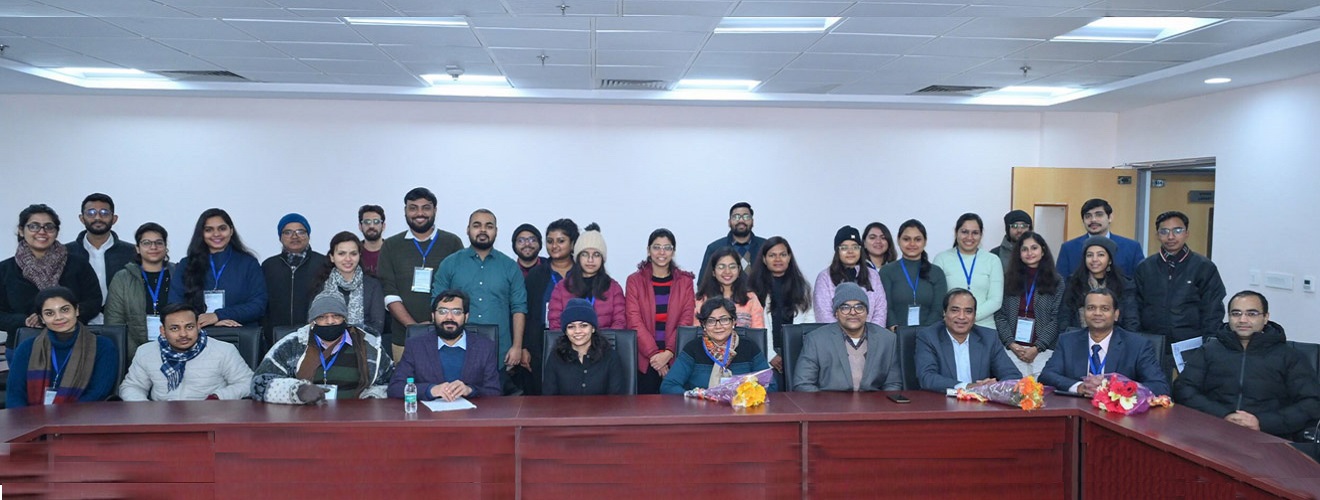
The Department of Economic Sciences has 26 permanent faculty members with research and teaching interests that cover a broad range of fields. Apart from having strength in traditional areas like microeconomics, macroeconomics, and econometrics; the department has expertise in agricultural economics, Bayesian econometrics, behavioral economics, development economics, efficiency, and productivity analysis, environmental economics, financial economics, health economics, industrial economics, international trade, labor economics, law and economics, optimization theory, political economy, family economics, and public policy.
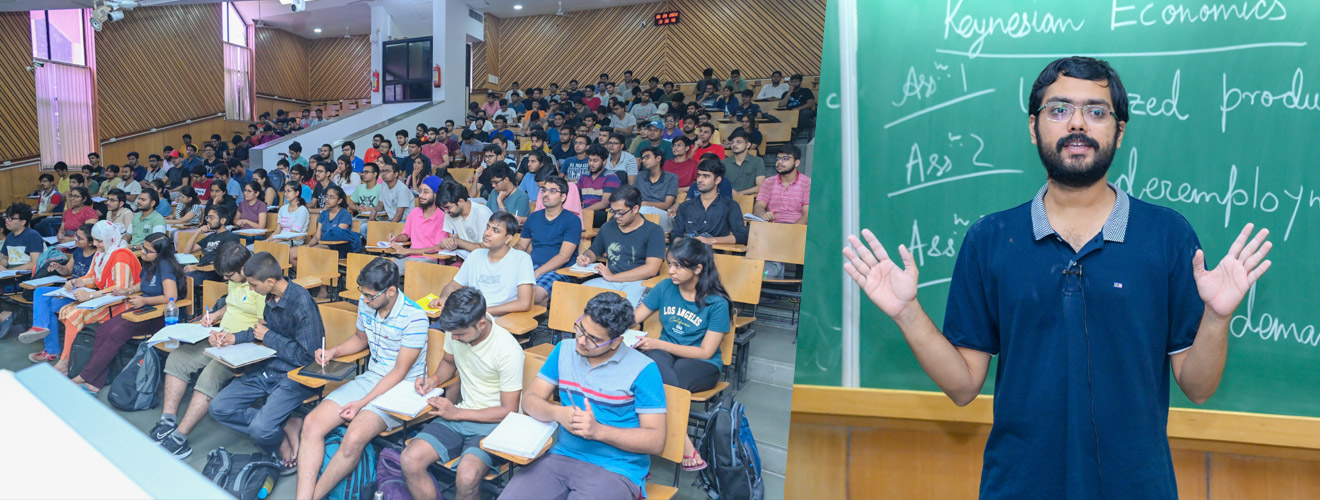
The department primarily offers four degrees in economics: 4 years B.S., 1 year M.S., 2 year M.Sc., and Ph.D. in Economics. Admission for the 52 seats (per year) in the B.S. program is through the advanced joint entrance examination (JEE). B.S. students who satisfy certain eligibility criteria can opt for a 1 year M.S. program in Economics. There is also a provision for the dual degree for undergraduate students of IITK. Admission to the M.Sc. program is through JAM/GATE and a written test conducted by IIT Kanpur. Entry to the Ph.D. program is through a written test and a viva exam conducted once at the beginning of each academic year. The department also offers several e-Masters programs.
- Final result of Ph.D. Admissions 2026–27 Semester I New
- Ph.D admission notice for 2026-27/Semester I
- Research Scholars' Day, February 12-14, 2026
- Symposium on Frontier Areas of Trade & Diplomacy with Focus on Partial and General Equilibrium Approaches- Friday, February 6, 2026.
- Online M.Sc program in Economics and Data Analytics commences
- Dr. Manpreet Singh joins the department as a faculty member.
- Selected candidates for Ph.D. admissions in Semester II (2025-26)
- Call for Papers – Research Scholars’ Day 2026
The Department of Economic Sciences, IIT Kanpur will be organising Research Scholars’ Day 2026 on February 13–14, 2026. - Ph.D Admission for 2025-26/II (starting January 2026): Applications are invited
- Admissions are now open for online M.Sc in Economics and Data Analystics
- Symposium on Economic Theory and Experiments to be held on Saturday, November 1, 2025
- Annual Conference 2025–2026: “Public Policy – An Indian Perspective” | August 29–30, 2025 | Department of Economic Sciences, IIT Kanpur
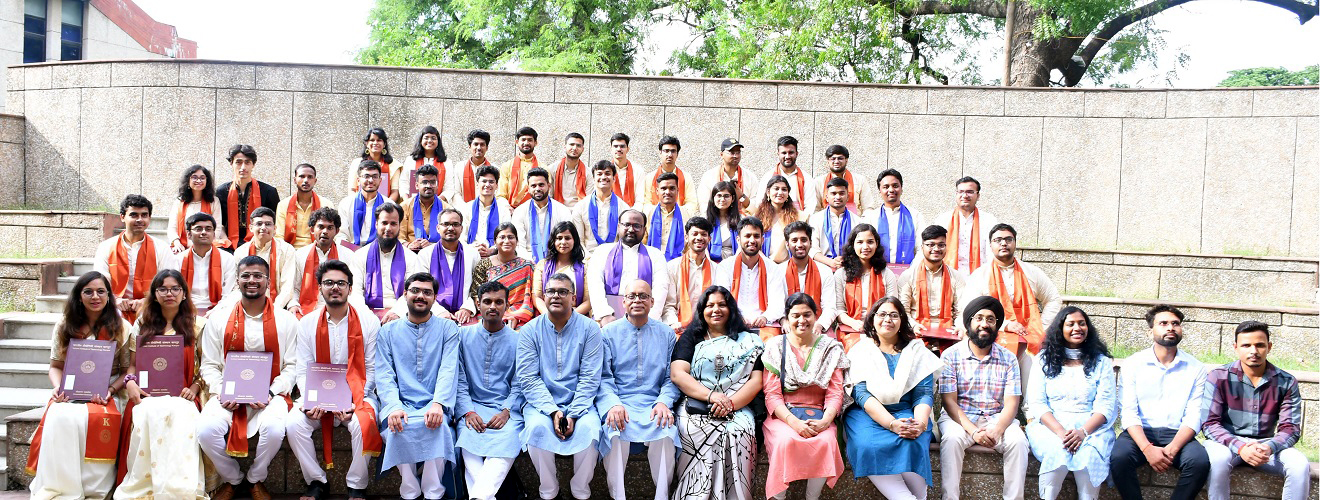
- Convocation 2025: Guest of Honour
Dr. Samiran Chakraborty (Managing Director and Chief Economist, India, Citigroup) - Follow @iitk_econ on Twitter for latest updates
- Recent PhD Placements
Title: Temperature Shocks and Household Consumption: The Role of Economic Sentiments
Speaker: Dr. Ronit Mukherji, Ashoka University
Date: April 16, 2026, 4:00-5:00 pm; Venue: Room 435, ESB-2
Title: Functional Data Analysis with Applications in Finance
Speaker: Dr. Rituparna Sen, ISI Bangalore
Date: April 09, 2026, 4:00-5:00 pm; Venue: Room 435, ESB-2
Title: Fixed Payments, Variable Risk: Heterogeneity in Consumer EMI Contracts
Speaker: Dr. Nirvana Mitra, Indian School of Business, Hyderabad
Date: April 2, 2026, 4:00-5:00 pm; Venue: Room 435, ESB-2
Title: Attitudes and norms about intimate partner violence: What makes women more impressionable?
Speaker: Dr. Gaurav Dhamija, Indian Institute of Technology Hyderabad
Date: March 18, 2026, 5:00-6:00 PM; Venue: Room 435, ESB-2
Title: Newton-type Methods for Generalized Nash Equilibrium Problems
Speaker: Prof. Andreas Fischer, Faculty of Mathematics, Technische Universität Dresden, Germany
Date: January 23, 2026, 4:00-5:00 PM; Venue: Room 435, ESB-2
Title: Linear Programming Duality: Two natural approaches and some applications to Economics
Speaker: Prof. Juan Enrique Martinez-Legaz, Department of Economic Theory and Economic History, Universidad Autonoma de Barcelona, Spain
Date: November 03, 2025, 2:30 PM to 3:30 PM; Venue: Room 435, ESB-2
Title: Fire in the Fields, Crime in the Air
Speaker: Dr. Digvijay Singh Negi, Associate Professor, Ashoka University
Date: October 09, 2025, 3:30 PM to 4:30 PM; Venue: Room 435, ESB-2
Title: Staying the Course: Experimental Evidence on Female Role Models and Women’s Higher Education
Speaker: Dr. Bharti Nandwani, Indira Gandhi Institute of Development Research
Date: September 12, 2025, 10:00 AM to 11:00 AM; Venue: Room 435, ESB-2
Title: Does Financial Inclusion Increase Household Resilience to Natural Disasters?
Speaker: Dr. Ashish Sedai from University of Texas at Arlington
Date: August 19, 2025, 5.00 PM to 6.00 PM; Venue: Room 435, ESB-2
Title: The Cost of Inaction: Impacts of Humanitarian Assistance Shortfalls on Refugees and Internally Displaced Persons
Speaker: Dr. Anubhab Gupta from Virginia Tech University, USA
Date: April 15, 2025, 11.00 AM to 12.00 PM; Venue: Room 435, ESB-2
Title: Challenges to India Becoming a Developed Country (Viksit Bharat) by 2047
Speaker: Prof. D. Narasimha Reddy, formerly Professor of Economics at the University of Hyderabad
Date: March 27, 2025, 6.30 PM to 7.30 PM; Venue: LHC-9
Title: Regularized Opinion Pools for Density Forecasts under Bayesian Inspired Framework
Speaker: Dr. Parush Arora from Ashoka University
Date: March 24, 2025, 11:00 AM to 12:00 PM; Venue: ESB-2/435
Title: Delegation with Flexible Information Acquisition: Ignoring the Left Tail
Speaker: Dr. Nishant Ravi from Indian School of Business (ISB, India)
Date: February 13, 2025, 3:00 PM to 4:00 PM; Venue: ESB-2/435
Title: Global Univalence and Factor price equalization via the class of P Matrices
Speaker: Prof. T E S Raghavan, Emeritus Professor at the University of Illinois at Chicago, USA
Date: January 27, 2025, 11:00 AM to 12:00 PM; Venue: ESB-2/435
Title: Differential Regulation and Firm Responses: A Study of the CAFE Standard
Speaker: Dr. Nafisa Lohawala, a fellow at Resources for the Future, USA
Date: November 29th, 3:00 PM to 4:00 PM; Venue: ESB-2/435
Title: Three Score and 15 Years (1948-2023) of Rao’s Score Test: A Brief History
Speaker: Prof. Anil Bera from Professor of Economics, College of LAS, University of Illinois, USA
Date: October 25th, 3:30 PM to 4:30 PM; Venue: ESB-2/435
Title: The relevant third: threat of coalition and economic development
Speaker: Dr. Somdeep Chatterjee from IIM Calcutta
Date: October 18th, 3:00 PM to 4:00 PM; Venue: ESB-2/435
Title: Teacher Quality in Delhi's High Schools
Speaker: Dr. Deepti Goel from Pitzer College in Claremont, USA
Date: September 27th, 4:30 PM to 5:30 PM; Venue: Virtual
Title: A Discussion on the June 2024 Financial Stability Report
Speaker: Shri Rakesh Kumar (DGM), Shri Prem Mohan (AGM), and Shri Aniket Singh (Manager), from the Reserve Bank of India
Date: September 13th, 11:00 am; Venue: ESB-2/435
Title: Uses of Machine Learning in Applied Economics
Speaker: Lucie Maruejols from Institute of Agricultural Economics, the Christian-Albrechts-University of Kiel, Germany
Date: August 23rd, 3:30 pm; Venue: ESB-2/435
Public policy Lecture
Title: Diversity of India and Its Relevance in Framing the Public Policy
Speaker: Bhagwan Shankar, IAS (retired)
Date: August 20th, 12:00 pm; Venue: ESB-2/435
Title: Local Media Reports about Sexual Crimes and Judicial Outcomes in India
Speaker: Mahima Vasishth from Bocconi University
Date: August 9th, 3:30 pm; Venue: ESB-2/435
Title: Optimum Design of Automated Market Makers
Speaker: Prof. Ashish Goel from Stanford University, USA
Date: August 1st, 3:30 pm; Venue: KD 101
Title: Do individuals follow recommendations?
Speaker: Prof. Indrajit Ray from Cardiff University, UK
Date: July 19th, 11:00 am; Venue: ESB-2/435
Title: Economic and Financial Performance of Indian IT Services Export Firms.
Speaker: Prof. P.M.Rao from Long Island University, New York
Date: July 2nd, 12:00 noon; Venue: ESB-2/435
Title: Computable comparative statics of equilibrium in partially ordered models.
Speaker: Tarun Sabarwal from University of Kansas, USA
Date: May 31st, 11:00 am; Venue: ESB-2/435
Title: A theory of international alliances
Speaker: Raghul S. Venkatesh, IISER, Bhopal
Date: April 18th, 3:00 pm; Venue: LH-08
Title: Welfare effects of catastrophic climate events on mountain communities: a case study of the Uttarakhand flash floods
Speaker: Meeta K. Mehra, JNU
Date: April 8th, 12:00 pm; Venue: LH-03
Title: Stable matching with privately observed payments
Speaker: Arunava Sen, ISI, Delhi
Date: April 4th, 3:00 pm; Venue: LH-08
Title: Reserve price competition with demand uncertainty
Speaker: Jeevant Rampal, IIM Ahmedabad
Date: March 21st; Venue: ESB-2/435
Title: Nudging marriage norms through cash transfers
Speaker: Rohini Somanathan, DSE, University of Delhi
Date: March 18th; Venue: ESB-2/435
Public policy Lecture
Title: Insurance sector's role in the Indian economy
Speaker: Abhay Tewari, Managing Director and CEO of Star Union Dai-ichi Life Insurance
Date: March 14th, 12:00 pm; Venue: ESB-2/435
Title: Dynamics of firm growth around policy thresholds: evidence from India
Speaker: Bhanu Gupta, Ashoka University
Date: March 4th, 11:00 am; Venue: ESB-2/435
Public policy Lecture
Title: Public policy in India: concepts and experiences
Speaker: Mr. Kumar Alok, IAS (retired)
Date: March 1st, 12:00 pm; Venue: ESB-2/435
Colloquium Talk Series
Title: Measuring political power at the state level and domination power at individual family level via the Shapley value and the nucleolus
Speaker: T.E.S. Raghavan, University of Illinois Chicago.
Date: February 27th,4:00 pm - 5:00 pm; Venue: LH8
Title: Final offer arbitration
Speaker: T.E.S. Raghavan, University of Illinois, Chicago
Date: February 26th, 11:00 am; Venue: ESB-2/435
Title: Bargaining and cooperation in dynamic games
Speaker: Dilip Abreu, New York University
Date: January 17th, 3:00 pm; Venue: ESB-2/435
- The Changing Profile of India's Trade Relations: A Partial and General Equilibrium Analysis authored by Prof. Somesh kumar Mathur, Department of Economic Sciences, IIT Kanpur, along with Prof. Prabir De (RIS, Ministry of External Affairs, GOI) and Dr. Archana Srivastava (Birla Institute of Technology and Science, Pilani, Hyderabad Campus)
- Kumar, Sanjiv, & Prabheesh, K. P. (2025). How Does Macroprudential Policy Impact Bank Risk-Taking and Profitability: Evidence from Indian Commercial Banks. Emerging Markets Finance and Trade, 61(4), 875-902. https://www.tandfonline.com/doi/full/10.1080/1540496X.2024.2399532#abstract
- Prabheesh, K. P., Wickramarachchi, V., & Kumar, Sanjiv. (2024). Assessing the Impact of US Monetary Policy on Foreign Currency Debt and Credit Growth in Emerging Markets During the COVID-19 Pandemic”. Emerging Markets Finance and Trade, 1-17. https://www.tandfonline.com/doi/abs/10.1080
- Saini, S., Ahmad, W., & Salahuddin. (2024). Do recessions induce the Schumpeterian creative destruction? Micro-evidence from India. Emerging Markets Review, In Press.
- Kaur, M., Ahmad, W., Hari, K. S., & Kattumuri, R. (2024). FinTech entrepreneurial ecosystem in India: Role of incubators and accelerators. Global Finance Journal, In Press.
- Vikram, A. Worst-case efficient and budget-balanced mechanism for single-object allocation with interdependent values. Social Choice and Welfare 62, 89–108 (2024).
- Batham, M., Ojha, M., Mirghasemi, S., and Rahman, M. A. (2023), “Binary and Ordinal Probit Regression: Applications to Public Opinion on Marijuana Legalization in the United States,” Applied Econometric Analysis using Cross Section and Panel Data, edited by Deep Mukherjee, 33-60, 2023. Contribution to Economics, Springer Singapore, Singapore.
- Singh, A., & Vellakkal, S. (2023). Outreach of the programmatic components of National Health Mission in India: An inter- and intra-state analysis using nationally representative data. Journal of Public Affairs (Wiley), e2883 (early view ahead of print). https://doi.org/10.1002/pa.2883
- Archana Srivastava, Somesh K Mathur and Prabir De (2023),” Ex-Ante Evaluation of Indias Trade Alliance with Indo Pacific: A General Equilibrium Analysis”,volume 58, issue 2, Foreign Trade Review, Sage Publication
- T Argaw, J Fledderjohann, E Aurino, S Vellakkal (2023). Children’s Educational Outcomes and Persistence and Severity of Household Food Insecurity in India: Longitudinal Evidence from Young Lives. The Journal of Nutrition (Elsevier).Vol 153 (4), April 2023, Pages 1101-1110.
- Maheshwari, P. and Rahman, M. A.(2023), "bqror: An R Package for Bayesian Quantile Regression in Ordinal Models", The R Journal, 1-17 (forthcoming)
- Archana Srivastava, Somesh K Mathur and Prabir De (2023),"An Ex Ante Evaluation of Indo-Pacific Economic Framework A General Equilibrium Analysis", Economic & Political Weekly JANUARY 28, 2023 vol LVIII no 4
- Vellakkal S,Khan Z, Alavani H, J Fledderjohann, Stuckler D: Effects of public policies in preventing cardiovascular diseases, Public Health (Elsevier). Volume 207, June 2022, Pages 73-81.
- Revisiting the nexus between fiscal decentralization and government size - The role of ethnic fragmentation. Atrayee Choudury and Sohini Sahu, European Journal of Political Economy, Volume 75, December 2022, 102193.
- Cross-country variations in economic complexity: The role of individualism. Garima Maurya and Sohini Sahu, Economic Modelling, Volume 115, October 2022, 105961.
- Fiscal decentralization, regional disparity, and the role of corruption. Nupur Nirola, Sohini Sahu and Atrayee Choudhury, The Annals of Regional Science, Volume 68, 2022
- Archana Srivastava and Somesh K Mathur(2022), "India's Possible Alignment with the RCEP: A General Equilibrium Analysis of Impacts on Carbon Emissions", forthcoming as book chapter in the book entitled" Thirty Years of ASEAN", AIC, RIS, Ministry of External Affairs, Delhi and Cambodia
- Archana Srivastava, Rachna Mathur and Somesh K Mathur (2022),"Evaluation of ASEAN–India Free Trade Regime: A General Equilibrium Approach", Journal of Asian Economic Integration, Volume 4, Number 2, Sage Publication, Thailand, New Delhi
- Chopra, A., M., Lahiri. A, (2022), "Pandemics through the lens of occupations", Canadian Journal of Economics
- Vikram A.,"A top-only mechanism with reserve price for single-good allocation problem." Economics Letters (2022): 110646.
- Dar, S. S., & Sahu, S. (2022). The effect of language on financial inclusion. Economic Modelling, 105693.
- Dutta, J., & Martínez-Legaz, J. E. (2021). Error bounds for inequality systems defining convex sets. Mathematical Programming, 189(1), 299-314.
- A Kanya, T Marthias, S Vellakkal, N Carvalho, R Atun, A Morgan, Y Zhao, E Hulse, B McPake, J Lee (2021). Socioeconomic inequalities ineffective service coverage for reproductive, maternal, newborn, and child health: a comparative analysis of 39 low-income and middle-income countries, EClinicalMedicine-LANCET, Volume 40
- Singh, A., & Vellakkal, S.(2021). "Impact of public health programs on maternal and child health services and health outcomes in India: A systematic review". Social Science & Medicine, 113795.
- Saini, S., Ahmad, W.,& Bekiros, S. (2021). "Understanding the credit cycle and business cycle dynamics in India". International Review of Economics & Finance, 76, 988-1006.
- Khan, M. A., & Ahmad, W.(2021). "Fresh Evidence on the Relationship between Market Power and Default Risk of Indian Banks". Finance Research Letters (Forthcoming).
- Dempe, S., Dinh, N., Dutta, J., & Pandit, T. (2021). "Simple bilevel programming and extensions". Mathematical Programming,188(1), 227-253.
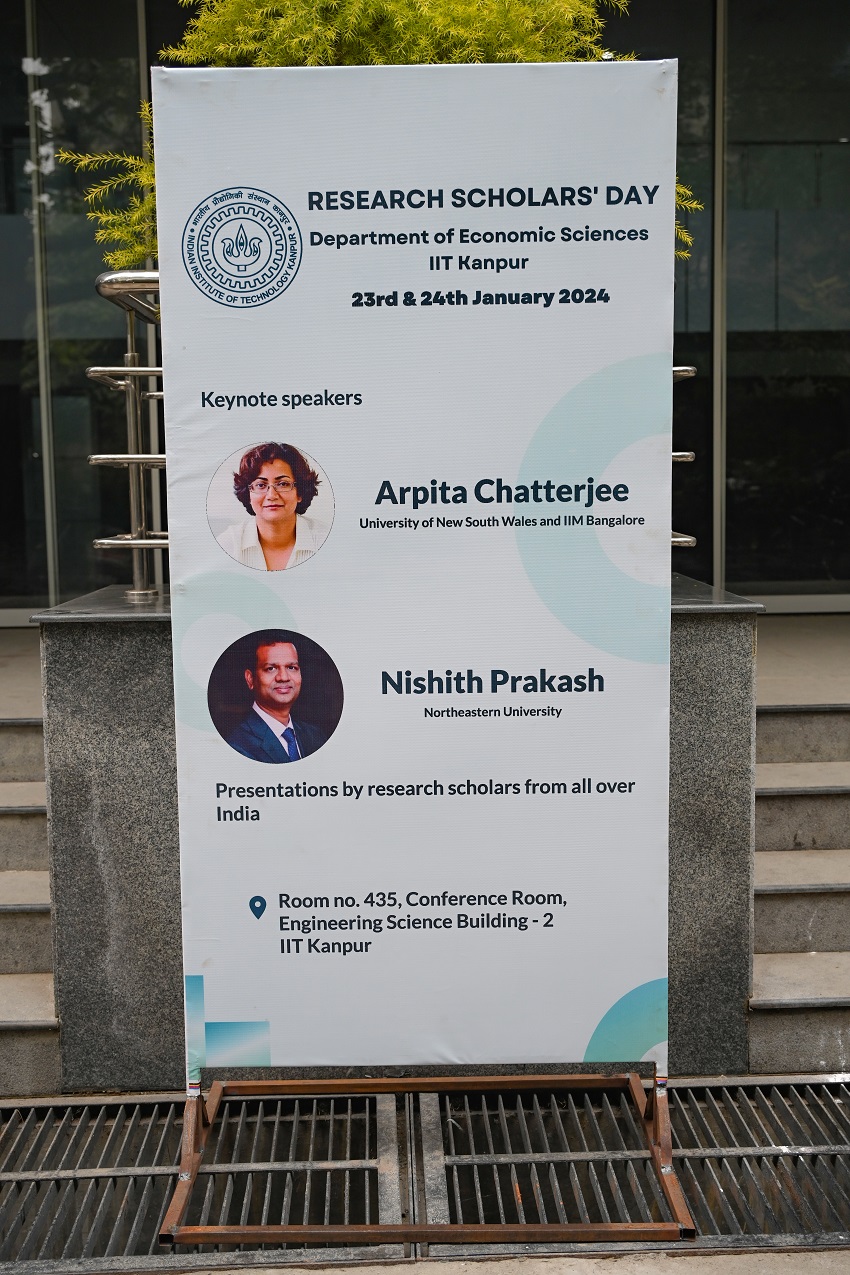
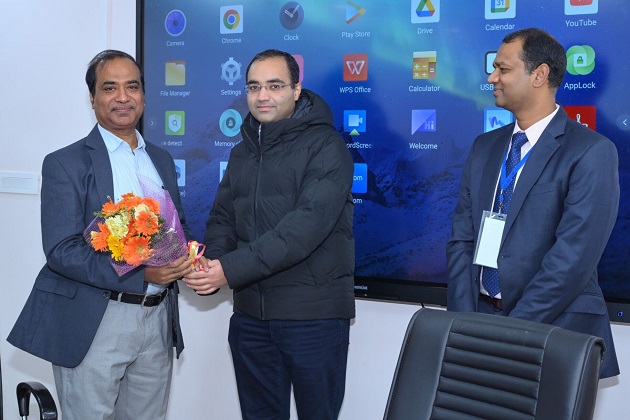
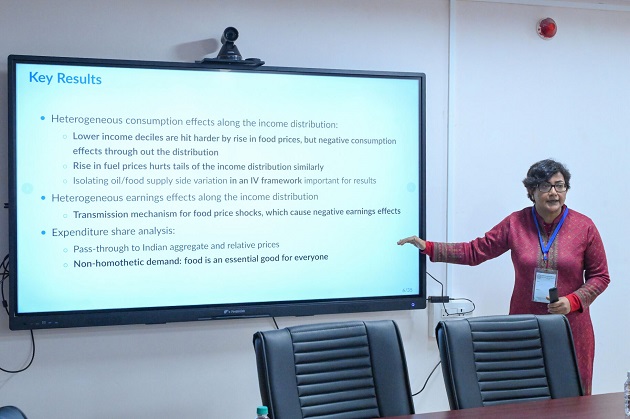
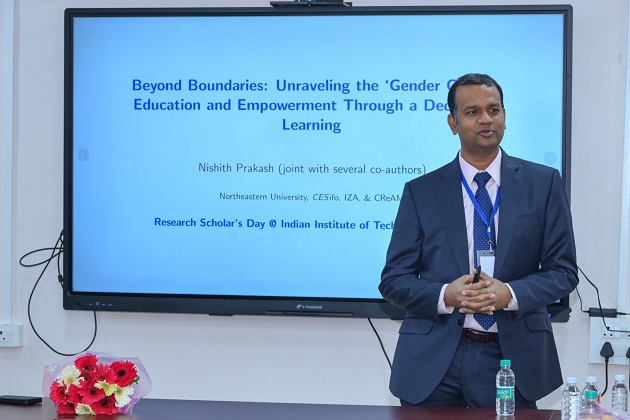
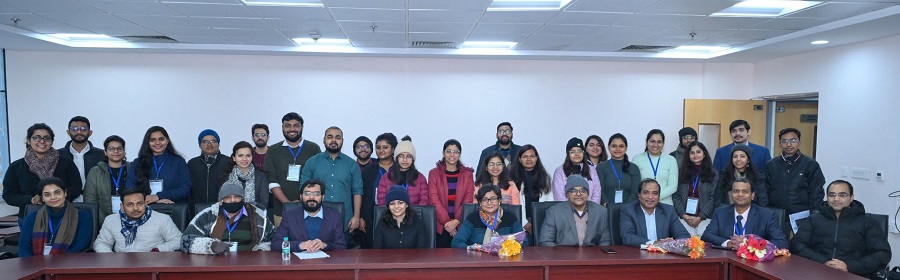
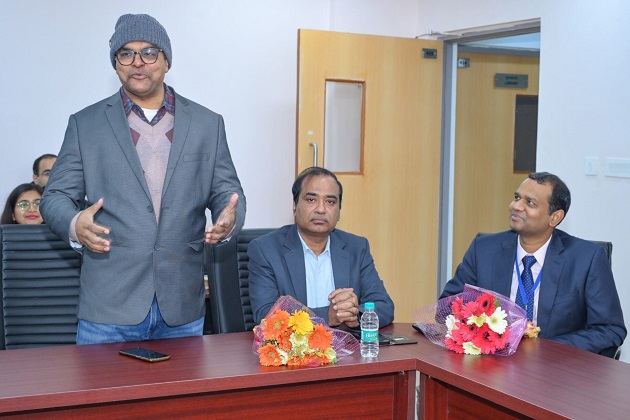
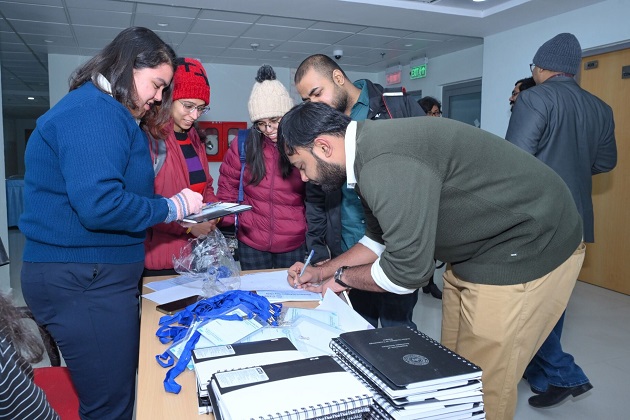
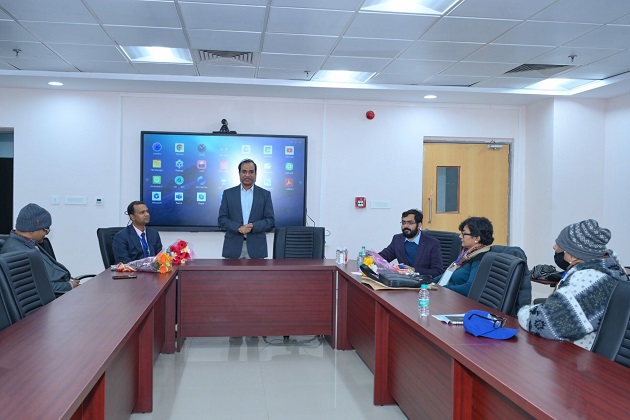
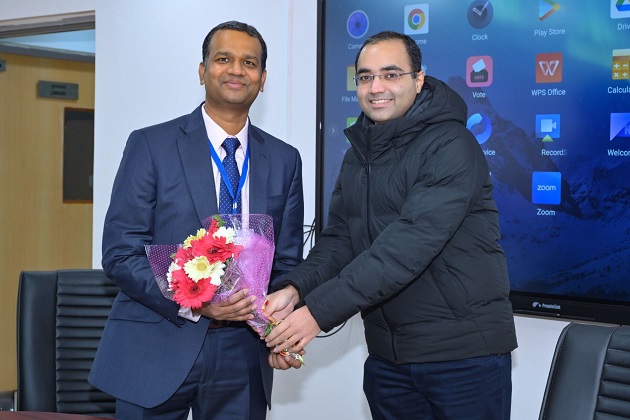
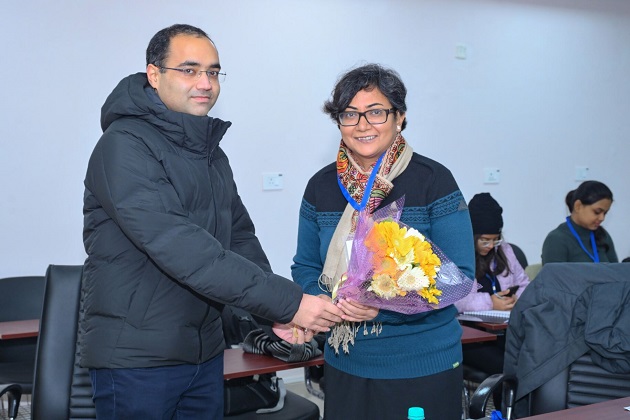
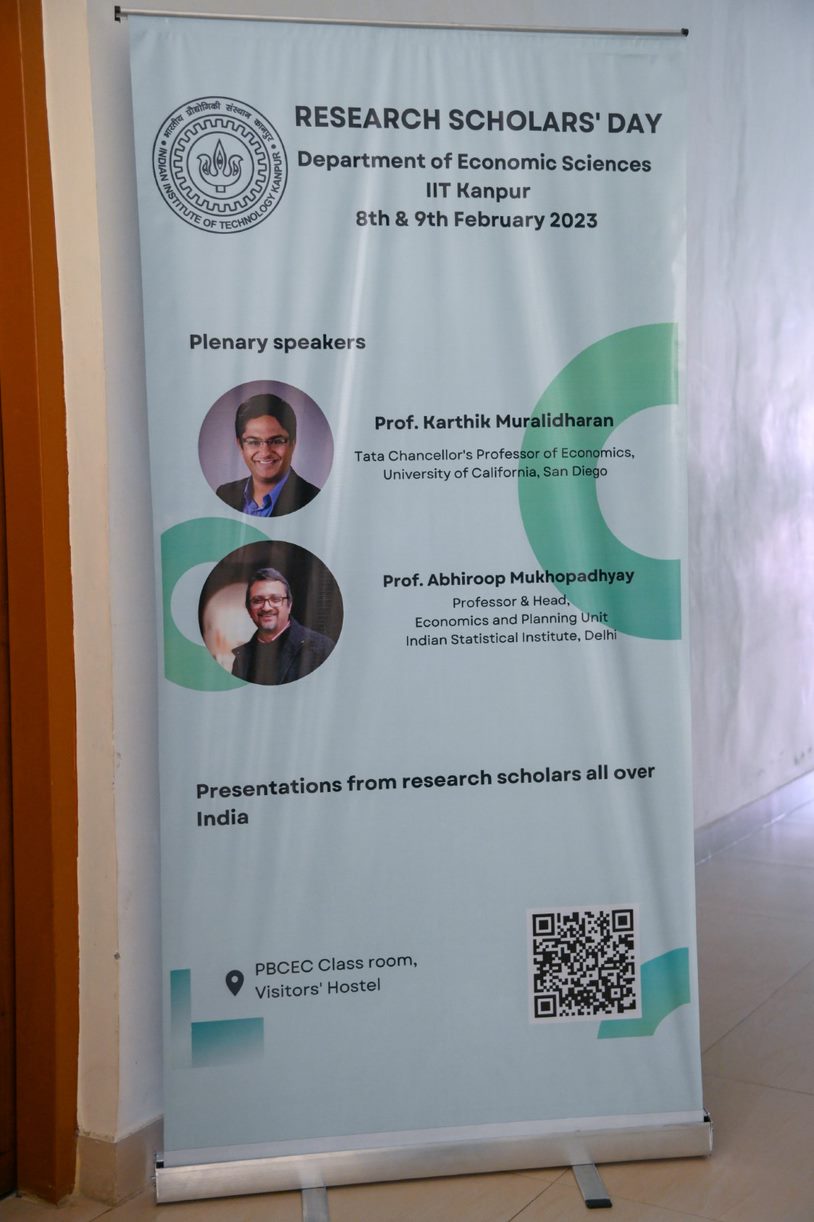
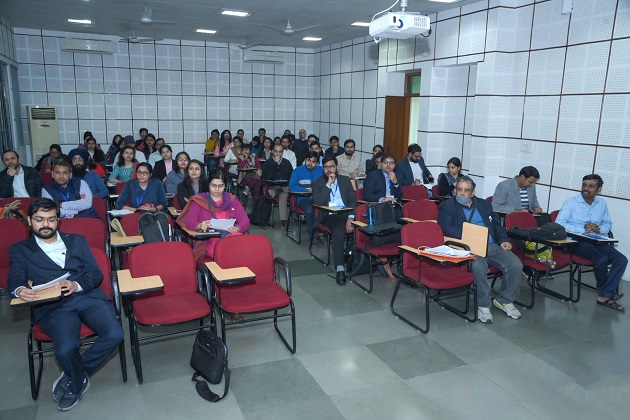
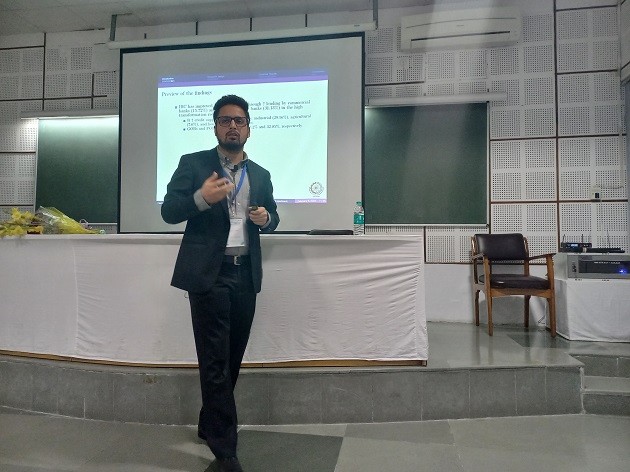
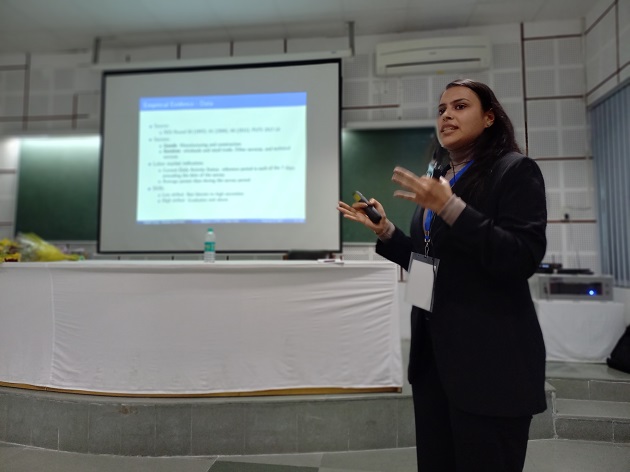
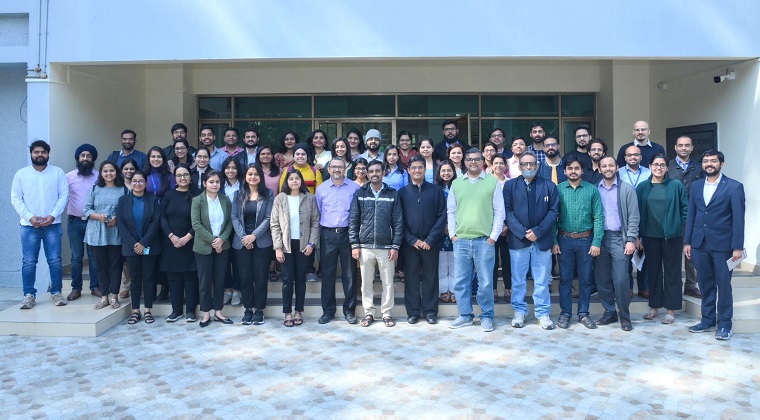
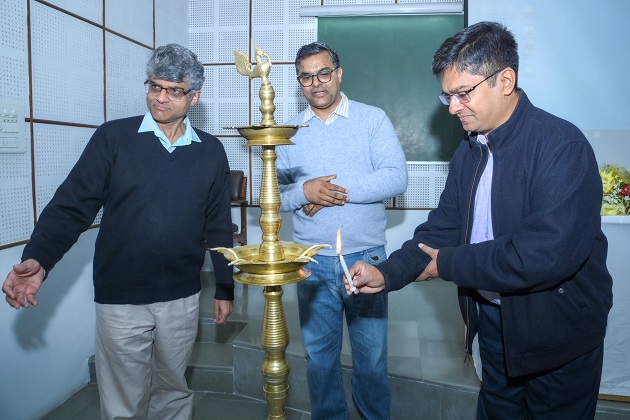
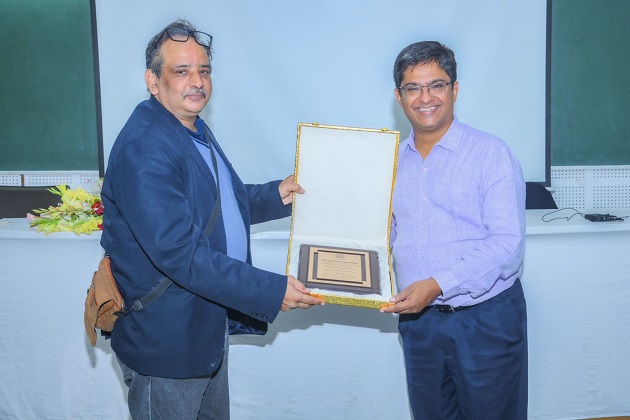
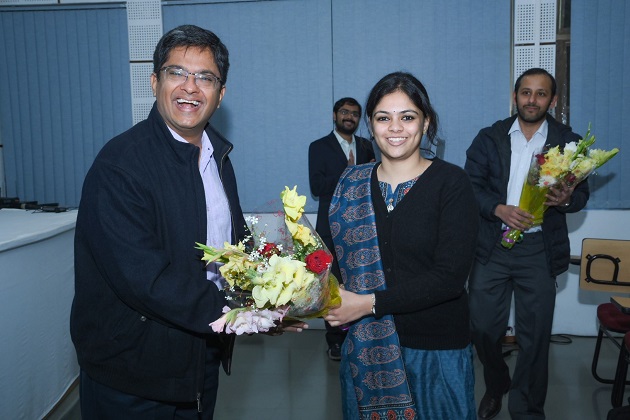
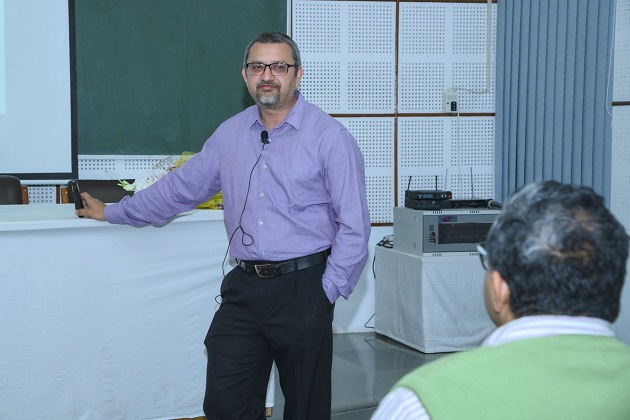
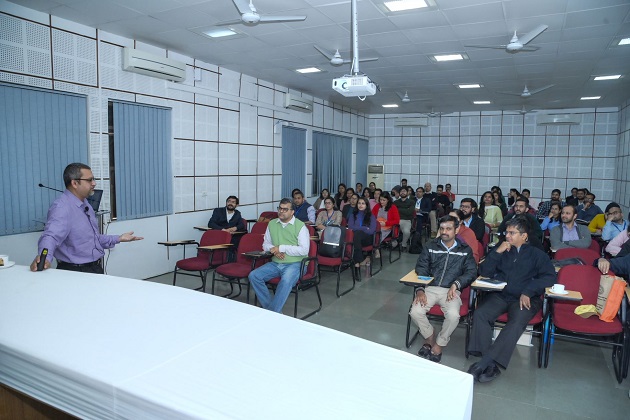
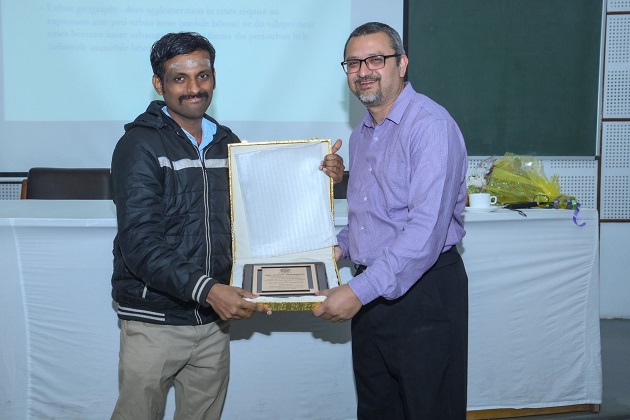
Research Scholars' Day

The Master of Science (M.Sc.) in Economics program
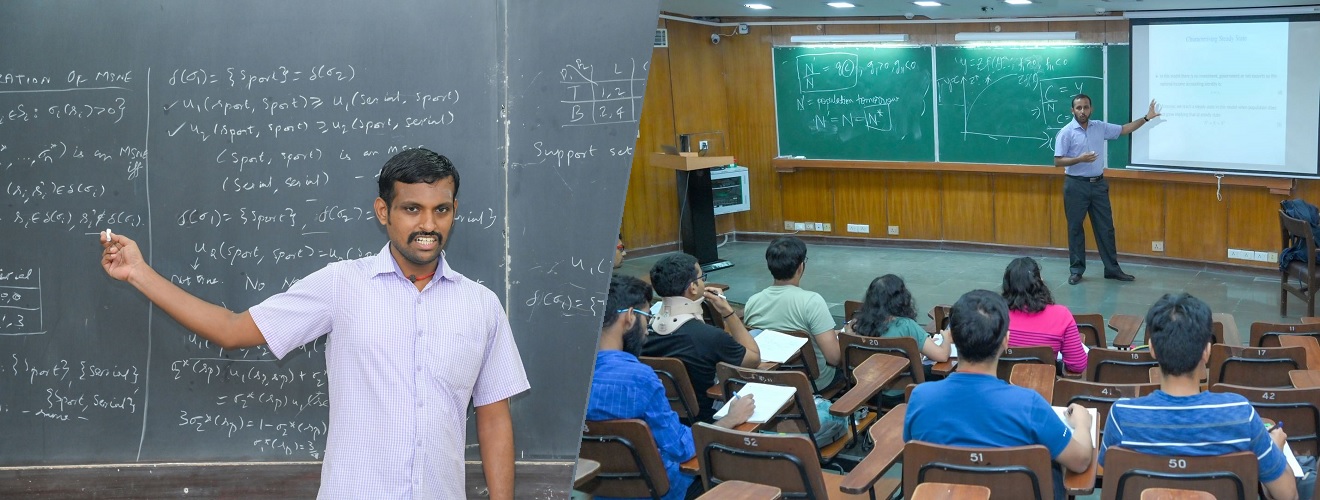
The Department of Economic Sciences at the Indian Institute of Technology Kanpur launched a two-year Master of Science (M.Sc.) program in Economics in the academic year 2023-24. The curriculum is designed to equip students with core competencies as professional economists while also leveraging IIT Kanpur's unique combination of expertise at the frontiers of economics and technology to impart cutting-edge skills in emerging interdisciplinary areas. The program emphasizes the application of economic theory to real-world problems such as auction design, pricing in energy markets, and causal evaluation of government policies. Strong emphasis is also placed on hands-on training in economic data analysis using modern statistical packages such as STATA and R, as well as quantitative economic modelling with computing languages such as Python and MATLAB.
Program structure
Students will have to take a total of 20 courses accounting for approximately 180 credits. There will be a total of 11 compulsory courses and 9 elective courses. The compulsory courses include courses in microeconomics, macroeconomics, mathematical methods in economics, applied probability and statistics, econometrics, game theory and computational methods in economics. The elective courses would include both courses offered by the department as well as from other departments.
- MSc course template (https://iitk.ac.in/eco/data/template-10-07-23.pdf)
- OE stands for Open Elective, DE stands for Departmental Elective
- Indicative syllabi for courses
- Microeconomics I
- Microeconomics II
- Macroeconomics I
- Macroeconomics II
- Mathematical Methods for Economics
- Computational Methods in Economics
- Economic Data Analysis: Methods and Computational Aspects
- Game Theory
- Econometrics I
- Econometrics II
- Machine Learning for Economists
- Monetary Economics
- Dynamic Macroeconomics
- Information Frictions in Financial Economics
- Public Economics and Public Policy
- Economics of Uncertainty and Information
Admissions
From the 2026–27 admission cycles onwards, the MSc Economics program will accept candidates through JAM in Economics (EN) with 24 seats and Mathematical Statistics (MS) with 16 seats.
Last Updated on: August 18, 2025
The faculty of the Department of Economic Sciences will offer three new e-Masters programs beginning from January 2023. The programs are targeted at entry and mid-level professionals and involve hands-on learning combining deep formal rigour and an intensely practical approach. A brief description of the three programs follows - for more details on the curriculum, application timeline and eligibility criteria, please click on the link below specific to each degree.
1. eMasters in Economics and Finance in Business
The popularity of data-driven business decision-making has made economic sciences highly suited for business intelligence, consultancy, and regulations. To meet the growing demand of professionals, this program offers a unique opportunity to learn economics and finance from business intelligence and decision-making perspectives. The blended modules on data analytics, finance, and core economic theories are one of the salient features of this program. The program offers a unique opportunity for business professionals to grasp the practical understanding of different economic tools and pricing mechanisms.
2. eMasters in Economics, Finance & Data Analysis
The wide application of mathematical and data analysis tools in modern economics has made it an attractive stream. This program offers a unique opportunity to learn economics and finance with strong exposure to quantitative economics and data analysis skills. The program is designed to suit the industry-specific demands in the banking, financial services, and consultancy domains. . The program is also helpful for data science enthusiasts who want to sharpen their understanding of the functioning of the economy and society.
3. eMasters in Economics, Finance & Public Policy
Understanding the recent developments in economic and financial policies has always been the foremost priority of regulators and policymakers. The dynamism of economic policy needs special training and focused analysis. This program, in this regard, offers a skill-based learning opportunity for policymakers and regulators working with central and state ministries/departments. This program is unique as it provides the learning opportunity and shape-up the thought process on different aspects of public policy planning and implementation-specific modules on public policy, public finance, program evaluation, and applied macroeconomics and finance.
Economic Sciences faculty have offered the following online courses under the National Programme on Technology Enhanced Learning (NPTEL)
Department of Economic Sciences
Indian Institute of Technology
KANPUR - 208 016
Phone : +91-512-2597870 (Office)
Email: This email address is being protected from spambots. You need JavaScript enabled to view it.
Address : Room 430, Engineering Science Building-2,
Indian Institute of Technology, Kanpur
Kanpur-208016