

Important Dates
Submission of full papers, case studies or 2-page long abstracts: 5 November 2025
Notification of authors: 15 December 2025
Camera-ready papers/case studies: 15 January 2026
Sponsors
This conference is sponsored by SPARC (Scheme for Promotion of Academic Research and Collaboration), through a SPARC project between IIT Kanpur and The University of Melbourne, Australia.
Scope
Vulnerable road users (pedestrians and two-wheelers) are involved in about half of the road accidents world-wide, e.g., 56% in India (MoRTH) and 37% in Australia (Road Trauma Australia). Recent technological advances in geospatial technologies and intelligence, connected transport technologies, and other areas, provide opportunities to develop solutions that can help minimize the risk to vulnerable road users. These technological advances may involve continuous monitoring of road networks, of motorized vehicle movements, as well as of vulnerable road users themselves, combined with advanced data processing capabilities powered by machine learning and deep learning algorithms to detect safety risks and hazards, understand road user behavior and ultimately taking appropriate decisions to enhance the road user safety and maintain streamlined traffic flows.
To address the problem of reducing traffic accidents, traffic agencies typically aim to reduce interactions among the different road users. These decisions, however, are often based on experience or local knowledge but are hardly data-driven. The impact of introducing these interventions on the accidents or traffic flow is often unknown. Although major cities around the world are equipped, for example, with CCTV cameras to monitor traffic, these cameras are unable to provide key data such as trajectories of motorized vehicles or of non-motorized road users, and models to understand road interactions are also scarce. Similarly, vehicle sensors, even of automated vehicles, are still limited in understanding road interactions.
The conference invites experts in fields related to sensing and modeling for pedestrian mobility and safety to improve the quality of life of the people living in increasingly congested cities.
Topics
The conference will cover a range of topics, including the latest advancements in:
- Sensors that monitor road behaviour and detect risks in those behaviours
- Data analytics, including machine learning and deep learning, to interpret those data streams
- Models, including simulation models, to identify and characterise risk in road interactions
- Addressing reliability and universality, such as low light conditions, low positioning accuracy conditions, and rule-following versus coordinating traffic cultures
- Sensor integration
- Enriching digital twins of roads or traffic with road safety information
- Privacy aspects in tracking road users
- Novel LiDAR-Camera fusion algorithms to detect and track road users to estimate their trajectory and velocity profiles
- Novel methods to identify undesirable road user behaviour, including speeding and near-misses using detected tracks and understanding the role of road infrastructure in the observed user behaviour
- Novel frameworks for continuous monitoring of the road networks and identification of accident-prone regions based on near-misses and traffic violations
- Understanding road user behaviour, identifying any patterns, understanding and quantifying road interactions including near-misses, potential collisions, speeding, and other risky behaviour in the context of interaction between pedestrians and other road users
- Long-term monitoring frameworks for continuous monitoring of the city; data structures so as to include the ‘risk’ information in the city maps that are used by agencies and the general public
- Short-term predictions of road behaviour
- Data analytic and sensing frameworks for pedestrian infrastructure detection and monitoring.
Program Overview
Plenary Session: 9:30 AM to 11:30 AM
Location: Outreach Auditorium
| Time | Event |
|---|---|
| 09:30 AM to 10:00 AM | Registration |
| 10:00 AM to 10:30 AM | Welcome by Prof. Salil Goel and Prof. Tarun Gupta (Dean R & D) |
| 10:30 AM to 11:30 AM |
Keynote Address: Prof. Milad Haghani (Principal Research Fellow, Resilience and Mobility, Department of Infrastructure Engineering, University of Melbourne) Title of the Talk: The global rise of oversized vehicles ("mobesity") and how it is systematically undermining pedestrian safety |
Location: PBCEC, Visitor's Hostel IIT Kanpur
| Time | Event |
|---|---|
| 11:30 AM to 12:00 PM | High Tea |
| 12:00 PM to 01:00 PM | Technical Session 1 |
| 01:00 PM to 03:00 PM | Lunch involving Conference Attendees |
| 03:00 PM to 04:30 PM | Technical Session 2 |
| 04:30 PM to 05:00 PM | Tea |
| 05:00 PM to 06:00 PM | Demo/ Hands on Session |
| 07:00 PM to 09:00 PM | Conference Dinner |
Location: PBCEC, Visitor’s Hostel IIT Kanpur
| Event | Time |
|---|---|
| 10:00 AM to 11:30 AM | Technical Session 3 |
| 11:30 AM to 12:00 AM | Tea |
| 12:00 PM to 01:00 PM |
Session by: Swati Meherishi (Editorial Director, Applied Science and Engineering Springer Nature) Title of the Talk: Artificial Intelligence in Research Publishing |
| 01:00 PM to 03:00 PM | Lunch (Participants only) |
| 03:00 PM to 04:30 PM | Technical Session 4 |
| 04:30 PM to 05:00 PM | Tea |
Plenary Session: 5:00 PM to 6:00 PM
Location: PBCEC, Visitor’s Hostel IIT Kanpur
| Event | Time |
|---|---|
| 05:00 PM to 06:00 PM | Concluding Remarks |
Technical Session 1: Mobility
| DAY 1 MONDAY, FEBRUARY 2, 2026 (12:00 PM – 01:00 PM) | |
|---|---|
| Venue: | PBCEC, Visitor's Hostel IIT Kanpur |
| Chair | Prof. Stephan Winter |
| Co-Chair | Prof. Aditya Medury, Prof. Kourosh Khoshelham |
| 12:00 PM |
Presentation 1: A Semi-Supervised Approach for Classifying Pedestrians from Point Cloud Clusters Rohit Rajput, Abhijeet, Amisha Dhiman, Salil Goel, Aditya Medury and Kourosh Khoshelham |
| 12:30 PM |
Presentation 2: Use of the YOLO model with modified techniques for pedestrian detection and time evaluation of GSV images Devender Kumar, Deepty Jain |
Technical Session 2: Mobility & Sensing
| DAY 1 MONDAY, FEBRUARY 2, 2026 (03:00 PM – 04:30 PM) | |
|---|---|
| Venue: | PBCEC, Visitor's Hostel IIT Kanpur |
| Chair | Prof. Kourosh Khoshelham |
| Co-Chair | Prof. Aditya Medury, Prof. Stephan Winter |
| 03:00 PM |
Presentation 3: Digital Twin Approach to Accessibility Assessment of Public Transport Kourosh Khoshelham, Junjie Zhang, Marko Radanovic, Zizhao Li, Shuyu Zhu, Yuan Zhao, Martin Tomko |
| 03:30 PM |
Presentation 4:
A comparison of the heteroskedasticity modelling technique in direct demand models for pedestrian exposure estimation and prediction Adarsh Singh, Aditya Medury |
| 04:00 PM |
Presentation 5: Contextualizing POI Descriptions for Leisure Walks Thi Minh Hoai Bui, Martin Tomko, and Stephan Winter |
Demo / Hands-on Session
| DAY 1 MONDAY, FEBRUARY 2, 2026 (05:00 PM – 06:00 PM) | |
|---|---|
| Venue: | PBCEC, Visitor's Hostel IIT Kanpur |
| Organizer | Rohit Rajput and Surbhi Barnwal |
| 05:00 PM | Workshop/ Discussion |
Technical Session 3: Safety I
| DAY 2 TUESDAY, FEBRUARY 3, 2026 (10:00 AM – 11:30 AM) | |
|---|---|
| Venue: | PBCEC, Visitor's Hostel IIT Kanpur |
| Chair | Prof. Aditya Medury |
| Co-Chair | Prof. Stephan Winter, Prof. Kourosh Khoshelham |
| 10:00 AM |
Presentation 6: Impact of Road Traffic Noise on Pedestrian Behaviour: A Case Study at an Undivided Two-way Road in Delhi Parth Parikh, Sai Chand, Anshuman Sharma |
| 10:30 AM |
Presentation 7: Analysing Pedestrians' Perception of Vehicle Stopping Distance and Its Influence on Gap Acceptance at Unprotected Midblock Crossings in Bhubaneswar City Thunga Vishnuvardhan Reddy and Partha Pratim Dey |
| 11:00 AM |
Presentation 8: Gap acceptance-based safety evaluation of urban midblock crossings under mixed traffic environment Avinash Chaudhari, Shriniwas Arkatkar, Priyanshi Patel, Anish Kharbas, Ashok Kumar |
Technical Session 4: Safety II
| DAY 2 TUESDAY, FEBRUARY 3, 2026 (03:00 PM – 04:30 PM) | |
|---|---|
| Venue: | PBCEC, Visitor's Hostel IIT Kanpur |
| Chair | Prof. Aditya Medury |
| Co-Chair | Prof. Stephan Winter, Prof. Kourosh Khoshelham |
| 03:00 PM |
Presentation 9: A Self-Supervised Framework for Near-Miss Risk Detection in Pedestrian Environments Sanskar Srivastava, Rachna Jain, Manohar Yadav |
| 03:30 PM |
Presentation 10: Pedestrian and road safety enhancement using LiDAR-based roadside object classification: A case study Aditya Raj, Poonam Pardeshi, Arpit Mishra, Manohar Yadav |
| 04:00 PM |
Presentation 11: Assessing the Impact of Roadside Encroachments on Pedestrian Level of Service, Safety, and Comfort Bidyananda Laishram, Dipanjan Mukherjee |
General Chair

Prof. Salil Goel
Department of Civil Engineering, IIT Kanpur
Program Committee Chairs

Prof. Kourosh Khoshelham
The University of Melbourne, Australia

Prof. Aditya Medury
Department of Civil Engineering, IIT Kanpur
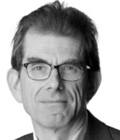
Prof. Stephan Winter
The University of Melbourne, Australia
Program Committee
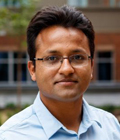
Prof. Rahul Goel
IIT Delhi, India

Prof. Manohar Yadav
MNNIT Allahabad

Prof. Indrajit Ghosh
IIT Roorkee, India

Prof. Vijay Kovalli
IISc Bengaluru, India
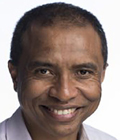
Prof. Andry Rakotonirainy
Queensland University of Technology, Australia

Dr. Long Truong
La Trobe University, Australia

Dr. Milad Haghani
The University of Melbourne, Australia

Prof. Sai Chand
IIT Delhi, India
Prof. Abhisek Mudgal
IIT-BHU, India

Prof. Punit Rathore
IISc Bengaluru, India

Dr. Debaditya Acharya
RMIT University, Australia

Prof. Jun Zhang
China University of Science and Technology, China

Prof. Stefania Bandini
Università degli Studi di Milano-Bicocca, Italy
Dr. Meead Saberi
University of New South Wales, Australia

Dr. Neema Nassir
The University of Melbourne, Australia

Dr. Yan Li
China University of Geosciences Beijing, China

Dr. Winnie Daamen
Delft University of Technology, The Netherlands
Prof. P K Garg
IIT Roorkee, India

Prof. Dr. Anja Huemer
Universität der Bundeswehr, Germany

Prof. Dr. Gerta Koster
Hochschule München
Prof. Cecile Appert-Rolland
IJCLab, Paris-Saclay University, Orsay
Submission Instructions
Submission Instructions and Template:
Instructions for authors and template: click hereAll submissions must be made through the Springer’s METEOR system. Click here to submit
All authors are required to register on the METEOR system for submission.
Please refer to the PDF regarding submission instructions on METEOR.
Prospective authors can submit either a full paper (at least 6 A4 pages), a case study (at least 4 A4 pages) or an abstract (max. 2 A4 pages). Accepted full papers and case studies will be considered for inclusion in the conference proceedings.
- Long abstract (upto 2 pages): The content should clearly communicate the problem statement, research gaps and provide an overview of the analyses undertaken. Please note that the long abstracts will not be considered for the conference proceedings.
- Case study (at least 4 A4 pages): The work should demonstrate new, original and unpublished applications of the proposed methodology/technology. Case studies will be considered for conference proceedings.
- Full paper (at least 6 A4 pages): Full papers must present original research with well defined research outcomes that are generalizable in nature.
Furthermore, the authors are requested to identify the most suitable track among the following options:
- Infrastructure and Road User Sensing
- Pedestrian Mobility
- Pedestrian Safety
Conference Proceedings
The conference proceedings of select papers will be published through Springer with an indexed proceedings.
It is planned to publish the peer-reviewed and selected papers of the conference as proceedings with Springer in their prestigious Lecture Notes in Civil Engineering
series (https://link.springer.com/series/15087). For detailed instructions for author and editors of conference proceedings, kindly visit the following link: https://www.springer.com/us/authors-editors/conference-proceedings. Select papers from the conference will be published by Springer as a proceedings book volume. Springer will conduct quality checks on the accepted papers and only papers that pass these checks will be published. Abstracts/extended abstracts and short papers (less than 4 pages) are not considered for publication.
Registration Procedure
Note that the registration fee does not include accommodation. The registration fee covers working lunch (on both days) and high tea during the conference hours.
Registrations are closed !
Step 1: Pay the registration fees via SBI Collect as per your category.
Step 2: Fill out the Google Form
| Course Code | 42 |
| Course Title | Sensing and Modeling for Pedestrian Mobility and Safety |
| Course Duration | 02.02.2026 to 03.02.2026 |
| Payment Link: | Payment Closed |
| Registration Link: | Click here to Register |
| Category | Fees in INR (Including 18% GST) |
|---|---|
| Non IITK Faculty | 5900/- |
| Non IITK Students | 1180/- |
| Personnel from Industry/ R&D Organizations | 8260/- |
| IITK Faculty | NIL |
| IITK Student | NIL |
Travel to IIT Kanpur
Established in 1959, IIT Kanpur is one of the premier institutions established by the Government of India to provide meaningful education and original research. You can reach IIT Kanpur by various modes of transportation.
Nearest Airports: Chakeri Airport (KNU) in Kanpur (26 km by road from IIT Kanpur) and Chaudhary Charan Singh International Airport (LKO) in Lucknow (80 km by road from IIT Kanpur)
By Train: You can take a train to “Kanpur Central Railway Station” from any major city like Delhi or Bombay (15 km by road from IIT Kanpur).
Accommodation
You can find a variety of hotels nearby the campus. Limited on-campus accommodation may be available on request. For on-campus accommodation, please contact us.